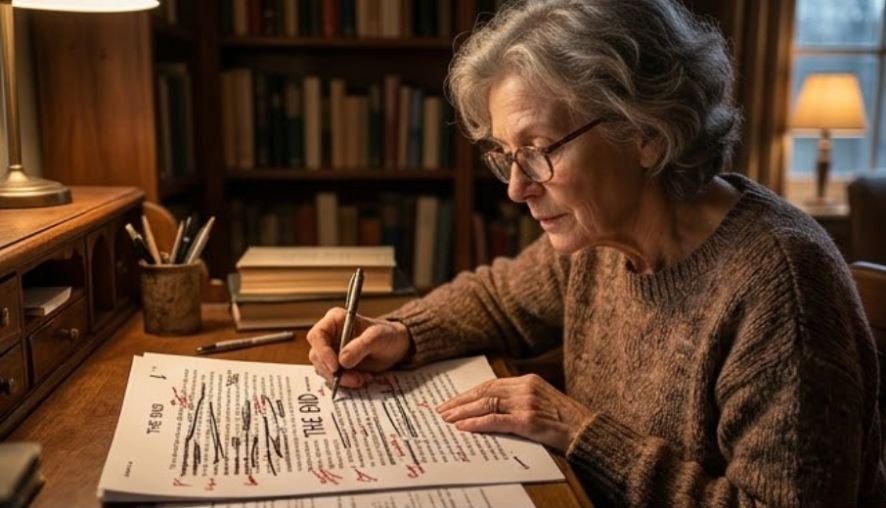
Staring at a completed first draft feels like absolute magic until the heavy self-editing phase begins. Pulling up my very first book draft revealed a massive sea of repetitive sentence structures and clunky paragraphs that hidden filler language had quietly bloated.
Tightening your prose doesn’t mean stripping away your unique creative voice; it simply means clearing out the structural debris. Learning exactly which words to cut from manuscript pages will instantly elevate your storytelling from an amateur level to a highly polished masterpiece.
Key Takeaways
- Identify sensory filter words to boost narrative intimacy.
- Eliminate weak padding adverbs like very and really.
- Remove redundant physical action descriptions from prose.
- Clean up weak sentence starters like there was.
- Automate repetitive editing loops using custom software macros.
The Real Truth About Manuscript Clutter
Every unnecessary word acts like a tiny speed bump that slows down your reader’s momentum. When structural fluff litters your pages, literary agents and publishers see a narrative that lacks tension and professional polish.
Trimming these invisible placeholders forces your sentences to become active, direct, and emotionally resonant.
Distancing Sensory Elements
Sensory language can unintentionally alienate readers if you route every observation through a character’s physical senses. Words like saw, heard, felt, realized, and noticed are classic examples of filter words that create a distinct narrative gap.
Instead of telling the audience that a character felt her throat tighten, simply describe how her throat tightened to immerse the reader directly in the raw experience.
Story Momentum Killers

Weak qualifiers and intensifiers frequently signal a lack of confidence in the underlying storytelling style. Throwaway terms like completely, totally, absolutely, and quite often dilute the impact of the sentences they inhabit.
If an event is truly shocking, the action itself should carry the emotional weight without relying on an extra descriptive warning label.
Scouting Out Weak Vocabulary Is Necessary
Let us be completely honest for a second. Hunt down those specific words to cut from manuscript drafts because nobody wants their beautiful story to read like a boring, padded high school essay.
Finding and deleting these sneaky little space-stealers turns your clunky rough draft into a fast-paced, high-stakes page-turner that keeps agents reading. It is the fastest way to make your storytelling look incredibly professional without changing your actual plot.
The Absolute Best Hack for Automated Editing

Manually hunting down every single repetitive phrase across an eighty-thousand-word book draft can easily drain your creative energy. Modern software features can handle the tedious heavy lifting so you can focus entirely on your story.
When editing fatigue causes a creative standstill, learning how to beat writer’s block fast can help you regain momentum before returning to the manuscript with a sharper perspective.
Setting up specialized automation tools will instantly transform your deep editing routine into a fast, stress-free process.
Strategic Word Macros
A custom macro inside Microsoft Word or Google Docs can scan your whole document and highlight known problem phrases simultaneously. You can build a basic script that changes the background color of weak modifiers to bright yellow or soft pink.
This simple visual guide allows you to evaluate each phrase contextually without spending hours typing the search command every time.
Structural Tracking Sheets
A physical or digital checklist kept right next to your computer monitor serves as an excellent reference tool. Grouping your personal crutch phrases by linguistic category helps you spot bad habits as you read line by line. Tracking these patterns lets you reprogram your natural writing style over time so future drafts require far less cleanup.
Advanced Action Plan for Creating Dynamic Prose

Swapping out repetitive vocabulary isn’t about following rigid rules blindly; it is about choosing impactful sentence structures. Learning how to manage words to cut from manuscript pages ensures you never accidentally strip away realistic character dialogue.
This step-by-step approach guides you through a clean narrative transformation while preserving your authentic voice.
When a scene feels empty after trimming, use writing prompts for world building to restore meaningful setting details without reintroducing unnecessary filler.
First, open your word processor and use the search tool to highlight common intensifiers such as just, really, and very. These words weaken your prose, and it is almost always better to choose a stronger verb or specific descriptor instead. Scan each highlighted section and delete the padding word entirely to see how the sentence instantly gains power.
Second, sweep through your chapters to locate redundant action starters and unnecessary physical directions. Look for phrases like began to run or started to walk and simplify them to ran or walked for maximum impact. Remove directional words like up or down when they are already implied by the verb, changing he sat down to he sat.
Third, eliminate weak modifiers ending in ly along with filler pronouns like that wherever they are not grammatically essential. Switch a phrase like he knew that she was lying to he knew she was lying to quicken the pacing. This intentional restructuring infuses your prose with deep, cinematic energy that keeps readers turning pages late into the night.
Frequently Asked Questions
1. What are the filler words to cut in writing?
Filler words to cut from manuscript files are unnecessary placeholders like just, really, very, and suddenly that sneak into early drafts. They pad your word count without adding real meaning, pacing, or narrative substance to your sentences.
2. What are the top 10 overused words?
The most common culprits include very, really, suddenly, looked, felt, started, completely, basically, just, and that. Writers rely on them out of habit during fast, unedited drafting sessions when they are trying to get ideas onto the page.
3. What are examples of fluff words?
Fluff words are empty modifiers such as extremely, totally, absolutely, and quite. They attempt to amplify a weak adjective when choosing a stronger, more specific base word would be much more powerful for your readers.
4. What are examples of crutch words?
Crutch words are personal favorite terms like realized, wondered, seemingly, or began. Authors unconsciously repeat these specific linguistic patterns whenever they need to transition between complex narrative thoughts or move a character across a room.
The Grand Finale of Your Book Editing Journey
Cleaning up the specific words to cut from manuscript drafts is the ultimate gift you can give your future readers. Stripping away passive language unlocks the true emotional depth of your characters and quickens your story’s pacing. Trust your narrative, trust your audience, and embrace the sharpening process to watch your beautiful novel truly shine on the shelf.