
My The Remembered Soldier book review begins with a warning: this is not a comfortable war novel. Anjet Daanje turns a missing identity into a tense domestic mystery. I found the book most powerful when it treated memory as something other people can edit, stage, and sell back to us.
The result is intimate, unsettling, and more daring than a conventional World War I story. For me, The Remembered Soldier book review cannot focus only on whether the plot is gripping. The novel’s real achievement lies in how it questions who owns a person’s past.
What Is The Remembered Soldier About?
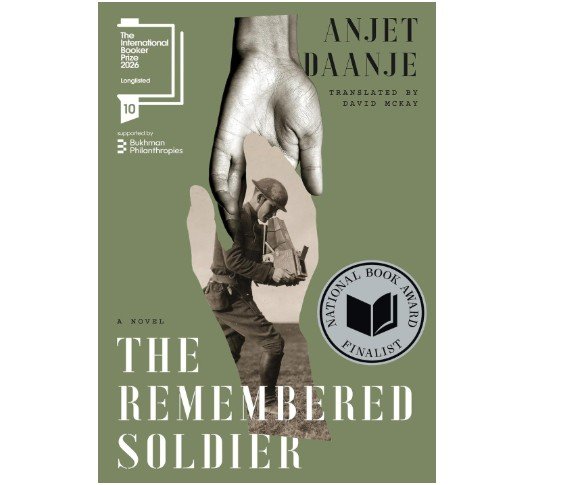
Image Source: Amazon
The novel opens in Flanders in 1922. A traumatized veteran has spent four years inside a psychiatric asylum. He cannot remember his name, family, profession, or life before the war.
The hospital calls him Noon Merckem, combining the time and place where he was discovered. A newspaper notice brings grieving women to the asylum. Each hopes the unidentified man might be a husband or son lost during the war.
Julienne Coppens eventually claims him as Amand, her missing husband and a professional photographer. Eager to escape the asylum, he returns home with her against medical advice.
A Homecoming Built on Doubt
Amand enters his supposed home as both husband and stranger. Julienne supplies his biography, habits, relationships, and position within the family. Yet factual information does not produce emotional recognition.
The house fits his identity on paper, but it rarely feels like home.
Julienne may be restoring a shattered life through devotion. She may also be constructing the husband she wants. Daanje keeps both possibilities alive, creating a spiral of suspicion once Amand begins questioning Julienne’s version of his past.
Memory, Photography, and Manufactured Identity
The strongest idea in this The Remembered Soldier book review is the relationship between photography and manufactured memory.
Julienne photographs Amand in a soldier’s uniform beside war widows. She then alters the negatives so Amand appears in place of each woman’s dead husband.
A photograph should preserve evidence. Inside Julienne’s studio, however, photography turns grief into a staged reconstruction. The camera does not simply record reality. It creates a more bearable substitute.
The same process happens to Amand. Julienne selects details, arranges them carefully, and develops a usable version of his past.
My Three-Layer Identity Test
While assessing Amand’s struggle, I used a three-layer identity test.
The first layer is factual identity: names, dates, photographs, documents, and possessions.
The second is relational identity: how family members, neighbors, and friends describe and treat him.
The third is moral identity: the person Amand believes he is capable of becoming.
These layers repeatedly contradict one another. Amand may match the records while distrusting the role. He may accept Julienne’s affection while fearing the story behind it.
His deepest question is not simply, “Who was I?” It is, “Must I become the person everyone remembers?”
That distinction lifts the novel above a conventional amnesia mystery. It makes identity social, emotional, ethical, and dangerously unstable.
War Trauma After the Armistice
Any honest The Remembered Soldier book review must address the novel’s treatment of shellshock.
The war has ended, but Amand continues to experience nightmares, panic, dissociation, and intrusive images. His body remains trapped in danger, even inside a family home.
Modern clinical guidance recognizes that combat trauma can involve upsetting memories, sleep problems, hypervigilance, avoidance, and difficulty performing ordinary activities. PTSD and traumatic brain injury can also share symptoms such as anxiety, poor concentration, and memory problems.
Daanje does not reduce Amand to a medical diagnosis. Instead, she shows how trauma invades marriage, employment, physical intimacy, and trust.
The premise was partly inspired by Anthelme Mangin, a real French soldier whose profound memory loss led several families to claim him. Daanje has explained that she borrowed a small part of Mangin’s history and invented the rest.
Anjet Daanje’s Tidal Prose

Readers seeking an honest The Remembered Soldier book review should know that the prose demands concentration.
Daanje constructs long sentences from stacked clauses, frequently connecting thoughts with repeated uses of “and.” The rhythm feels breathless, circular, and relentless.
The writing often moves between domestic reality, battlefield memories, nightmares, and imagined possibilities. Readers experience uncertainty alongside Amand instead of observing it from a safe distance.
Why the Long Sentences Work
At first, the syntax slowed me down. Soon, I understood its purpose.
Amand cannot organize experience into a clean division between past and present. The sentences therefore accumulate sensations, fears, doubts, and possibilities before he can settle them.
The International Booker Prize describes the prose as propulsive and highlights how David McKay’s translation retains the momentum of Daanje’s long sentences.
The style creates disorientation rather than merely describing it.
David McKay’s Translation
McKay keeps the English version readable without flattening its strangeness. A smoother or more conventional translation might have weakened Amand’s psychological instability.
The National Book Foundation praised the translation for drawing readers into the novel’s hypnotic movement and psychological depth.
The novel was longlisted for the International Booker Prize 2026. It also won the 2025 Republic of Consciousness Prize for the United States and Canada.
Julienne and Amand: Romance or Captivity?
This The Remembered Soldier book review would be incomplete without examining Julienne.
She appears loving, manipulative, frightened, practical, sensual, and desperate. Her contradictions prevent the novel from becoming a simple story about a dishonest wife.
Amand needs Julienne because she offers continuity. He fears her because she controls the evidence supporting his identity.
Their intimacy grows through care, dependence, suspicion, and performance. The relationship can feel tender in one scene and claustrophobic in the next.
Readers drawn to eerie historical fiction may also appreciate The Wax Child book. Both stories raise questions about families that protect themselves through silence, belief, and altered versions of the past.
Is The Remembered Soldier Difficult to Read?
Yes, but its difficulty is deliberate.
The US paperback edition runs to 576 pages. The narrative moves between reality and nightmare while withholding firm answers about Amand’s identity.
Readers who prefer fast plots or tidy resolutions may find the experience exhausting.
Still, The Remembered Soldier book review cannot dismiss the length as self-indulgent. The slow accumulation creates psychological pressure. Living beside Amand’s uncertainty makes his dependence on Julienne more convincing.
I suggest reading the book in steady sections rather than rushing. Pay attention to photographs, uniforms, mirrors, dreams, and altered images. These repeated symbols reveal how the novel connects appearance with identity.
Who Should Read The Remembered Soldier?
Choose this novel if you enjoy literary historical fiction, psychological suspense, unreliable memory, and morally complicated relationships.
It should appeal to readers who prefer the aftermath of war over battlefield action. It is also a strong choice for anyone interested in translated fiction and experimental narrative styles.
Consider skipping it for now if you need a light story, rapid pacing, or a completely solved mystery.
My The Remembered Soldier book review verdict remains highly positive, but the novel demands patience, focus, and emotional stamina.
Frequently Asked Questions
1. Is The Remembered Soldier based on a true story?
It is fictional but partly inspired by the real case of amnesiac French soldier Anthelme Mangin.
2. Is The Remembered Soldier worth reading?
Yes, especially for readers who value psychological depth, experimental prose, and morally ambiguous historical fiction.
3. Is The Remembered Soldier a romance?
It contains a love story, but trauma, dependence, manipulation, and doubt make it darker than a conventional romance.
4. How long is The Remembered Soldier?
The US paperback edition contains 576 pages, making it a substantial reading commitment.
My Verdict: Memory Has Never Looked So Suspicious
My final The Remembered Soldier book review rating is 4.5 out of 5 stars.
Daanje creates a haunting story in which love can restore a person and rewrite one. The photography studio provides the novel’s sharpest symbol. Every photograph appears to preserve a moment, yet every image can be altered.
I would revisit the opening chapters after finishing. Later revelations change how Julienne’s care, Amand’s fear, and the staged photographs appear.
This is not merely a story about recovering lost memories. It asks a far more disturbing question: who gains power when another person cannot remember?