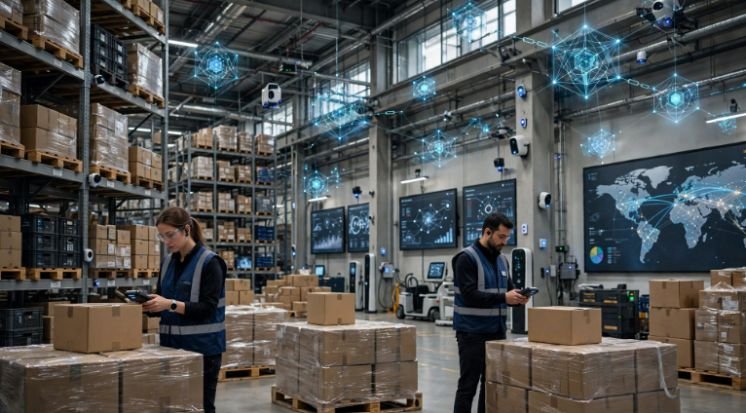
Inventory sounds simple until you actually have to manage it. Products arrive late, suppliers update records at different times, warehouse teams scan the wrong pallet, and suddenly three systems show three different stock counts.
That is why info blockchain based inventory management systems are getting attention beyond cryptocurrency circles. Blockchain can create a shared, tamper-evident history of inventory events, helping suppliers, manufacturers, logistics partners, warehouses, and retailers work from records they can verify instead of constantly comparing disconnected databases.
For me, that is the interesting part. Blockchain inventory management is not about adding futuristic technology just because it sounds impressive. It is about making an everyday operational headache easier to trace, understand, and manage.
Table of Contents
ToggleWhat Problems Can info blockchain based inventory management systems Actually Solve?
Traditional inventory platforms generally work extremely well inside a single organization. Trouble starts when products move between several independent companies, each using different software, processes, and databases.
A manufacturer may record that a shipment left at 9:00 a.m., while the logistics provider records it at 10:15. The warehouse may then enter a slightly different quantity. Someone eventually has to figure out which record is correct.
Blockchain offers a shared transaction history where approved participants can verify important events. AWS describes blockchain supply-chain systems as a way to create a tamper-evident shared source of truth while improving traceability and transparency between participating organizations.
How Do info blockchain based inventory management systems Work Behind the Scenes?
Imagine a pallet arriving at a distribution center. A worker scans its RFID tag, the warehouse management platform confirms receipt, and approved information about that event is passed to the blockchain network.
The transaction can include details such as the product identifier, batch number, quantity, sender, receiver, location, timestamp, and shipment status. Once validated according to the network’s rules, the event becomes part of the shared record.
Blockchain does not necessarily replace your ERP or warehouse management system. It normally sits alongside existing applications, creating a trusted layer through which selected information can be shared across organizations.
Why Can info blockchain based inventory management systems Improve Traceability?
Traceability becomes difficult when products pass through dozens of hands. If something goes wrong, businesses may have to search emails, spreadsheets, shipping documents, supplier portals, and warehouse databases just to reconstruct a product’s journey.
Blockchain can give authorized participants a chronological record of important product events. That can make it easier to investigate where a component originated, which facility handled it, when ownership changed, and which batch was involved.
NIST has studied blockchain and related technologies specifically in the context of manufacturing supply-chain traceability. Its research notes that increasingly complex supply chains make product origins harder to determine and examines how blockchain-based data sharing may support improved traceability.
How Can Smart Contracts Make Inventory Management More Automatic?
Smart contracts are programmable rules that execute when predefined conditions are met. They can help remove some of the repetitive manual steps that slow inventory workflows.
For example, a business could create rules that flag a shipment when its recorded temperature exceeds a limit, update ownership after receipt is confirmed, or trigger another workflow when inventory reaches a specified threshold.
I would not hand every purchasing decision to a smart contract on day one. The smarter approach is to automate predictable, clearly defined events first and keep human review for unusual situations.
How Do RFID and IoT Make Blockchain Inventory Smarter?
Blockchain is only as useful as the information entering it. That is why RFID, barcode scanners, GPS trackers, connected warehouse equipment, and IoT sensors often appear alongside blockchain inventory technology.
An IoT temperature sensor could monitor a refrigerated shipment, while GPS data records its location. RFID can identify which pallet crossed a warehouse checkpoint. These events can then feed inventory and blockchain systems with less manual data entry.
The combination is especially valuable when companies need to prove not only where a product traveled but also the conditions it experienced along the way.
Why Do Data Standards Matter for Blockchain Inventory?
Imagine five companies joining one blockchain network while every company calls the same inventory event something different. You have technically connected everyone while still giving them five different languages.
Shared data standards help solve that problem. GS1’s EPCIS standard provides a common approach for sharing supply-chain visibility events, including information about what happened, when it happened, where it happened, and why. It also supports details such as movement, chain of custody, certifications, and sensor data.
As different blockchain networks and supply-chain systems need to communicate with one another, exploring Top Blockchain Interoperability Tools can help readers understand the technologies that support smoother data exchange across blockchain ecosystems.
That may sound technical, but the practical benefit is simple: suppliers, logistics companies, manufacturers, and retailers have a better chance of interpreting shared information consistently.
Where Can info blockchain based inventory management systems Deliver the Most Value?
Blockchain tends to make the most sense when several independent organizations need to trust the same inventory history. Pharmaceuticals, food distribution, automotive manufacturing, electronics, luxury goods, aerospace, and other traceability-heavy industries are natural candidates.
Food companies may want faster batch tracing during recalls. Pharmaceutical businesses may need better visibility into product provenance. Manufacturers may want to identify exactly which supplier provided a problematic component.
High-value goods can also benefit because provenance records can help establish where products originated and how they moved through the supply chain.
The more handoffs, participants, and reconciliation problems you have, the stronger the potential case becomes.
How Do You Implement info blockchain based inventory management systems Step by Step?
Step 1 is to identify a real operational problem. Do not begin with “we want blockchain.” Start with something specific, such as inventory discrepancies, slow product tracing, supplier disputes, counterfeit risk, or poor shipment visibility.
Step 2 is to map the data. Decide which inventory events matter and what information each event should contain. Product IDs, batch numbers, quantities, locations, timestamps, custody changes, and sensor data are common examples.
Step 3 is to choose participants and permissions. Suppliers might need permission to create shipping events, while warehouses confirm receipt and auditors receive read-only access.
Step 4 is to connect the blockchain layer with tools employees already use. ERP software, warehouse management systems, RFID scanners, supplier portals, transportation platforms, and IoT devices should feed selected information automatically whenever possible.
Step 5 is to run a small pilot. Start with one product category, supplier group, warehouse, or distribution route instead of trying to rebuild your entire supply chain overnight.
Step 6 is to measure the results. Compare inventory accuracy, reconciliation time, tracing speed, manual workloads, disputes, and operating costs against your previous process before deciding whether to scale.
What Could Make a Blockchain Inventory Project Fail?
One of the biggest risks is bad input data. Blockchain can make records difficult to alter afterward, but it cannot magically know whether someone scanned the wrong item in the first place.
Integration can also become expensive. Legacy ERP systems, outdated warehouse software, supplier platforms, and inconsistent data formats may require additional APIs or middleware.
Participation is another challenge. A supply-chain ledger becomes far less valuable when important suppliers or logistics partners refuse to contribute timely data.
Privacy must also be considered carefully. Businesses usually do not want competitors seeing purchase prices, production volumes, supplier agreements, or customer information. Permissioned access and thoughtful data architecture therefore matter enormously.
How Do You Know Whether Blockchain Is Worth the Investment?
I would ignore flashy metrics such as the number of blockchain nodes or transactions processed. Those numbers tell you that the technology is running, not whether your warehouse is performing better.
Track useful metrics instead: inventory accuracy, discrepancy resolution time, supplier disputes, product tracing speed, recall response time, shrinkage, manual reconciliation hours, and fulfillment delays.
Then compare those improvements with implementation, integration, infrastructure, training, governance, and supplier onboarding costs.
If a conventional centralized database solves the problem faster and cheaper, use it. Blockchain should earn its place by solving a genuine trust or coordination problem.
What Are the Key Takeaways About info blockchain based inventory management systems?
The biggest takeaway is that blockchain works best as a shared trust layer rather than a replacement for every inventory application you already own. For businesses exploring how blockchain architectures can support different operational needs, understanding what makes Casper a modular blockchain can provide useful context on modular blockchain design.
Start small, solve one measurable problem, establish clear governance, and expand only when the pilot demonstrates better traceability, reconciliation, accuracy, or automation.
Frequently Asked Questions
1. What are info blockchain based inventory management systems?
They are inventory solutions that use blockchain technology to maintain shared, verifiable records of product and stock events across authorized suppliers, manufacturers, warehouses, logistics providers, and retailers.
2. Can blockchain replace traditional inventory software?
Usually not. Businesses generally continue using ERP and warehouse management platforms while blockchain provides an additional shared record for transactions that need verification across multiple organizations.
3. Can blockchain reduce inventory errors?
It can improve transparency and make discrepancies easier to investigate. However, accurate scanners, sensors, data standards, employee procedures, and system integrations are still essential because incorrect input can still create incorrect records.
4. Are blockchain inventory systems useful for small businesses?
Sometimes, but not always. A small business with a simple supply chain may benefit more from standard inventory software. Blockchain becomes more attractive when several independent organizations need shared verification and traceability.
Ready to Kick Inventory Guesswork to the Curb With info blockchain based inventory management systems?
Blockchain will not stop every misplaced pallet, mistyped quantity, or sleepy warehouse scan. What it can do is make the history surrounding those events clearer, harder to quietly change, and easier for authorized partners to verify.
My favorite rule for evaluating info blockchain based inventory management systems is simple: start with the problem, not the technology. When multiple organizations repeatedly waste time deciding whose inventory record is correct, a shared ledger starts looking much less like hype and much more like useful infrastructure.