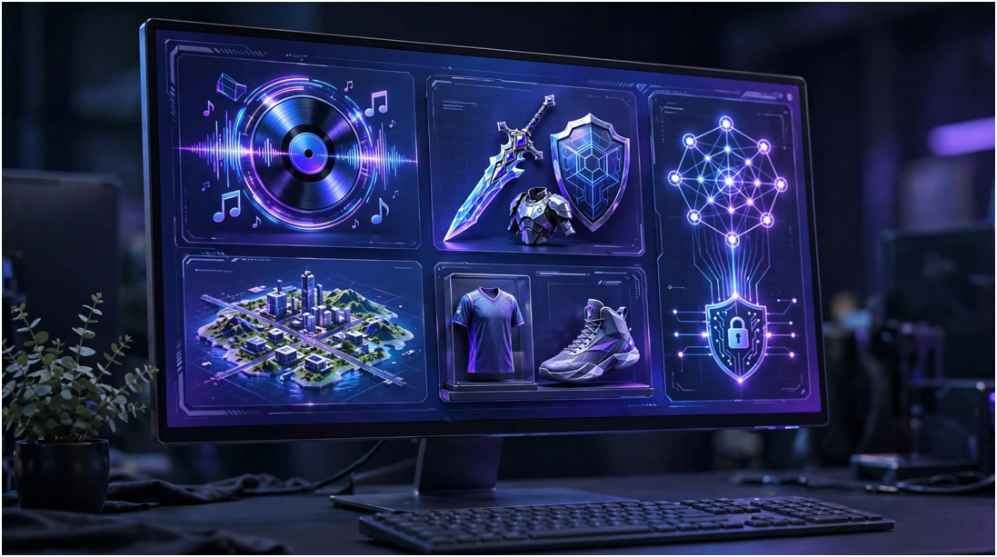
I once reviewed a marketplace concept with an impressive homepage but no clear transaction flow. That order was backwards. A useful NFT Marketplace begins with ownership, settlement, security, and customer needs—not visual effects.
Building one involves more than uploading digital artwork. Product teams must select networks, wallets, token standards, storage, payment systems, and revenue models. They must also plan for fraud, taxes, intellectual property, and customer support.
Table of Contents
ToggleWhat Does an NFT Marketplace Actually Need?
An NFT Marketplace needs a way to create or import tokens, display assets, verify ownership, list items, process purchases, and record transfers. Most platforms also require search, filters, user profiles, notifications, and administrative controls.
Its architecture may include a conventional website, database, blockchain indexer, wallet integration, smart contracts, and decentralized storage. Blockchain records do not replace every database. Search results, user preferences, and support records often remain off-chain.
The marketplace should explain what it controls. Users need to know who holds their funds, who can change platform rules, and what happens when the website becomes unavailable.
Which Marketplace Model Should You Choose?
The correct model depends on the target user and regulatory exposure. A consumer art platform has different needs from an enterprise licensing exchange or game-item market.
Before selecting technology, define the asset, user, transaction, network, and legal rights involved. This single decision prevents expensive architecture changes later.
Centralized and Custodial Platforms
A centralized operator controls major platform decisions. It may manage accounts, moderate content, hold assets, or facilitate traditional payments. This structure can create a familiar user experience.
Custody also creates responsibility. The operator may need stronger identity controls, fraud monitoring, financial safeguards, and account-recovery procedures. A breach can affect many customers simultaneously.
Centralized does not necessarily mean custodial. A company can operate the website while users retain assets in personal wallets. Teams should describe the arrangement precisely.
Decentralized and Non-Custodial Platforms
A non-custodial platform lets users authorize transactions from their own wallets. Smart contracts may execute trades without the operator taking possession of each asset.
This approach reduces some custody risks but introduces different threats. Users can approve malicious contracts, lose private keys, or interact with counterfeit collections. Smart-contract defects can affect every transaction using the contract.
Decentralization also exists on a spectrum. A platform may use immutable contracts while retaining control over its website, metadata, moderation, or upgrade keys.
What Features Make an NFT Trading Platform Useful?
A strong NFT Marketplace should provide accurate search and transparent asset information. Each listing should identify the creator, owner, blockchain, contract address, token standard, price, transaction history, and relevant rights.
Filters should match the niche. An art marketplace may filter by medium or collection. A gaming platform may use rarity, character type, level, or compatibility.
Wallet integration must show the network, requested permission, transaction amount, and expected fee. Error messages should explain failures in plain language.
Creators need simple minting, collection management, pricing, and performance analytics. Buyers need verified links, saved items, bid tracking, and clear fee disclosures. Administrators need moderation, dispute handling, risk alerts, and audit logs.
I apply the same usability rule to AI Marketing products: automation should reduce work without hiding critical decisions. An automated transaction is useful only when users understand what it will do.
How Do Smart Contracts Power NFT Transactions?
Smart contracts establish marketplace rules and automate transfers. They can create tokens, process fixed-price sales, manage auctions, divide payments, and verify wallet ownership.
Ethereum commonly uses the ERC-721 token standard for unique tokens. ERC-1155 can support multiple token types within one contract. The correct standard depends on supply, transfer behavior, and application needs.
Contracts should minimize unnecessary complexity. Every extra feature increases testing requirements and potential attack surface. Upgrade controls must also be transparent because administrators may retain significant power.
Marketplace operators should commission independent security reviews before handling valuable assets. An audit lowers risk but cannot guarantee perfect safety. Continuous monitoring and responsible disclosure remain necessary after launch.
How Can You Build an NFT Marketplace?
Marketplace development should begin with a complete transaction model. I define what the seller owns, what the buyer receives, how payment settles, and what happens when something fails.
This method exposes business and legal questions before they become expensive code.
Validate the Niche and Transaction
Select a narrow first audience. “All digital assets” rarely provides a useful starting position. A focused community makes search, moderation, features, and marketing easier to design.
Create one worked transaction. For example, a photographer lists a licensed image token for $100. The marketplace charges 2%, the payment processor charges 3%, and the seller receives $95 before taxes or network costs.
This reveals the platform’s real value proposition. It also shows whether the economics work at the intended price level.
Research competitors, interview likely users, and test a clickable prototype. Do not build minting infrastructure until users understand and value the proposed transaction.
Design the Architecture
Choose the blockchain based on security, transaction cost, ecosystem support, wallet availability, and expected volume. Avoid selecting a network only because it is fashionable.
Define which information belongs on-chain. Ownership and transfer records may use blockchain infrastructure. Profiles, search indexes, moderation notes, and analytics can remain in a conventional database.
Decide how media and metadata will be stored. The IPFS documentation explains content-addressed storage. Using IPFS does not automatically guarantee permanent availability, so teams must also plan persistence and pinning.
A broader Blockchain Hyperverse strategy may involve games, identity, communities, and virtual spaces. Interoperability should solve a user problem rather than exist as a promotional phrase.
Test and Launch Carefully
Test wallet connections, network switching, failed transactions, duplicate listings, auction timing, fee calculations, refunds, and contract permissions. Include mobile wallets and slow connections.
Run threat modeling before launch. Examine phishing, cross-site scripting, compromised administration, contract exploits, fake collections, wash trading, and metadata manipulation.
Launch with limits. Caps on minting, transaction value, or invited creators can reduce early exposure. Monitor error rates and suspicious activity before expanding access.
Publish plain-language documentation covering fees, custody, intellectual property, prohibited content, privacy, and support. Users should understand platform rules before connecting a wallet.
How Does an NFT Marketplace Make Money?
An NFT Marketplace can collect transaction, listing, minting, subscription, or payment-processing fees. Some platforms sell premium creator tools, analytics, promotion, or enterprise infrastructure.
The revenue model must match user value. High listing fees discourage experimentation. High sales fees push active traders elsewhere. Promotional placements can damage trust when paid visibility is unclear.
I prefer a transparent fee model with a public worked example. Show the listing price, marketplace charge, processor cost, network fee, royalty, and seller payout. Hidden economics create abandoned checkouts and support complaints.
Which Legal and Security Issues Matter?
NFTs can involve copyright, trademark, securities, consumer-protection, tax, privacy, and anti-money-laundering questions. Legal treatment depends on the token’s design and the platform’s activities.
The US Copyright Office and USPTO NFT study examines intellectual-property questions involving NFTs. Marketplace terms should require uploaders to hold appropriate rights and provide a clear takedown process.
US users may also face digital-asset tax reporting duties. Platforms should preserve usable transaction records without presenting generalized content as personal tax advice.
Security requires more than contract auditing. Protect administrative accounts, API keys, databases, front-end deployments, wallet connections, and customer-support channels. Many successful attacks target people and websites rather than the blockchain itself.
Frequently Asked Questions
1. How much does it cost to build an NFT Marketplace?
Cost depends on custody, smart contracts, networks, payment methods, audits, moderation, and custom features.
2. How long does NFT marketplace development take?
A focused prototype may take weeks, while a secure production platform can require several months or longer.
3. Does an NFT trading platform need its own token?
No; many platforms operate successfully using existing blockchain currencies and conventional fee models.
4. Can a business create an NFT marketplace without coding?
White-label tools can reduce development, but security, compliance, contracts, branding, and operational responsibilities remain.
Build the Transaction, Not the Hype
A successful NFT Marketplace does not begin with a giant collection or flashy roadmap. It begins with one transaction that users understand, trust, and willingly repeat.
My recommended next step is to map a single purchase from listing to seller payout. Include every permission, fee, failure point, and support action. If that experience is not clear on paper, adding code will only make the confusion more expensive.