
The first thing that grabbed me about this acid green velvet grace krilanovich book review was not the promised weirdness. It was how naturally class warfare, family damage, Gothic horror, and California mythology appear to feed the same nightmare.
There is one important distinction for readers searching for a verdict right now. Acid Green Velvet is scheduled for publication in the United States on September 8, 2026. This is therefore an advance review based on official publication materials and published advance criticism, rather than a claim of post-release reader consensus. Penguin Random House lists the novel at 336 pages, published by Two Dollar Radio.
A Strange Return Worth Paying Attention To

Grace Krilanovich has not published a novel since The Orange Eats Creeps arrived in 2010. That sixteen-year gap instantly makes Acid Green Velvet noteworthy.
Yet anticipation alone would not make this acid green velvet grace krilanovich book review interesting. What fascinates me is how little the new novel seems interested in making Krilanovich easier to categorize.
Her first novel established a cult reputation through fragmented, hallucinatory fiction. The new book shifts toward late nineteenth-century California but keeps the instability. Historical fiction becomes Gothic Western. Social satire becomes nightmare. Class politics mingle with haunted houses, spiritualism, fringe communities, vampiric imagery, and itinerant outsiders.
Lit Hub included the novel among its anticipated books of 2026, reflecting how much curiosity surrounds Krilanovich’s return.
Readers drawn to unusual literary fiction may also find the yniga glenn diaz book worth exploring for another approach to socially observant contemporary storytelling.
Acid Green Velvet Plot: Class War in Gilded Age California
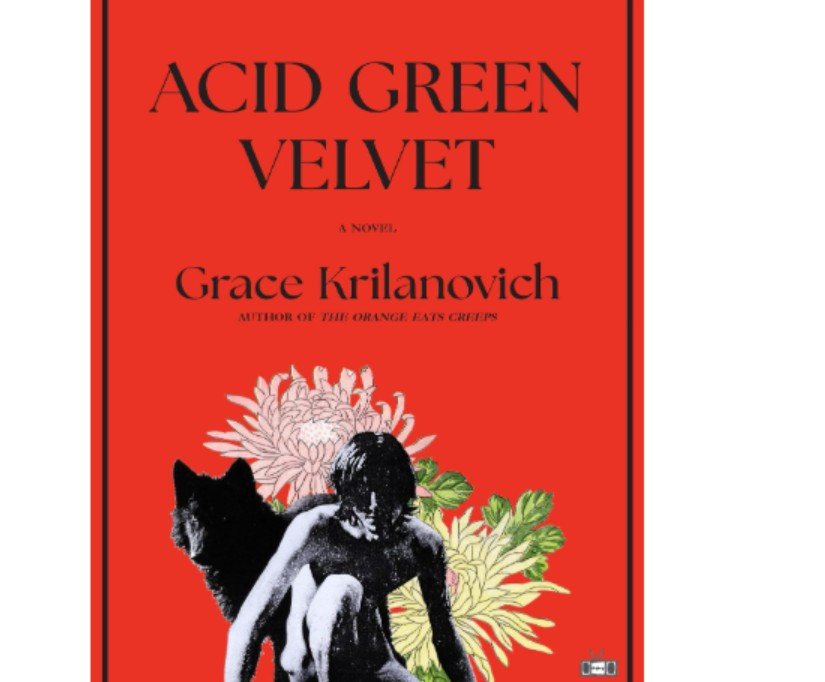
Image Credit: Amazon
The official premise begins with Paulette and Kenneth, two young wanderers who threaten Paulette’s dangerous father, Rodney Eligon.
Their attempt to escape him does not produce a clean break.
Years later, Paulette reaches Anzar, a strange California town populated by cults, eccentrics, alternative religions, transient communities, and entrenched wealth. She takes up residence with Johnny Hasley, heir to the family that has dominated Anzar for generations.
Paulette, Kenneth, and the Hasley World
Paulette hopes Johnny can provide something close to security. The problem is that Johnny’s politics appear more fashionable than sacrificial. He can perform solidarity while remaining protected by inherited wealth.
Then Kenneth returns.
His appearance threatens both Paulette’s ambitions and the version of her past she has tried to outrun. Rodney also re-enters the larger conflict, helping turn resentment among workers and itinerant people toward Anzar’s established owners.
Publishers Weekly describes the resulting story as one of class war and youthful rebellion, with the conflict expanding as the narrative moves into the early 1880s.
That makes the acid green velvet grace krilanovich book review more complicated than a simple plot assessment. The real question is what happens when everyone claims freedom while depending on someone else’s vulnerability.
Anzar Is More Than a Setting
Anzar looks especially compelling because it seems designed as a social experiment that has started decomposing.
The wealthy Hasleys sit above the town. Workers push upward. Itinerant communities move through spaces established society would rather control. Cults and alternative belief systems offer competing forms of belonging.
I read that setup as deliberate compression. Krilanovich turns one fictional California town into a miniature argument over who gets land, safety, status, and legitimacy.
Readers fascinated by literary fiction that makes place feel unstable may also want the theres a monster in the lake laura fernandez book, especially for another form of reality-bending narrative energy.
What Makes the Novel’s Psychedelic Noir Style Different?

Style may be the main reason to follow this acid green velvet grace krilanovich book review rather than stopping after the synopsis.
Publishers Weekly gave the book a starred review and singled out Krilanovich’s prose as its major attraction. The official publisher page also groups the novel with Western fiction while describing its combination of domestic Gothic anxiety, pollution, spiritualism, living death, fringe societies, and class parasitism.
That mixture matters because Krilanovich does not seem interested in historical reconstruction for its own sake. The past becomes chemically unstable.
My Anzar Pressure Test: House, Street, Body
My most useful way of interpreting the novel’s advance material is through three spaces.
The house represents inherited protection. Johnny can experiment with radical identity because the Hasley manor still cushions him.
The street represents movement and rebellion. Paulette, Kenneth, Rodney, workers, and transient communities expose how fragile respectable society becomes when outsiders organize.
The body represents the cost. Desire, hunger, violence, contamination, fear, and vampiric imagery make political conflict physical.
That house-street-body structure is what makes the acid green velvet grace krilanovich book review especially intriguing to me. Class is not presented as an abstract economic lecture. It enters rooms, clothing, relationships, dirt, sex, danger, and survival.
Gothic Western Themes Beneath the Weirdness
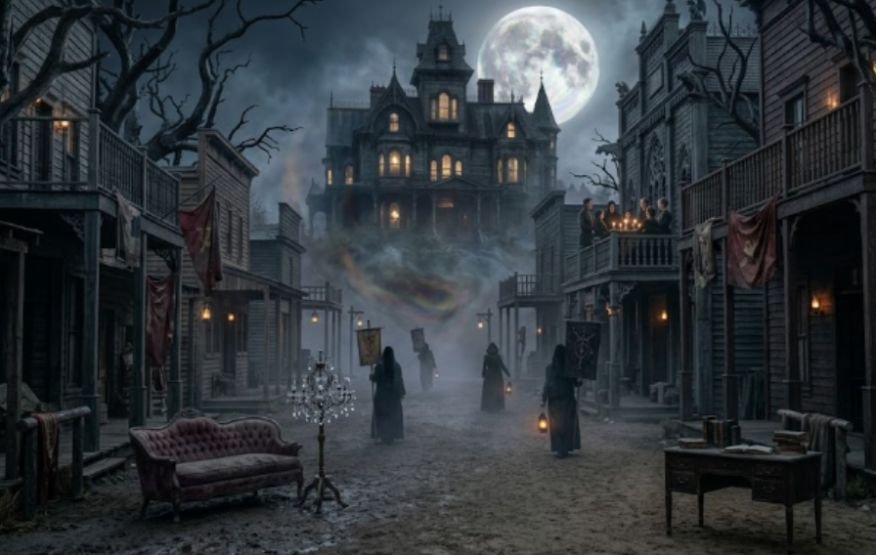
The book’s strangeness could easily distract from its serious themes.
Manifest destiny sits beneath the California setting. Family power intersects with land ownership. Johnny’s faux-socialism raises questions about wealthy people adopting radical aesthetics without surrendering privilege.
Paulette adds another layer. Reinvention can look like freedom, but survival may also require attaching yourself to whatever power is available.
Krilanovich appears interested in failed fathers as well. Rodney’s presence ties private family damage to larger public disorder. Authority fails at home before it fails across the town.
For readers studying experimental fiction that turns environment and social structures into narrative forces, the dams irene sola book offers another useful internal reading path.
Who Will Enjoy Acid Green Velvet?
My acid green velvet grace krilanovich book review recommendation comes with one major qualification: readers should want intensity more than neatness.
This does not appear built for someone seeking transparent historical realism or a gentle period drama. The attraction is collision.
Readers of experimental literary fiction, Gothic Westerns, psychedelic noir, countercultural history, surreal fiction, and class-conscious novels appear to be the strongest audience.
Fans of Krilanovich’s earlier work have another reason to pay attention. Acid Green Velvet does not seem designed as a safer comeback. The early descriptions suggest an author doubling down on density and disorientation.
What Early Critics Are Saying
Advance criticism has been unusually enthusiastic.
Publishers Weekly awarded the novel a starred review and praised both its class-war narrative and prose. Kirkus, as quoted by Two Dollar Radio and Penguin Random House, describes the book as impressive and emphasizes the explosive quality of Anzar.
Authors including Jeff VanderMeer, Steve Erickson, Aimee Bender, and Ben Ehrenreich have also praised Krilanovich’s originality and stylistic force.
The pattern matters more than any single blurb.
Early responses repeatedly return to the same combination: historical scope, aggressive prose, surreal atmosphere, and social conflict. That consistency gives this acid green velvet grace krilanovich book review a stronger basis for recommendation than hype alone.
Verdict: Beautiful, Ferocious, and Not Here to Behave
My verdict is simple: Acid Green Velvet looks like one of 2026’s most interesting risks in American independent publishing.
Nothing about it sounds designed for passive reading. The California setting bends. Class identities become costumes. Homes become ideological fortresses. Wanderers threaten established order. Gothic imagery makes social decay visible.
That is why the acid green velvet grace krilanovich book review ultimately lands on anticipation rather than easy praise. The available evidence suggests a demanding novel whose style is inseparable from its politics.
My next step for readers would be to approach it as a Gothic social novel rather than expecting a conventional Western. Pay attention to who owns space, who performs rebellion, and who can leave when things become dangerous. Those three questions may unlock Anzar faster than chasing every surreal image literally.
Frequently Asked Questions
1. What is Acid Green Velvet by Grace Krilanovich about?
It follows Paulette, Kenneth, and the powerful Hasley family amid class rebellion, itinerant communities, Gothic strangeness, and social upheaval in nineteenth-century California.
2. When does Acid Green Velvet come out?
Two Dollar Radio and Penguin Random House currently list the U.S. publication date as September 8, 2026.
3. What genre is Acid Green Velvet?
It blends literary fiction, Gothic Western elements, psychedelic noir, historical fiction, social satire, and surreal horror.
4. Is the acid green velvet grace krilanovich book review verdict positive?
Yes, based on the available advance material and strong early criticism, though readers should expect dense, experimental storytelling rather than conventional historical fiction.