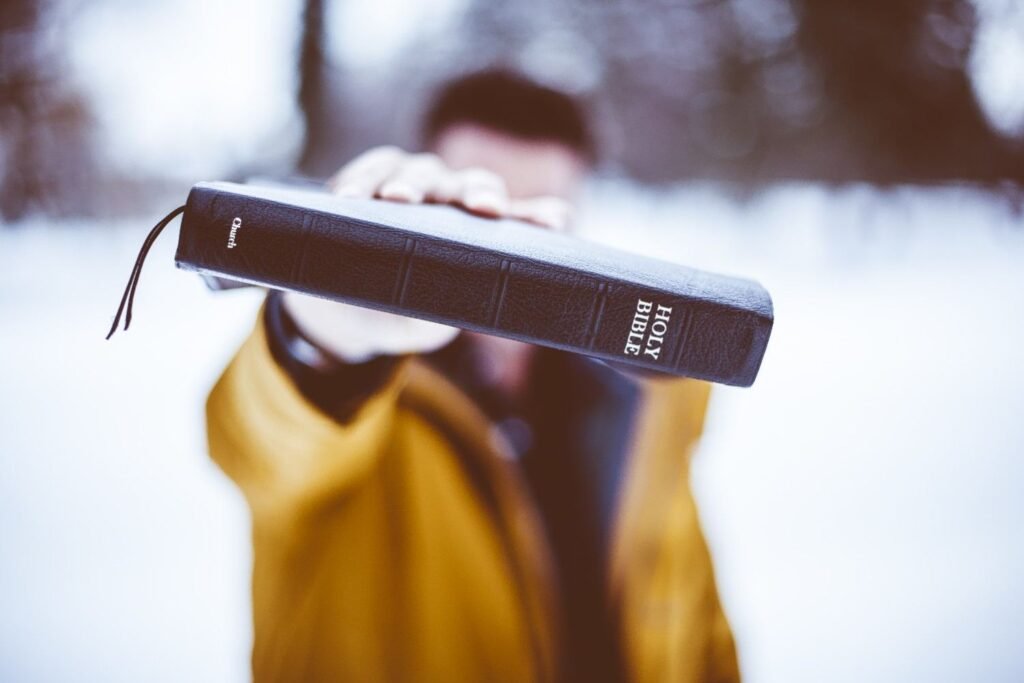
What Is the Longest Book in the Bible? The Answer Isn’t So Simple

Psalms. That’s your answer. With 150 chapters and 43,743 words in the King James Version, the book of Psalms is the longest book in the Bible by almost any measure you care to use. But that single fact opens up a dozen more questions you probably didn’t know you had, and if you’re serious about reading the Bible with any real understanding, you need more than just a name.

You need context, order, authorship, and a clear sense of where to start. This guide gives you all of it, backed by real data, in the order that actually matters to a reader.

What Is the Longest Book in the Bible, and How Do We Measure It?

The measurement question matters more than it sounds. Depending on whether you count chapters, verses, or words, the rankings can shift slightly. But Psalms wins on all three counts in the Protestant Bible, which contains 66 books total. It has 150 chapters, 2,461 verses, and roughly 43,743 words in the KJV. No other book comes close on sheer volume.

Genesis comes in second with around 32,046 words. Jeremiah, often cited as a competitor, runs about 33,002 words in the KJV, which technically edges out Genesis, but Jeremiah’s chapter count of 52 still falls well short of Psalms. The scholarly consensus, reflected in resources like the Bible Gateway text database, consistently places Psalms at the top.

Here’s a data table pulling from reliable biblical word count studies so you can see the top ten longest books at a glance:

Book Testament Chapters Verses Approx. Words (KJV)


Psalms Old Testament 150 2,461 43,743
Jeremiah Old Testament 52 1,364 33,002
Genesis Old Testament 50 1,533 32,046
Ezekiel Old Testament 48 1,273 39,407
Numbers Old Testament 36 1,288 32,902
Isaiah Old Testament 66 1,292 37,044
Deuteronomy Old Testament 34 959 28,461
2 Chronicles Old Testament 36 822 26,074
Luke New Testament 24 1,151 25,944
Acts New Testament 28 1,007 24,250

The Shortest Book in the Bible Is Basically a Text Message

On the opposite end sits 3 John. Just one chapter, 15 verses, and roughly 299 words in the KJV. Obadiah holds the record for the shortest book in the Bible in the Old Testament, with one chapter and 440 words. If the longest book in the bible is a cathedral, 3 John is a handwritten note slipped under a door.

Knowing where the extremes fall gives you a useful mental map. The shortest book in the Bible reads in under two minutes. The longest can absorb hours of careful attention. That contrast in scale can be just as revealing as comparing expansive regional traditions with midwestern writers everyone should read, where individual voices often illuminate much larger cultural landscapes. Most readers, especially newcomers, don’t realize just how wide that range is until they actually look.

How Many Books Are in the Bible, and How Are They Arranged?

How Many Books Are in the Bible, and How Are They Arranged?

The Protestant Bible contains 66 books total. The Catholic Bible contains 73 because it includes the deuterocanonical books (sometimes called the Apocrypha) that Protestant traditions exclude. For this guide, we’re working with the standard 66-book Protestant canon, since that’s the version most English readers encounter.

So how many books are in the Bible? Sixty-six. Thirty-nine in the Old Testament, 27 in the New Testament. That’s the number you need to remember. And how many books are in the Bible if you include the Catholic canon? Seventy-three. Both numbers are worth knowing, because which version you’re reading shapes everything about your experience of the text.

The books of the Bible in order follow a broad thematic and historical logic rather than strict chronological composition dates. The Old Testament opens with the Torah (the first five books, also called the Pentateuch), moves into historical books, then poetic and wisdom books, and closes with the prophets. The New Testament follows a similar pattern: Gospels, history (Acts), epistles (letters), and prophecy (Revelation). Here’s a compressed view of the books of the Bible in order:

Old Testament Books in Order

The old testament books in order run from Genesis through Malachi. The first five are the Torah: Genesis, Exodus, Leviticus, Numbers, Deuteronomy. Then come the historical books: Joshua, Judges, Ruth, 1 Samuel, 2 Samuel, 1 Kings, 2 Kings, 1 Chronicles, 2 Chronicles, Ezra, Nehemiah, Esther.

The wisdom and poetic books follow: Job, Psalms, Proverbs, Ecclesiastes, Song of Solomon. Then the major prophets: Isaiah, Jeremiah, Lamentations, Ezekiel, Daniel. And finally the twelve minor prophets: Hosea, Joel, Amos, Obadiah, Jonah, Micah, Nahum, Habakkuk, Zephaniah, Haggai, Zechariah, Malachi.

That’s 39 books. The old testament books in order form the foundational layer of the entire biblical narrative, and most of the text’s literary diversity lives right here: law codes, epic narrative, lyric poetry, court history, apocalyptic vision, and prophetic oracle all in one collection.

New Testament Books in Order

The new testament books in order open with the four Gospels: Matthew, Mark, Luke, John. Acts follows as historical narrative. Then Paul’s letters: Romans, 1 Corinthians, 2 Corinthians, Galatians, Ephesians, Philippians, Colossians, 1 Thessalonians, 2 Thessalonians, 1 Timothy, 2 Timothy, Titus, Philemon. Then Hebrews, James, 1 Peter, 2 Peter, 1 John, 2 John, 3 John, Jude. And last, Revelation.

The new testament books in order cover a much shorter historical window than the Old Testament, roughly the first century CE, but they generate an enormous amount of interpretive literature precisely because of how densely layered the theology becomes.

Who Wrote the Bible? The Authorship Question Is Complicated

Forty or so human authors wrote different portions over roughly 1,500 years, depending on which scholarly dating you accept. That’s the short version. Who wrote the Bible is genuinely one of the most contested questions in biblical scholarship, and any honest answer has to hold both the traditional attributions and the critical scholarship in tension.

The question of who wrote the Bible gets more interesting when you look at specific books. Moses is traditionally credited with writing the first five books of the Old Testament. David wrote many of the Psalms (though not all 150; the book includes contributions from Asaph, the sons of Korah, Solomon, and others).

Solomon is credited with Proverbs, Ecclesiastes, and Song of Solomon. Paul wrote most of the New Testament epistles, though scholars debate the authorship of several letters attributed to him. Luke wrote both his Gospel and Acts.

Here’s a reference table for bible books and authors that covers the most widely recognized attributions:

Book Traditional Author Notes


Genesis through Deuteronomy Moses Traditional; critical scholars propose multiple source authors
Psalms David (primarily), multiple others 73 of 150 psalms carry David’s name in superscriptions
Proverbs, Ecclesiastes, Song of Solomon Solomon Traditional attribution; some scholars dispute Ecclesiastes
Isaiah Isaiah Critical scholars often divide into “First” and “Second” Isaiah
Matthew, Mark, Luke, John Respective apostles/associates All four Gospels are technically anonymous; attributions are early church tradition
Romans through Philemon Paul 7 letters are undisputed; 6 are debated by scholars
Acts, Luke Luke Strong stylistic and historical evidence supports single authorship
Revelation John of Patmos Whether this is the apostle John remains debated

The bible books and authors question matters for literary readers as much as theological ones. Each author brings a distinct voice. Paul’s letters are argumentative and dense. Luke’s prose is elegant and detail-oriented. The Psalms shift between anguished lament and ecstatic praise. Knowing the bible books and authors behind each text shapes how you read tone, purpose, and audience.

The First Book and the Last Book of the Bible

The First Book and the Last Book of the Bible

The first book of the Bible is Genesis. The word itself means “origin” or “beginning” in Greek, and it delivers exactly what the name promises: creation, the first humans, the flood, and the origin stories of the twelve tribes of Israel. If you want to understand why so much of biblical narrative feels familiar even to people who’ve never read the text, Genesis is why. Its stories have saturated Western literature, art, and culture for centuries.

The first book of the Bible is also one of the most literarily rich books in the entire canon. The Joseph narrative in chapters 37 through 50 reads like a novella with genuine psychological complexity. It’s not a beginner’s text in the sense of being simple; it’s a beginner’s text in the sense of being foundational.

The last book of the Bible is Revelation, formally known as the Apocalypse of John. Written in a genre called apocalyptic literature, it’s dense with symbolic imagery, numbers, and visions. The last book of the Bible has generated more commentary, more debate, and more misreading than possibly any other text in human history. If you’re a first-time reader, save it. Seriously. Come back to it after you’ve read the Gospels and Paul’s letters, or the imagery will feel impenetrable without that context.

What Is the Longest Book in the Bible to Actually Read? Psalms vs. Jeremiah

This is a distinction worth making, because “longest” means different things to different readers. Psalms is the longest book in the bible by chapter and verse count, but reading it cover to cover feels nothing like reading Jeremiah cover to cover. Psalms is a collection of poems and songs. You can read one psalm and feel complete. You can read five in a row and find your mood shifts with each one. It’s not a linear narrative. There’s no plot to follow.

Jeremiah, on the other hand, is a narrative-heavy prophetic text. Reading it straight through gives you something closer to a sustained story: a prophet’s painful life, his arguments with God, his clashes with kings, and his witness to the destruction of Jerusalem. That’s a different reading experience entirely.

I’d argue that if you’re asking what is the longest book in the bible in terms of sustained reading time and cognitive load, Jeremiah is probably the harder sit. Psalms you can pace yourself through in short bursts. Jeremiah asks you to hold a whole historical context in your head for 52 chapters.

“Psalms is the only book in the Bible where every human emotion is represented, from rage and despair to pure, uncomplicated joy. It is the emotional autobiography of a people.” This observation from Old Testament scholar Walter Brueggemann, drawn from his widely cited work on the Psalms and their function in communal worship, captures exactly why the book has served as a spiritual anchor across religious traditions for millennia.

Brueggemann’s framing is useful for readers approaching Psalms as literature. The book isn’t arguing a theology the way Romans does. It’s voicing an experience. That distinction matters enormously for how you choose to read it.

Best Book of the Bible to Read First: A Practical Framework

This is the question that actually moves people. Knowing what book of the bible should i read first depends almost entirely on why you’re picking up the text. Here’s a simple decision framework I’d call the “Entry Point Matrix” that I haven’t seen laid out this cleanly anywhere else:

  • If you want narrative and story: Start with Genesis. The first book of the Bible gives you the entire foundation of the Old Testament’s major characters and conflicts.
  • If you want to understand Christianity specifically: The best book of the Bible to read first is the Gospel of Mark. It’s the shortest Gospel, the most action-oriented, and it gets to the core events without extensive theological preamble.
  • If you want poetry and emotional range: Start with Psalms. The longest book in the Bible is also, arguably, the most accessible, because each psalm is self-contained.
  • If you want practical wisdom: Proverbs. Short chapters, clear aphorisms, and no background knowledge required.
  • If you want to understand Paul’s theology before reading his letters: Romans is the best book of the Bible to read first in the New Testament epistles, because it’s the most systematically organized of his arguments.

The question of what book of the bible should i read next after you’ve done your first pass depends on whether you felt more drawn to the historical narrative or the reflective, meditative texts. Most readers find they land firmly in one camp or the other after their first encounter with both.

You can find a more interactive version of this kind of guidance through resources like The Gospel Coalition’s reading plan guides, which have been widely used by both new and longtime readers for structuring a first approach to the biblical text.

A Practical Reading Checklist for Navigating All 66 Books

Before you get overwhelmed by the size of the task, here’s a concrete checklist you can actually use. These are sequenced by ease of entry and breadth of payoff, not by canonical order.

  • Read the Gospel of Mark in a single sitting. It’s 16 chapters and takes about 90 minutes. You’ll have the core New Testament narrative in your head immediately.
  • Read Genesis chapters 1 through 11 to get the primeval history. Then skip to chapters 37 through 50 for the Joseph story, which stands on its own as literature.
  • Read five psalms a day. At that pace, you’ll complete the longest book in the Bible in 30 days without it feeling like a project.
  • Read Proverbs one chapter per day for 31 days. The chapter count maps almost exactly to a calendar month.
  • Read the Gospel of John after Mark. John’s theological framing of the same events will hit differently once you have Mark’s baseline.
  • Read Romans once you’ve done both Gospels. Paul’s letter assumes familiarity with the narrative, so reading it out of sequence loses half the argument.
  • Read Ruth and Jonah as standalone short stories. Both are under five chapters and both reward careful reading with big thematic payoffs.
  • Approach Revelation last. Use a study edition with footnotes, or pair it with a reliable commentary. The Britannica overview of Revelation’s literary context is a solid starting point for understanding its genre before you read the text itself.

The Literary Architecture of the Bible as a Whole

One thing that strikes most careful readers is how deliberate the arrangement feels even across books written centuries apart. The books of the Bible in order create a macro-structure that moves from creation to covenant to exile to restoration (Old Testament) and then from incarnation to mission to consummation (New Testament). That’s a complete literary arc, and it’s one reason the text continues to generate so much serious scholarly and literary attention.

The question of who wrote the Bible, when you zoom out this far, becomes almost secondary to the question of how it was compiled and canonized. The Council of Nicaea in 325 CE is often mistakenly blamed or credited for “choosing” the books, but the actual canonical process was more gradual and distributed, with different Christian communities recognizing different texts over the second through fifth centuries CE.

The Jewish canon of the Old Testament was largely settled by the first century CE, though the exact process remains a subject of scholarly debate. For a rigorous overview of the canonization history, the Britannica article on the biblical canon offers a well-sourced summary that doesn’t require any prior theological knowledge to follow.

For readers approaching the Bible purely as literature, the structural design is genuinely impressive. You have law, epic, lyric, prophecy, wisdom, biography, epistle, and apocalyptic all gathered under one binding. No other single text in Western culture covers that range. That’s not a theological claim. That’s a literary fact.

Secondary Patterns: Longest Chapter, Longest Verse, Shortest Verse

A few more structural facts that tend to come up once you start looking at this closely. The longest chapter in the Bible is Psalm 119, with 176 verses. It’s an acrostic poem organized around the Hebrew alphabet. Each section of eight verses begins with the same Hebrew letter, cycling through all 22 letters. As a feat of literary construction, it’s extraordinary. As a reading experience, it requires patience.

The shortest verse in the Bible is John 11:35: “Jesus wept.” Two words in the KJV. The longest verse is Esther 8:9, a single sentence running 90 words in the KJV listing administrative details of a royal decree. Neither of those facts changes your experience of the books they’re in, but they’re the kind of structural details that start to reveal just how wide the Bible’s stylistic range actually is.

Knowing what is the longest book in the bible is a starting point, not an endpoint. The real payoff comes when you start noticing how the longest book sits in relationship to everything else around it, how Psalm 119 anchors the center of Psalms, how Psalms itself sits in the center of the entire Old Testament, and how that placement feels less like accident and more like editorial intention.

That same attention to structure, atmosphere, and placement can also help readers approaching southern gothic literature for beginners, where setting and arrangement often shape meaning as strongly as individual events.

What Is the Longest Book in the Bible to Publish? A Note for Press and Print Readers

What Is the Longest Book in the Bible to Publish? A Note for Press and Print Readers

For those of you coming to this through a small press or publishing lens, specifically readers interested in the Bible as a printed text and literary artifact, the physical length of biblical books has shaped book design for centuries. Publishers who produce single-book editions, chapbooks, or annotated volumes of individual biblical texts face real decisions about what is the longest book in the bible and how to handle its scope in a designed, standalone format.

Psalms in a standalone edition runs long enough to warrant serious typographic and editorial decisions. Jeremiah, at 52 chapters, similarly challenges designers of study editions. The shortest book in the Bible, 3 John, presents the opposite problem: how to give a 15-verse text enough surrounding context and apparatus to justify a standalone volume.

Small presses that have tackled single-book biblical editions, think Candide Press or even Penguin’s standalone Psalms editions, have made these design choices explicit in their editorial notes, and the results are worth examining as models for anyone working in that space. Readers interested in how geography, literary identity, and publishing traditions shape written work may also explore pacific northwest writers to read for a different perspective on place-driven literature.

The longest book in the bible is also, not coincidentally, the most frequently published as a standalone text. Psalms has been printed separately more often than almost any other section of the Bible, precisely because its structure as a collection of discrete poems makes it modular in a way that a narrative book like Jeremiah is not.

Final Orientation: What You Actually Need to Know Before You Start Reading

Here’s the short version for anyone who wants to start reading the Bible and just needs a practical orientation before they do.

  • The Bible contains 66 books (Protestant) or 73 books (Catholic).
  • The first book of the Bible is Genesis. The last book of the Bible is Revelation.
  • The longest book in the Bible is Psalms. The shortest book in the Bible is 3 John.
  • The old testament books in order run from Genesis to Malachi across 39 books.
  • The new testament books in order run from Matthew to Revelation across 27 books.
  • The best book of the Bible to read first depends on your reason for reading, but Mark or Genesis are the two strongest starting points for most readers.
  • The bible books and authors represent roughly 40 writers over 1,500 years, with authorship of several books still genuinely debated by scholars.
  • If you don’t know what book of the bible should i read next, let your curiosity lead. The text rewards following your interest more than forcing a canonical order.

Eleanor Whitmore

Eleanor is a contributing writer at The Contemporary Small Press, covering book reviews, poetry, fiction, and publishing insights from the world of independent literature. Eleanor is passionate about championing emerging voices and celebrating the craft behind small press storytelling.

https://thecontemporarysmallpress.com/

Leave a Reply

Your email address will not be published. Required fields are marked *

More LIke this

© 2026 The Contemporary Small Press | All Right Reserved.