Some novels tell a story. Irene Solà’s debut keeps asking who has the right to capture one, distort one, and release it back into the world. In this dams irene sola book review, what grabs me most is not simply Ada’s homecoming. It is watching an entire village become combustible material for fiction.
Dams, originally published in Catalan as Els dics, is translated into English by Mara Faye Lethem. For US readers, Graywolf Press has scheduled its edition for November 3, 2026. The publisher describes it as Solà’s playful, metafictional first novel.
What Is Dams by Irene Solà About?
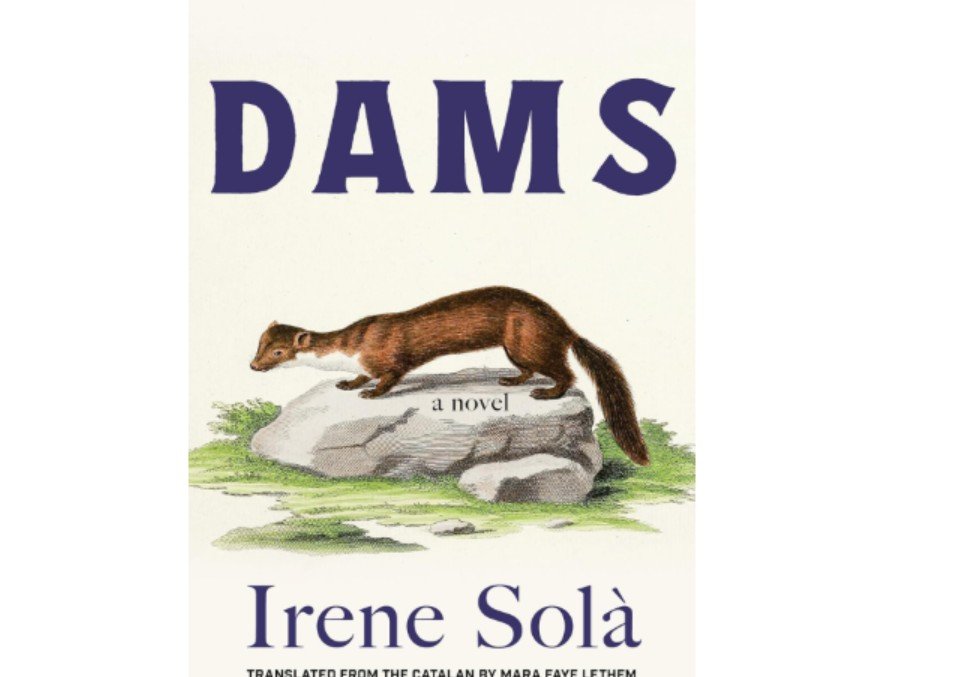
Image Credit: Amazon
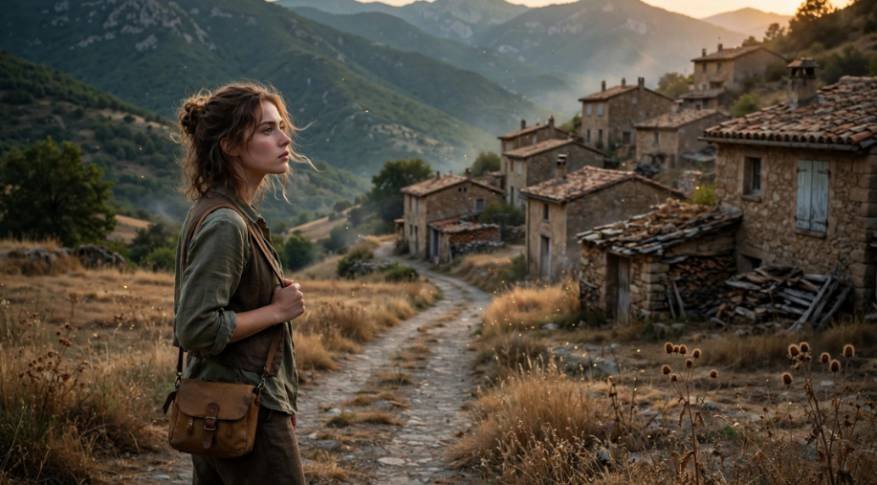
Ada returns to her rural Catalan village after studying in London. Home is familiar, but she no longer occupies it in quite the same way. She reconnects with relatives, childhood friends, Vicenç Jr., and the slow rhythms of village life.
Then she starts writing.
Each morning, Ada turns people, incidents, memories, and rumors into stories. Realistic observations gradually mutate into dark comedy, fantasy, horror, folklore, and surreal invention. Graywolf describes the novel as alternating between Ada’s life and the stories Ada creates.
That distinction matters to any dams irene sola book review. Plot alone cannot explain what Solà is doing. The real movement occurs between lived experience and its transformation into fiction.
Readers exploring other unconventional contemporary books might pair it with asmodeus rita indiana book. Solà’s work is more pastoral and playful, but both resist comfortable literary boundaries.
Metafiction, Magical Realism, and Rural Catalonia
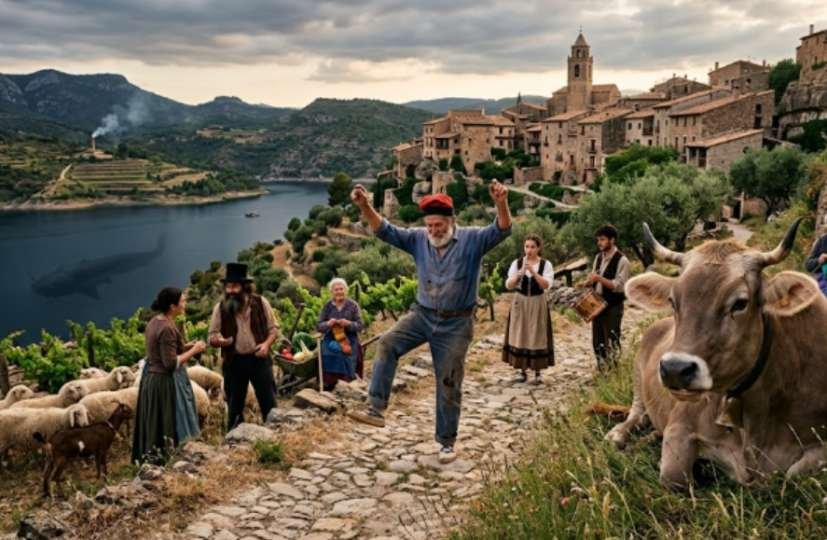
A farmer who lost two fingers in a combine still loves dancing. Josefa Puig survives a cow attack. A cow develops its own strange inner life. Gold earrings reach the Sau Reservoir, where an enormous catfish swallows them.
These details could sound like unrelated eccentricities. On the page, they serve a larger purpose. Solà shows how quickly ordinary events can become stories, myths, jokes, nightmares, or legends.
My central reading in this dams irene sola book review begins with the title.
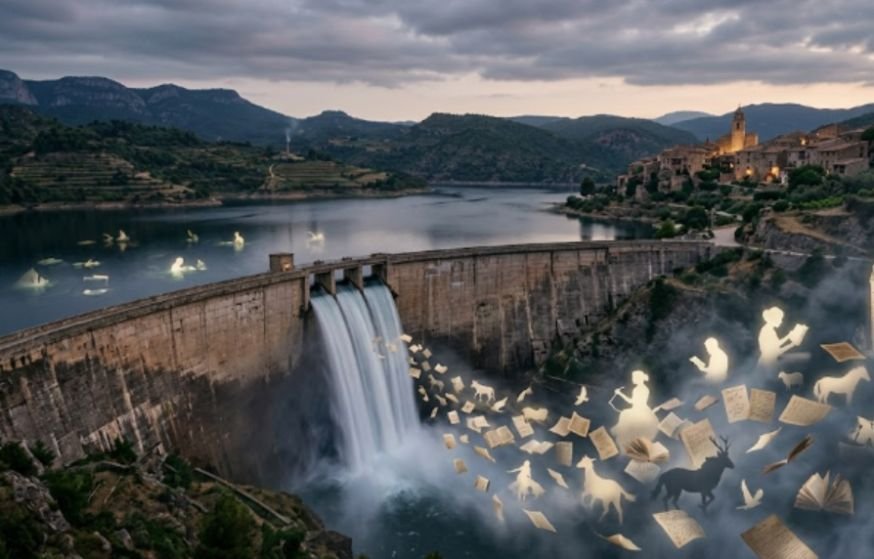
A dam exists to hold back force. Ada appears to do something similar when she writes. She captures experiences and gives them form. Yet every story she creates seems capable of spilling beyond the boundary she built for it.
The village therefore becomes more than a setting. It is a storytelling system that refuses containment.
Why the Fragmented Structure Works
Experimental novels sometimes mistake complexity for depth. I use a three-question test when assessing unusual structure:
Does the form create meaning? Does it add emotional pressure? Would a conventional structure lose something essential?
For me, Dams clears all three hurdles.
Ada is both an insider and an outsider. She belongs to this community, yet London has given her distance from it. A fragmented structure suits that unstable position. Her village reaches her through encounters, recollections, inventions, and competing perspectives rather than one clean storyline.
That creates an interesting contrast with whyteface a igoni barrett book, another work where questions of identity and perception matter. Solà, however, destabilizes reality by multiplying narratives rather than directing everything through a single dependable version of events.
Characters Who Turn a Village Into a Story Engine
The characters are where this dams irene sola book review becomes especially interesting.
Ada organizes the novel, but she does not monopolize its imagination. Vicenç Sr., Josefa Puig, animals, old lovers, rumors, and even the reservoir become part of its narrative ecosystem.
Samantha the cow is perhaps the clearest sign that readers should abandon conventional hierarchy. Human beings do not automatically matter more because they are human. Animals can become philosophical. Objects can carry history. Landscape can influence narrative as strongly as dialogue.
Granta calls the novel an ode to community, enduring love, and imagination, while its description emphasizes the constant movement between Ada and her invented stories.
A strong dams irene sola book review therefore needs to ask more than, “Who are the main characters?” A better question is, “Who receives narrative authority?”
Solà repeatedly expands the answer.
Mara Faye Lethem’s Translation and Solà’s Developing Style
Mara Faye Lethem translates the novel from Catalan. She has also translated Solà’s When I Sing, Mountains Dance, giving English-language readers unusual continuity across the author’s work. Graywolf identifies Lethem as an award-winning translator whose work includes several contemporary Catalan and Spanish-language writers.
That continuity matters because Solà relies heavily on voice, rhythm, tonal shifts, and sudden changes in perspective.
The dams irene sola book review also becomes more revealing when the debut is considered alongside her later fiction. Many techniques associated with Solà are already visible here: nonhuman perspectives, folklore, rural landscapes, unruly narrators, and blurred borders between memory and invention.
Graywolf’s description of When I Sing, Mountains Dance similarly emphasizes its polyphonic world and its movement across human, historical, and even geological perspectives.
Readers interested in spare European experimentation may also recognize points of connection with range dorthe nors book. Solà feels more exuberant and folkloric, but both writers ask readers to accept form as part of meaning.
Is Dams Worth Reading?
Yes, with one qualification.
My dams irene sola book review is strongly positive for readers who enjoy experimental literary fiction. It is a less obvious recommendation for someone seeking a tightly engineered plot with escalating conflict and a neat resolution.
Readers who actively look beyond major bestsellers for unusual voices and inventive storytelling may also want to explore new fiction books worth discovering, especially if they enjoy translated literature, experimental structures, and novels that challenge conventional expectations.
Its pleasures accumulate instead.
A village incident gains a strange new edge. An animal suddenly matters. A story wanders somewhere unexpected. Another voice appears. Gradually, those fragments begin forming a larger argument about how humans create meaning from experience.
I would recommend Dams most strongly to readers interested in translated fiction, metafiction, folklore, magical realism, nonhuman narration, and unconventional points of view.
Writers may get even more from it. The novel provides a useful study in how changing perspective can transform an ordinary event without changing its basic facts.
The Dam Breaks, and That Is the Point
My favorite way to understand Dams is as a novel about failed containment.
Ada returns home and tries to capture life through language. Instead, stories multiply. They exaggerate, escape, contradict, mutate, and acquire lives beyond their original subjects.
That is why this dams irene sola book review lands on a strong recommendation. Do not approach Solà’s debut expecting a conventional plot machine. Read it for voice, storytelling, community, and the delicious instability between reality and invention.
For writers, try one exercise after reading: choose a mundane event from the novel and track every way Solà changes it through perspective, tone, exaggeration, or fantasy. That reveals far more about her craft than memorizing the plot.
Frequently Asked Questions
1. What is Dams by Irene Solà about?
It follows Ada returning to her Catalan village and transforming local people, memories, and incidents into increasingly imaginative stories.
2. Is Dams Irene Solà’s first novel?
Yes. Dams, originally published as Els dics, is Irene Solà’s debut novel.
3. Who translated Dams into English?
Mara Faye Lethem translated Dams from Catalan into English.
4. Is Dams magical realism or experimental fiction?
It fits both categories, combining metafiction, folklore, surreal imagery, fragmented narration, rural realism, and nonhuman perspectives.