Freida McFadden wrote a novel so twisty that readers genuinely gasped at page 300. How did Andrew die in The Housemaid book is one of the most searched questions on the internet right now, and for good reason. The answer is not what you expect.
This article gives you the full breakdown of Andrew’s fate, the mechanics of the ending, and why the reveal lands so hard. Spoilers start now, and they do not stop.
The Housemaid Plot: What You Need to Know First
Before getting to Andrew’s death, a quick grounding in the housemaid plot is necessary because the novel’s structure is what makes the twist possible. The Housemaid by Freida McFadden was published in 2022 and became a massive bestseller. You can check the Goodreads page for The Housemaid to see its 500,000-plus ratings.
The housemaid plot follows Millie Calloway, a woman with a criminal past who desperately needs work. She accepts a position as a live-in housekeeper for Andrew and Nina Winchester. Andrew is charming on the surface, successful, and well-regarded socially. Nina, his wife, seems erratic, cold, and controlling. Millie is locked in the attic at night. The reader assumes Nina is the villain.
That assumption is the trap McFadden sets from page one.
The housemaid summary in short: a woman takes a housekeeping job, gets trapped in a abusive household, discovers the real abuser is the husband, and orchestrates a way out. That synopsis does not do justice to how the novel layers its reveals, but it gives you the skeleton before we get to the bones of Andrew’s actual death.
The Housemaid Characters: Who Is Andrew Winchester?
Andrew Winchester is the central antagonist of the novel. On paper he is everything society rewards: wealthy, physically attractive, well-spoken. In practice, he is a controlling abuser who has systematically broken Nina down over years of marriage. He uses charm as a weapon, and he is skilled at making outsiders see Nina as the unhinged one.
The housemaid characters who matter most to the ending are:
- Millie Calloway, the housekeeper and primary narrator whose past is slowly revealed
- Andrew Winchester, the outwardly perfect husband who is actually the abuser
- Nina Winchester, the wife readers wrongly peg as the villain for most of the book
- Enzo, Millie’s friend and eventual ally with connections to the local area
Understanding Andrew’s character is critical because his death is not an accident and it is not a random act of violence. It is the direct consequence of the choices he made throughout the novel. McFadden is deliberate about this. The housemaid characters are constructed so that the violence at the end feels earned rather than sensational.
Andrew works as a villain specifically because he isn’t written as one on the surface how to create believable fictional characters that readers remember covers why that kind of restraint is harder to pull off than an obvious antagonist.
The Housemaid Twist Explained: The Real Villain Reveal
About two-thirds of the way through the novel, the narrative flips. This is what most readers call the housemaid twist explained moment.
McFadden shifts the perspective and reveals that Nina is not a jealous, controlling wife. She is a victim of Andrew’s long-term psychological and physical abuse. The reason she seemed erratic is that Andrew had been systematically isolating and gaslighting her for years.
Andrew had been doing the same thing to Millie, positioning her as his next target once Nina had been sufficiently broken. The locked attic, the rules, the strange behavior Nina displayed were all responses to trauma, not evidence of instability.
The housemaid twist explained in one sentence: every weird thing Nina did was a response to Andrew’s abuse, and Millie was walking into the same trap.
Once Millie understands this, the novel pivots from a psychological mystery into something closer to a thriller about two women trying to survive the same predator. This is where the housemaid plot accelerates toward its violent conclusion.
The gap between what Nina appears to be doing and what she’s actually enduring is a sharp example of internal conflict vs external conflict operating on two different characters at once, not just one.
How Did Andrew Die in The Housemaid Book: The Full Scene
This is the section you came for. How did Andrew die in The Housemaid book comes down to a confrontation that Millie and Nina engineer together. After Millie fully understands that Andrew is the monster and that she is in genuine danger, she and Nina stop working against each other and start working together.
Andrew is killed by Millie. She stabs him. The killing happens during a violent confrontation in which Andrew is physically threatening and the act is framed as self-defense born from desperation rather than cold premeditation. McFadden does not render it as a triumphant moment. It is brutal and terrifying and necessary within the logic of the story.
The question of how does Andrew die in The Housemaid is sometimes complicated by readers who think Nina might have dealt the final blow, but the narrative is clear: Millie is the one who acts. Nina’s role is more about enabling the conditions and covering up what happens afterward. Both women are complicit in the cover-up, which sets up the housemaid book ending’s legal and emotional aftermath.
The housemaid spoilers that most readers find shocking are not just the death itself but what comes before it, specifically the revelation of Millie’s own criminal history and how it relates to a prior abusive situation.
Her past is not incidental. It is the reason she has both the capacity and the justification to act when she does.
How Does Andrew Die in The Housemaid: Why It Matters Narratively
McFadden structured how does Andrew die in The Housemaid very carefully to avoid the novel becoming a simple revenge fantasy. The killing is messy. There are consequences. The aftermath involves deception, cover stories, and the lingering question of whether Millie will face legal consequences for her past criminal record.
“McFadden is doing something genuinely clever with genre expectations. She gives you the satisfying ending you wanted while making sure you understand the cost.” This is the consensus among literary reviewers who covered the book’s release, a point echoed across major book communities including Reddit’s r/books spoiler thread for The Housemaid where thousands of readers discussed the ending in detail.
The death also functions as a mechanism for revealing Millie’s full backstory. Before Andrew dies, we learn that Millie went to prison for attacking a previous abusive partner.
The crime she committed before the events of the novel was not random violence. It was a response to abuse. Andrew’s death echoes that history with a crucial difference: this time, the two women do not get caught immediately, and they construct a story together.
The Housemaid Book Ending Explained: What Actually Happens After
The housemaid book ending involves Nina and Millie covering up Andrew’s death and constructing a version of events that protects them both. The novel ends with a significant amount of ambiguity about whether they will ultimately succeed or face consequences. The housemaid ending explained in full includes the suggestion that Nina has more agency and more strategic intelligence than anyone gave her credit for, including Millie herself.
The final pages of the housemaid book ending imply a reversal of power dynamics that some readers find genuinely chilling. Nina, who spent most of the novel appearing to be the victim of everyone around her, may in fact be the most dangerous person in the room.
There is a last-minute suggestion that Millie may have traded one dangerous situation for another, though this reading is debated.
The housemaid ending explained fully requires accepting that McFadden does not give you a clean resolution. Millie is free of Andrew but not necessarily safe. That tension is what makes the ending work as literature rather than just genre satisfaction.
The Housemaid Freida McFadden Summary: Context for the Book’s Impact
The housemaid Freida McFadden summary needs some context to make sense of why this book hit so differently than other domestic thrillers. McFadden is a physician and bestselling author who brought a precise understanding of power dynamics and psychological manipulation to the novel’s structure. That background shows. The abuser in this novel is not cartoonishly evil. Andrew is recognizable, which is far scarier.
The housemaid Freida McFadden summary in terms of publishing history: the book was originally self-published and then picked up by Grand Central Publishing after going viral on BookTok. It spent significant time on the New York Times bestseller list and spawned a full sequel and a television adaptation.
McFadden’s follow-up thriller took a different structural approach entirely our Does It Hurt review breaks down how she handles unreliable narration outside the domestic-thriller setup.
The housemaid summary as a cultural object is really a story about how domestic thriller readers were ready for a book that took abuse seriously rather than using it as set dressing. The plot mechanics, specifically the reveal of who the real abuser is, resonated because it reflected patterns that many readers recognized from real life.
The Housemaid Book Review: What Makes It Worth Reading
This section is my honest opinion, not a summary of other reviews. The housemaid book review you’ll find everywhere praises the pacing, and that praise is deserved. McFadden writes short chapters with cliffhangers that make the book genuinely difficult to put down. But what makes it more than a fast read is the way it handles the double perspective.
The housemaid book review that this novel most deserves focuses on the structural decision to make Nina appear villainous. It’s a risk that pays off precisely because McFadden commits to it. She doesn’t hedge. By the time the twist lands, you feel the embarrassment of your own assumptions. That’s good fiction doing its job.
The weaknesses are real too. Some of the coincidences in Millie’s backstory strain credibility. The novel occasionally explains its own themes a sentence too long. But for the genre, the execution is sharp.
The Housemaid Series Order: Where to Go After This Book

The housemaid series order matters if you’re reading this after finishing the first book and wanting more. As of 2024, the series consists of two main entries:
| Book | Publication Year | Focus | Where It Falls in Series Order
|
|---|---|---|---|
| The Housemaid | 2022 | Millie joins the Winchester household; Andrew’s death | Book 1 |
| The Housemaid’s Secret | 2023 | Millie takes a new housekeeping job; new mystery | Book 2 |
The housemaid series order is simple: read book one first, obviously, because book two picks up Millie’s story after the events with Andrew and Nina. The sequel is a standalone thriller in structure but carries direct character continuity. If you loved the first book for the domestic claustrophobia and the unreliable perspective shifts, the sequel delivers more of that.
What Happens in The Housemaid: A Chapter-by-Chapter Flow
For readers who want a more granular sense of what happens in The Housemaid before or after reading, here’s the core flow without getting lost in every subplot.
Millie arrives at the Winchester home desperate for work and a fresh start after prison. She immediately senses something is wrong with the household dynamic. Nina gives her bizarre rules. Andrew is warm and seemingly reasonable. The attic bedroom is locked from the outside.
As what happens in The Housemaid unfolds, Millie begins to suspect Nina of abuse and even cruelty toward Andrew. Then Millie and Andrew develop what appears to be a flirtation. Andrew tells Millie that Nina is dangerous and mentally unstable. Millie believes him.
The midpoint pivot: Millie discovers evidence that Nina’s “instability” is a manufactured narrative. She learns about prior housemaids. She connects with Enzo, who helps her understand Andrew’s pattern of behavior. The housemaid spoilers that matter most live here, in the middle section, where McFadden reveals Andrew’s abuse piece by piece.
The third act: Nina and Millie form an alliance. Andrew becomes threatening. The confrontation happens. Andrew dies. The cover-up begins. The ambiguous final pages close the novel.
How Did Andrew Die in The Housemaid Book: A Practical Reading Guide
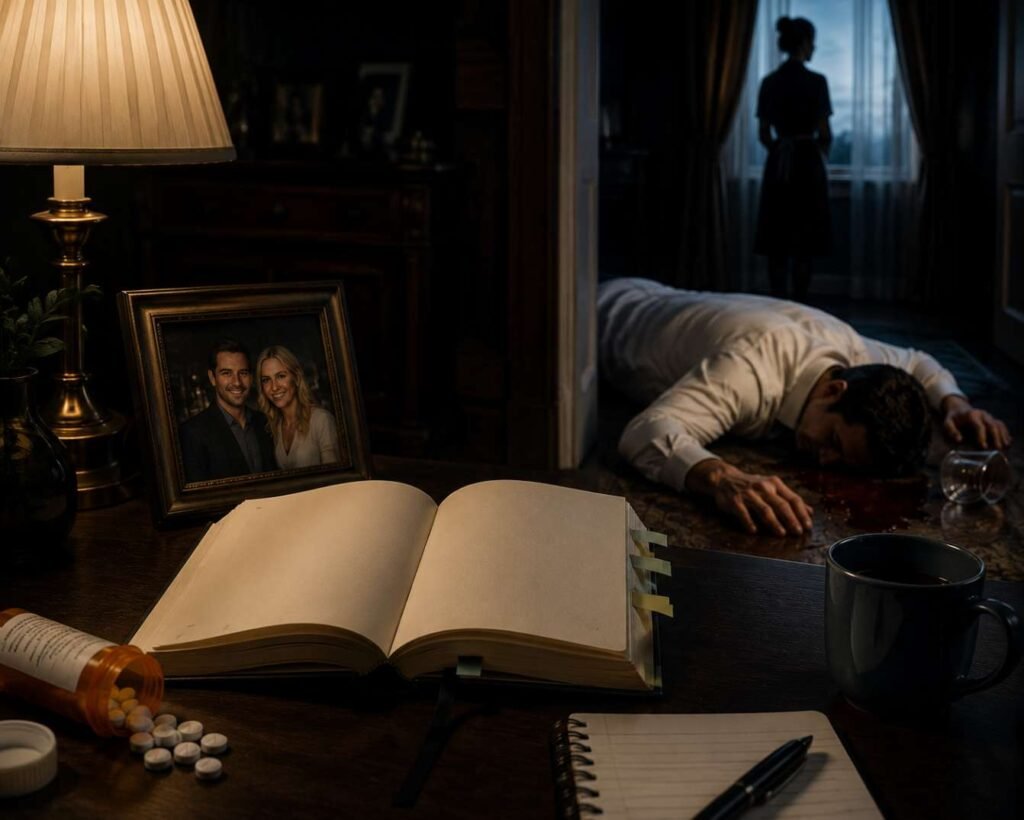
If you’re trying to get the most from the novel, here’s a set of things to watch for on a first or second read that make Andrew’s death land harder:
- Notice every time Andrew volunteers information about Nina’s mental state. Each one is manipulation, not concern.
- Track the attic lock. Who controls it and when changes meaning after the twist.
- Watch Millie’s reactions to Andrew’s warmth. McFadden writes them with enough ambiguity that they read differently the second time through.
- Pay attention to what Millie never fully explains about her prior crime. The gap is intentional.
- The final conversation between Nina and Millie before the book closes has two possible interpretations. Read it twice.
Understanding how did Andrew die in The Housemaid book fully means understanding that the death is the culmination of a carefully constructed pattern, not a single moment of violence. McFadden earns it over 300 pages. The housemaid spoilers are most affecting when you read them in context rather than in isolation.
The Housemaid Spoilers: Three Details Readers Always Get Wrong
The housemaid spoilers that circulate online sometimes get distorted in the retelling. Three corrections worth making:
First, some summaries imply Nina kills Andrew. She does not. Millie does. Nina’s role is complicity and cover-up, which is a different moral position and one McFadden treats with more nuance than a simple “they did it together” framing suggests.
Second, some readers describe Millie’s prior crime as identical to Andrew’s killing. It isn’t. The circumstances are similar in structure (a violent act against an abuser) but the details differ, and those details matter for how you read Millie’s psychology and reliability as a narrator.
Third, the housemaid spoilers around the ending sometimes claim the novel closes on a clearly hopeful note. It doesn’t. The final impression is genuinely uncertain. Whether Millie has found safety or walked into a new trap is the question McFadden leaves open.
Why The Housemaid Still Matters to Small Press and Independent Fiction Readers
The housemaid Freida McFadden summary as a publishing story is actually a small press and indie publishing success. The novel was self-published before its traditional deal. That origin matters to readers who care about how books reach audiences. McFadden built her readership through direct community engagement on BookTok and reader communities before any major publishing infrastructure got involved.
For contemporary small press readers, this trajectory is instructive. A book with a genuinely clever structural gimmick, a morally complex protagonist, and a willingness to take genre conventions seriously can find a massive audience without a traditional launch. The housemaid plot would not have been greenlit easily through traditional channels because it asks readers to sit with discomfort for two-thirds of the novel before rewarding them. Self-publishing let McFadden take that risk.
The housemaid book review consensus from literary communities aligns with this reading: the book succeeds because its author had creative control over the structure. A more heavily edited traditional debut might have softened the twist or moved it earlier. The fact that it sits where it does, that late, is what makes it work.
Your reading life gets richer when you pay attention to the publishing context around the books you love. McFadden’s story is one worth knowing.
Closing: The Death That Makes the Book
Andrew Winchester dies because Millie Calloway refuses to be his next victim. That refusal, made possible by her alliance with Nina, is the emotional and narrative core of everything McFadden built across 300 pages. The housemaid ending explained in full is really a story about what happens when two women stop competing for a predator’s approval and start protecting each other instead.
The housemaid summary you’ll find in one sentence is this: a housemaid job turns into a survival situation, and the woman who seemed most dangerous turns out to be an ally.
But that sentence leaves out the texture that makes the book worth reading. Read it yourself, then read the final exchange between Millie and Nina a second time and ask yourself whether you trust either of them.
If you’ve already finished and want to dig into how McFadden built the unreliable narrator mechanics, the Contemporary Small Press covers exactly this kind of structural analysis for contemporary fiction. Start there and see what else you’ve been missing.