
Freida McFadden sold over a million copies of The Housemaid before most book clubs had even heard her name. Her follow-up thriller, Does It Hurt?, dropped in 2024 and immediately polarized readers between “I read it in one sitting” and “I saw the twist coming a mile away.” Both camps are right about different things.
This guide gives you the complete does it hurt book breakdown: the full summary, character profiles, genre, themes, the ending explained, the age rating, where it fits in her publication order, and an honest review.
Whether you’re deciding whether to buy it or you finished the last page and need someone to process it with, you’re in the right place.
Does It Hurt Book Summary: What the Story Is Actually About

The does it hurt plot centers on Sawyer, a young woman running from a painful past who boards a boat headed to a remote research station off the coast of Australia. She meets Nico, a charismatic marine biologist, and the attraction is immediate and electric. But once the vessel is wrecked and the survivors are stranded on a tiny, isolated island near the station, the romantic tension curdles fast into something much darker.
Stuck on the island with a small group of strangers, Sawyer starts noticing that things don’t add up. People are secretive. Accidents happen that feel a little too deliberate. And Nico, whom she was beginning to trust, starts showing a side of himself she didn’t expect. The does it hurt book summary is essentially a survival thriller wrapped around a psychological mystery: who on this island wants her dead, and why does her own history keep threatening to resurface at the worst possible moment?
McFadden structures the narrative in alternating timelines. The present action on the island is told from Sawyer’s perspective. But a second thread, told from a different point of view, slowly reveals the backstory that explains how and why everyone ended up in this exact situation. That structural choice is the engine of the whole book. The does it hurt book reads quickly because every chapter ending gives you just enough to force you into the next one.
The does it hurt summary sounds like a dozen other thrillers you’ve read. Remote location. Unreliable narrator. Secrets from the past. But McFadden earns her page-count by making the interpersonal dynamics feel genuinely uncomfortable rather than just plot-convenient. Sawyer’s relationship with Nico is the emotional core, and McFadden makes you question your own read of him for most of the book’s second act.
Does It Hurt Characters: Who’s Who on the Island
The does it hurt characters are a deliberately compact group, which is smart. Isolation thrillers fall apart when there are too many suspects to track. McFadden keeps it tight.
Sawyer is the lead and the reader’s anchor. She’s defined early on by guardedness. She lies about small things, avoids questions about her past, and reads situations with the paranoia of someone who has been burned before. That history is revealed gradually, and the reveals recolor everything you thought you understood about her earlier choices. She’s not always likable, which is exactly right for this kind of story.
Nico is built to be the romantic lead who might not be trustworthy. McFadden gives him warmth and competence in equal measure, then slowly peels both back. His motivations are the central mystery of the second half, and the does it hurt plot specifically withholds his full backstory until it can do the most damage.
The supporting cast on the island includes a handful of researchers and crew members, each of whom gets a defining secret. Some of those secrets pay off and some feel slightly grafted on, but none of the characters are complete dead weight. That’s more than you can say for most thrillers in this sub-genre.
The way McFadden builds Sawyer and Nico is a good case study in how to create believable fictional characters that readers remember neither of them works as a type; both work because their contradictions are consistent.
Does It Hurt Author: Freida McFadden’s Track Record
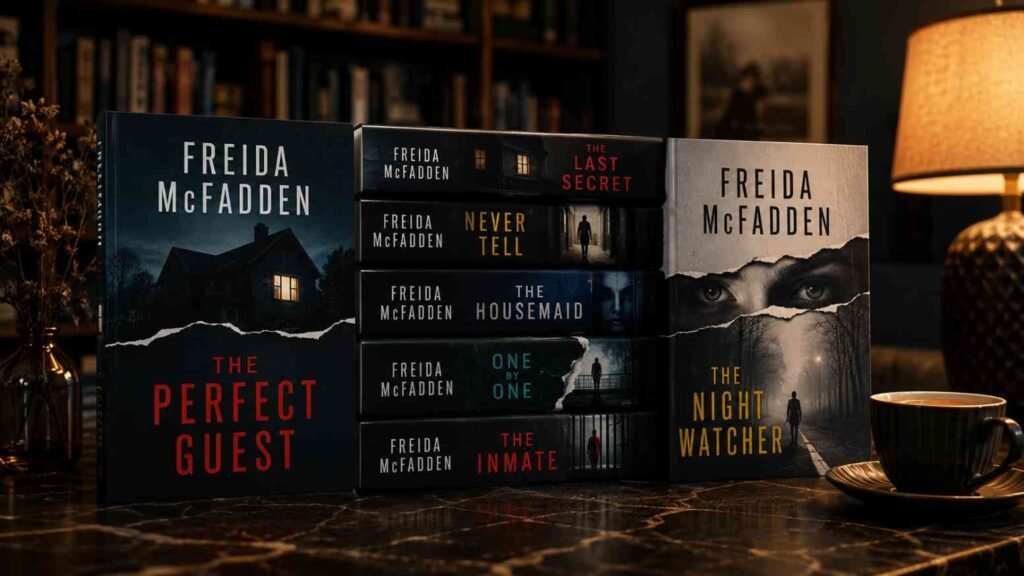
The does it hurt author is Freida McFadden, a psychiatrist by training who started writing thriller fiction before The Housemaid made her a household name in the BookTok era. Her earlier titles built a loyal readership, but it was The Housemaid and its sequel that turned her into one of the most commercially dominant thriller writers currently working. You can see her full catalog and publication history at her official author website.
McFadden’s background in psychiatry is not incidental to her fiction. Her villains tend to have coherent internal logic even when their actions are extreme. Her narrators are unreliable in ways that feel rooted in psychology rather than pure plot mechanics. The does it hurt book reflects both strengths. Sawyer’s paranoia has texture because it’s grounded in a diagnosable pattern of trauma response, not just narrative convenience.
Her rise tracks closely with the broader BookTok phenomenon. Publishers Weekly reported that The Housemaid surpassed three million copies sold, a figure driven in large part by social media recommendation loops. Does It Hurt? launched into that same ecosystem and benefited from it immediately.
Does It Hurt Genre and Age Rating
The does it hurt genre is domestic psychological thriller with elements of survival fiction. The domestic label might seem odd given that most of the action happens on a remote island, but McFadden’s real subject is always intimate relationships: who we trust, who we perform a self for, and what we’re hiding from the people who think they know us. The survival setting is the pressure cooker. The psychology is the actual story.
The does it hurt age rating sits comfortably at adult, recommended for readers 18 and older. There are explicit sexual scenes, sustained violence, and content involving past trauma presented without softening. It’s not gratuitous by thriller standards, but it’s not suitable for younger readers or those who prefer their suspense without graphic content.
The book’s BookTok-driven popularity and its explicit content sit in the same territory covered in what a smut book actually is genre fiction where spice level is part of how readers sort what they’re picking up.
For context, here’s how it compares to other recent McFadden titles:
| Title | Genre | Recommended Age | Violence Level | Sexual Content
|
|---|---|---|---|---|
| Does It Hurt? | Psychological / Survival Thriller | 18+ | High | Moderate to High |
| The Housemaid | Domestic Thriller | 17+ | Moderate | Moderate |
| The Coworker | Workplace Thriller | 16+ | Low to Moderate | Low |
| The Locked Door | Medical Thriller | 17+ | High | Low |
Does It Hurt Themes: What McFadden Is Really Saying
The does it hurt themes are more layered than the premise suggests. At the surface level, this is a story about physical danger in an isolated setting. But McFadden is consistently more interested in the emotional architecture beneath the action.
Trust and self-deception run through every chapter. Sawyer lies to other characters, but she also lies to herself, reframing her own motivations in ways the reader can see through before she can. McFadden treats self-deception as something almost everyone does, not just thriller protagonists, which gives the book a resonance that outlasts the plot mechanics.
The performance of identity is the second major thread. Every character on that island is presenting a version of themselves that doesn’t fully match their interior. The isolation setting strips those performances away, not all at once but gradually, like paint peeling in humidity. The question the does it hurt book keeps asking is whether the person underneath the performance is better or worse than the one you thought you knew.
That gap between the island’s physical danger and Sawyer’s private unraveling is a clean example of internal conflict vs external conflict doing separate work in the same scene.
Power in romantic relationships is the third theme, and it’s the one McFadden handles most carefully. Sawyer and Nico’s dynamic shifts constantly in terms of who holds leverage. The book doesn’t offer a tidy verdict on that dynamic, which some readers find frustrating and others find honest.
“McFadden excels at building dread from the ordinary. Her characters don’t act monstrously by accident. They act monstrously because they’ve been slowly, plausibly shaped into it. That’s what makes her different from writers who rely on twists alone.”
Booklist, reviewing Freida McFadden’s fiction across her catalog
Does It Hurt Ending Explained: What Actually Happens
Fair warning: the does it hurt ending explained section that follows contains full spoilers. If you haven’t finished the book, stop here and come back.
The final act of the does it hurt plot reveals that the person Sawyer has been most afraid of on the island is not who she suspected. The second-timeline narrative, which has been feeding you information about an unknown character’s obsession, eventually converges with Sawyer’s present-tense story in a confrontation that recontextualizes several earlier scenes completely.
Nico’s secret is not that he’s the villain. His secret is that he came to the island specifically because of Sawyer, having tracked her down after learning about her past. His motivations are obsessive but not violent, which puts him in a morally ambiguous space that McFadden refuses to clean up neatly. He wanted her. He manipulated circumstances to get close to her. Whether that constitutes something threatening or just something deeply inappropriate is left for the reader to sit with.
The actual threat comes from one of the researchers, whose identity I’ll leave partially protected here in case you skipped the spoiler warning accidentally. The motive is rooted in Sawyer’s pre-island history, connecting a thread that McFadden laid down in the first fifty pages so subtly that most readers miss it on the first pass.
Sawyer survives. Her survival isn’t triumphant in the Hollywood sense. It’s messy and compromised, and the final pages show her making a choice about Nico that most readers interpret differently depending on how they read her character. Some see it as growth. Some see it as the same pattern repeating. That ambiguity is intentional, and I think it’s the best single decision McFadden made in the entire book.
The does it hurt ending explained in one sentence: Sawyer survives a threat she almost didn’t see coming, defeats it through her own paranoia working in her favor for once, and chooses a complicated future over a clean one.
Does It Hurt Series Order: Is There a Sequel?
The does it hurt series order question comes up constantly in reader communities, and the straightforward answer is that Does It Hurt? is a standalone novel. It is not part of a named series. McFadden’s catalog is mostly standalones, with the exception of The Housemaid trilogy.
For readers working through McFadden’s full output, here is a practical reading order based on publication date and thematic similarity. The does it hurt series order in context of her wider catalog looks like this:
- The Locked Door (2022): good starting point for new readers, slightly less intense
- The Housemaid (2022): her breakout, domestic thriller, very different setting from Does It Hurt
- The Housemaid’s Secret (2023): direct sequel, read The Housemaid first
- The Coworker (2023): workplace setting, lighter on violence
- Does It Hurt? (2024): survival thriller, her most atmospheric to date
- The Housemaid Is Watching (2024): third in The Housemaid trilogy
Reading order within the Housemaid trilogy matters. Everything else, including the does it hurt book, can be read in any order without missing context.
Does It Hurt Book Review: What Works and What Doesn’t
The does it hurt book review I’d give it is this: a very good thriller that is fifteen pages too long in the middle and has a supporting cast that never quite reaches the depth of its two leads. That’s not a fatal flaw in a genre where pace is the primary virtue, but it’s worth naming.
What McFadden gets completely right is atmosphere. The island setting in the does it hurt book feels genuinely claustrophobic in a way that many isolation thrillers miss. She uses sensory detail precisely: the heat, the smell of seawater on everything, the way sound carries differently outdoors at night. You feel the geography as a trap, not just a backdrop.
The alternating timeline structure is effective for about sixty percent of the book and slightly mechanical for the rest. Once you understand the pattern, the second timeline starts to feel like a scheduled delivery of exposition rather than a genuine narrative thread. Readers who catch on quickly will find the second half slightly less tense than the first. Readers who stay in the dark longer will find the opposite.
The does it hurt book review from the broader critical community is mixed-positive. Goodreads readers have given it an average of around 3.9 out of 5, which for the thriller genre represents a solid performance. The most common criticism tracks exactly with my read: the twist is well-constructed but slightly telegraphed for experienced thriller readers.
Personally, I’d rank it above The Coworker and below The Housemaid in her catalog. The ambition is higher than both. The execution is almost there.
Does It Hurt Book Explained: A Practical Reader’s Checklist
If you’re picking up the does it hurt book and want to read it strategically rather than just reactively, this checklist gives you the analytical framework to get the most out of it. This is the approach I call the “Dual Track Reading” method: you follow the surface story for pace and follow the character behavior for subtext simultaneously, then compare notes at the end of each act.
- Track every time Sawyer edits what she tells another character about herself. The pattern reveals her self-image before the backstory does.
- Note when Nico’s competence appears on-page versus when it’s reported by Sawyer secondhand. The ratio shifts meaningfully across the three acts.
- Pay attention to which characters ask questions versus which ones answer them. McFadden uses question-asking as a subtle dominance signal throughout.
- The second timeline: identify the narrator’s emotional register in each chapter. It shifts in ways that make the eventual reveal feel fair rather than cheap.
- The final confrontation reuses an image from the opening chapter. Finding it on re-read confirms that McFadden planted it intentionally.
The does it hurt book explained through this lens is fundamentally a story about how we construct trustworthiness in ourselves and project it onto others. Every major plot event is downstream of a character trusting a performance over actual evidence. That’s the engine. Once you see it, the does it hurt book explained version makes every scene feel richer than it does on first read.
For readers interested in how psychological thriller authors construct unreliable narrators, the Guardian’s deep-dive on unreliable narrators in modern fiction provides useful critical context that maps directly onto McFadden’s technique.
Does It Hurt Book: Who Should Read It
The does it hurt book is the right choice for you if you finished The Housemaid and wanted more intensity, if you enjoy survival fiction that doesn’t lose its psychological edge when the physical danger arrives, or if you’re specifically interested in how contemporary thriller writers use setting as a character in its own right.
Skip it if you need your protagonists straightforwardly sympathetic. Sawyer is not that. Skip it also if you read enough thrillers that the alternating-timeline reveal structure feels automatic to you, because you will see the shape of it too early and spend the second half waiting for the book to catch up to where you already are.
For everyone else, this is exactly what a beach read should be: propulsive, emotionally uncomfortable in productive ways, and finished in a weekend.
So here’s what I’d push you to think about after closing the last page: Sawyer’s final choice suggests she’s learned something from the island. But given everything McFadden showed you about her patterns, do you actually believe she has? That question is the real ending, and it’s the one worth bringing to your book club.