I expected witchcraft to drive the plot. Instead, the magic exposes how powerless a woman can feel inside her own family. This The Witch by Marie NDiaye book review examines the novel’s unsettling mood, domestic satire, translation, and demanding ambiguity without spoiling every strange turn.
First published in French as La Sorcière in 1996, the novel reached US readers in Jordan Stump’s English translation on April 7, 2026. Vintage lists the paperback at 144 pages. The book was shortlisted for the 2026 International Booker Prize, which was ultimately won by Taiwan Travelogue.
Quick Review: Who Should Read The Witch?
| Review factor | My take |
| Genre | Literary fiction, surrealism, and domestic horror |
| Strongest feature | The eerie link between motherhood and lost control |
| Possible drawback | Fragmented episodes and emotionally cold characters |
| Pace | Short but deliberately uneasy |
| Best for | Readers of strange, psychological translated fiction |
| Rating | 4 out of 5 |
This is not a cozy witch story or rules-based fantasy. It reads like suburban life viewed through warped glass. The supernatural appears casually, while emotional cruelty feels brutally real.
What Is The Witch by Marie NDiaye About?
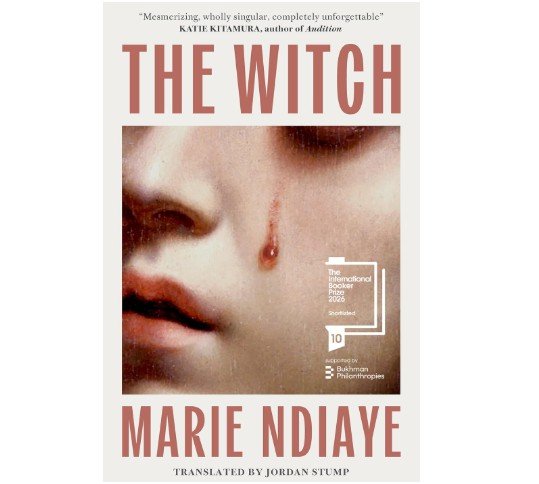
Image source: Amazon
Lucie is a stay-at-home mother with weak and unreliable magical gifts. When her twin daughters, Maud and Lise, turn twelve, she introduces them to the matrilineal powers inherited by the women in their family.
The girls quickly surpass her. Their visions arrive through tears of blood, and their powers create distance rather than intimacy. Meanwhile, Lucie’s husband disappears with the family’s money. Her unstable neighbor Isabelle then pulls her into a dubious magical business.
The plot sounds dramatic, yet NDiaye avoids conventional suspense. Events unfold with dream logic. People accept transformations, disappearances, and humiliations with an unnerving lack of surprise.
Motherhood, Witchcraft, and Domestic Power
The Daughters’ Magic Changes the Meaning of Growing Up
My strongest response came from the gap between Lucie’s pride and fear. Maud and Lise are not simply talented children. Their growing power makes Lucie increasingly unnecessary.
That dynamic turns adolescence into something uncanny. Children naturally build private lives and question parental authority. NDiaye makes that separation physical. The daughters can escape the domestic nest in ways their mother cannot.
The International Booker judges described the novel as an unconventional exploration of motherhood. They also highlighted its concerns with household labor, financial dependence, careers, and pressure on women to remain agreeable. Those themes explain why a novel written three decades ago feels current.
Magic Does Not Equal Freedom
The book’s smartest reversal is simple: Lucie has supernatural ability but almost no practical agency. She cannot stabilize her marriage, protect her savings, repair her parents’ relationship, or command respect.
I call this the novel’s “power gap.” The greater the visible magic becomes, the clearer Lucie’s everyday vulnerability looks. That contrast gives the story more bite than a standard empowerment narrative.
Jordan Stump’s Translation and NDiaye’s Surreal Style

Image source: Wikipedia
Jordan Stump’s translation preserves the novel’s cold, shifting atmosphere. The Booker judges praised its language and the way its sentences transform unexpectedly. NDiaye has also credited Stump’s long partnership and described translators as essential to expanding a writer’s world.
The prose remains controlled even when the story becomes bizarre. NDiaye rarely explains the supernatural. She makes the reader live inside uncertainty. That approach creates tension, but it can also feel emotionally remote.
Readers who need firm rules may find the book incomplete. I found the lack of explanation purposeful. Lucie cannot decode her family or her own life, so the reader receives no special authority either.
What Works and What May Frustrate Readers
The Witch by Marie NDiaye book review discussions often divide over the same qualities. Its short length suggests simplicity, yet its emotional structure remains slippery.
The novel works best when it links ordinary disappointments with impossible events. Its dark humor also prevents the domestic misery from becoming flat. However, several characters behave with such callousness that emotional investment can become difficult.
The episodic structure may resemble connected vignettes rather than a steadily building plot. Readers seeking a clear climax or satisfying resolution should adjust their expectations.
Where to Start With Marie NDiaye’s Books
NDiaye won the Prix Femina for Rosie Carpe and the Prix Goncourt for Three Strong Women. Ladivine, also translated by Stump, was longlisted for the International Booker Prize in 2016. Her range includes the Comédie-Française play Papa doit manger and co-writing Alice Diop’s film Saint Omer.
For a broader introduction, start with Three Strong Women. Choose Vengeance Is Mine for psychological suspense, Ladivine for generational shame, and Rosie Carpe when you are ready for her bleakest family drama.
Readers following the 2026 International Booker selections may also explore The Remembered Soldier book, another translated title from that year’s longlist.
Is The Witch Worth Reading?
Yes, for the right reader. My The Witch by Marie NDiaye book review verdict is strongest when the novel is treated as psychological literary fiction, not fantasy entertainment.
I recommend it to readers who enjoy fever-dream narratives, morally difficult characters, and stories where mood matters more than explanation. Skip it when you want comforting magic, rapid plotting, or clearly likable heroes.
Final Spell: Strange, Sharp, and Not Here to Please You
The novel’s magic is deliberately unimpressive. Its emotional effect is not. NDiaye turns a failing marriage, changing daughters, and financial vulnerability into a quiet nightmare about becoming powerless inside your own life.
My next-step tip is simple: read the first 25 pages before judging the pace. Once you accept its dream logic, the book’s cold humor and maternal anxiety become much easier to appreciate.
Frequently Asked Questions
1. Is The Witch by Marie NDiaye a fantasy novel?
It uses witchcraft, but it works mainly as surreal literary fiction and domestic psychological horror.
2. Is The Witch by Marie NDiaye difficult to read?
The prose is accessible, though the fragmented plot and unexplained magic demand patience.
3. How long is The Witch by Marie NDiaye?
The US Vintage paperback is 144 pages, making it a short but layered read.
4. What should I read after The Witch?
Try Three Strong Women for NDiaye’s broader range or Vengeance Is Mine for psychological suspense.