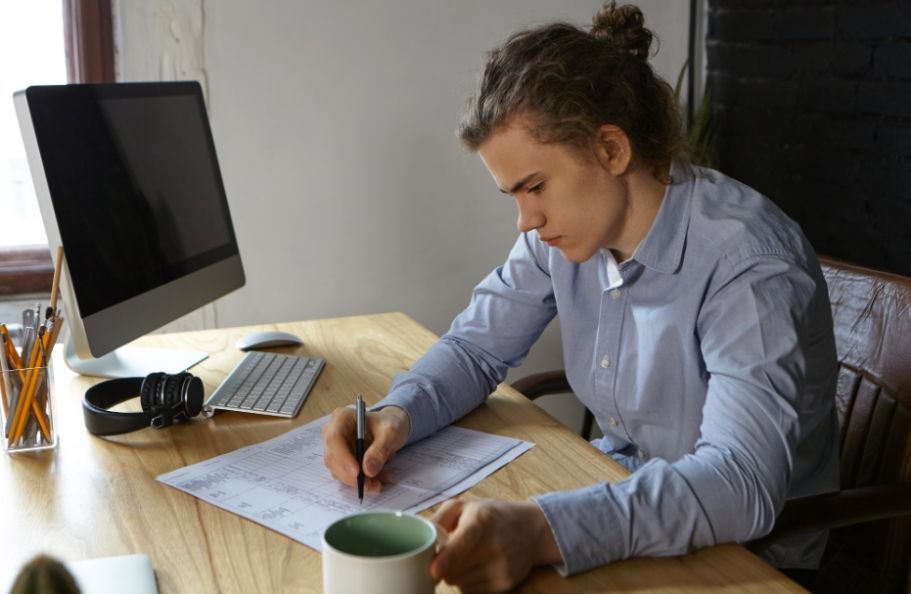
I know the frustration of rereading a draft, publishing it, and then spotting an obvious typo. Familiarity makes mistakes difficult to see because the mind often reads what I intended rather than what is actually on the page. The most effective proofreading techniques for writers interrupt that habit by slowing the reading process, changing the appearance of the text, and dividing the final review into focused passes.
Proofreading should begin only after major revisions are complete. It is the final quality-control stage for checking spelling, grammar, punctuation, facts, consistency, and formatting.
Editing and Proofreading Are Different
Editing improves the substance of a draft by reorganizing ideas, clarifying meaning, repairing pacing, or removing repetition.
Fiction writers can apply developmental editing tips for fiction writers before proofreading to strengthen plot, character arcs, pacing, structure, and the overall reading experience. Proofreading comes later and focuses on surface-level accuracy.
Trying to handle both stages at once is inefficient. Finish the larger revisions, save a clean copy, and then begin a separate final review.
Why Writers Overlook Their Own Mistakes
The brain predicts language, which makes reading faster but can also supply missing words, ignore repetition, and accept familiar sentences that are incorrect. Fatigue makes the problem worse, so effective proofreading depends on timing, focus, and a repeatable process.
17 Ways to Proofread Your Own Writing

1. Let the Draft Rest
Leave the document for several hours or a full day. Distance helps you return as a more objective reader.
2. Remove Distractions
Silence notifications, close unrelated tabs, and work somewhere quiet. Interruption science as a research field, shows how even a single distraction can break concentration and cause you to skip a line.
3. Change the Text’s Appearance
Switch the font, increase the size, or adjust line spacing. A different layout forces the brain to process the words again.
4. Print the Draft
Mistakes often become easier to notice on paper, especially in essays, stories, reports, and book chapters.
5. Read Aloud
Reading aloud exposes missing words, awkward rhythm, repetition, and overly long sentences.
6. Use Text-to-Speech
A digital voice can reveal duplicated words, missing articles, and unnatural sentence construction.
7. Check One Error Category at a Time
Review spelling first, punctuation second, consistency third, and formatting last. Focused passes improve accuracy.
8. Read Backward
Begin with the final sentence and move toward the opening. For spelling, examine individual words from right to left.
9. Review Punctuation Separately
Inspect commas, apostrophes, quotation marks, colons, semicolons, and end punctuation without focusing on meaning.
10. Verify Names and Proper Nouns
Check every person, place, company, product, and organization. Fiction writers should confirm character and location names.
11. Confirm Facts and Numbers
Recheck dates, ages, prices, measurements, quotations, citations, and statistics.
12. Inspect Page Elements
Review headings, chapter titles, page numbers, captions, footnotes, links, headers, and the table of contents.
13. Search for Confusing Words
Use document search to check terms such as their and there, affect and effect, or your and you’re. It can also reveal filler words.
14. Build a Personal Error List
Record recurring weaknesses such as tense shifts, missing commas, dialogue punctuation, capitalization, or inconsistent spacing.
15. Work in Short Sessions
Proofread long documents in sections and take regular breaks. Short sessions protect concentration and reduce skimming.
16. Use Software With Judgment
Grammar and spelling tools can identify possible problems, but they may misunderstand context, character voice, or intentional style.
17. Ask Another Reader
A fresh reader has no memory of what you meant to write and may catch errors that remain invisible to you.
A Five-Pass Proofreading Process

During the first pass, check spelling, missing words, repeated words, and typographical errors. Use the second for grammar, punctuation, sentence boundaries, and capitalization.
The third pass should verify names, tense, terminology, dates, locations, point of view, and other consistency details. The fourth should cover layout, headings, links, spacing, and visual elements.
Finish with a slow read-aloud pass. Avoid major rewriting at this stage because large changes can introduce new errors.
Proofreading Fiction and Nonfiction
Fiction writers should check dialogue punctuation, character descriptions, timelines, setting details, and point-of-view consistency.
Before reaching this final review stage, authors can follow a structured process for how to edit a novel manuscript so plot, scenes, character development, and prose are already stable.
A continuity sheet can track names, ages, dates, injuries, weather, locations, and important objects.
Nonfiction writers should verify claims, quotations, references, statistics, terminology, links, and headings. Blog writers should also inspect the title, meta description, anchor text, image captions, and calls to action.
Frequently Asked Questions
1. What are the best proofreading techniques for writers handling long manuscripts?
Divide the manuscript into chapters, use focused passes, maintain a continuity sheet, read dialogue aloud, and take scheduled breaks. A final review by another reader is also valuable.
2. Should I Proofread Immediately After Writing?
No. Even a short break helps you return with sharper attention and less attachment to the original wording.
3. Can Grammar Software Replace a Human Proofreader?
No. Software can flag possible errors, but it may misunderstand tone, dialogue, context, intentional fragments, or specialized terminology.
4. How Many Times Should a Document Be Proofread?
Most drafts benefit from at least three passes. Long, technical, or important documents may need five or more, with each pass assigned a specific purpose.
Final Takeaways
I have learned that strong proofreading is not one hurried final read. It is a controlled process that makes familiar writing look unfamiliar long enough for mistakes to become visible. When I separate revision from proofreading, check one category at a time, and finish by reading aloud, I catch more errors without repeatedly scanning the same paragraphs.
A polished draft protects credibility, improves readability, and allows readers to concentrate on the message instead of the mistakes.