
Some books frighten through monsters. This one frightens through ordinary lives that cannot escape grief. In this White Nights by Urszula Honek book review, I examine why thirteen linked stories feel like one long haunting—and why that feeling lasts.
Translated from Polish by Kate Webster, the book follows villagers in the Beskid Niski region of southern Poland. They endure poverty, violence, hard labor, failed love, and sudden death. The collection contains thirteen interconnected stories, each centered on someone trying to cope, survive, or simply exist.
What Is White Nights About?
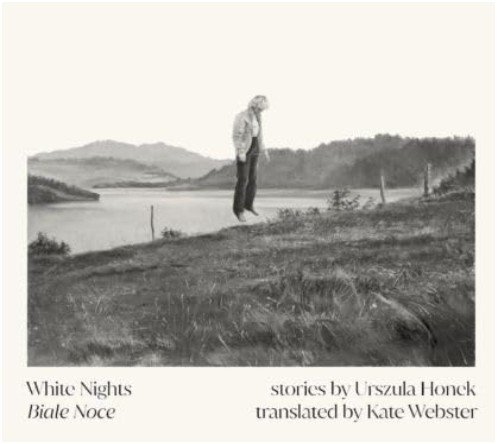
Image source: Amazon
White Nights does not follow one hero through a tidy plot. It moves among villagers, years, memories, and deaths. A minor figure in one story may become central in another. A tragedy may appear before its cause becomes clear.
The structure demands attention, but the effort feels purposeful. Each story adds another perspective to a shared wound. What begins as separate village portraits eventually becomes a coherent narrative.
The landscape also behaves like a character. Mountains, rivers, forests, muddy roads, winter ice, and dim homes shape every choice. Escape remains possible in theory, but rarely in spirit.
A Story Collection That Behaves Like a Novel
The timeline moves backward and forward rather than following a straight path. Honek often presents the emotional damage before explaining the event that caused it. The official Booker reading guide also identifies the nonchronological structure as one of the book’s central discussion points.
I soon stopped asking, “What happens next?” Instead, I asked, “How long has this damage been spreading?”
For that reason, this White Nights by Urszula Honek book review treats the collection as a map of communal grief rather than a conventional village chronicle.
Pilot, Andrzej, and Piotrek: Three Responses to Despair
The most revealing way to read the book is through three childhood friends. Pilot, Andrzej, and Piotrek grow up in the same unforgiving environment but develop different survival methods.
Pilot dreams. Andrzej absorbs. Piotrek escapes.
That pattern is the original lens in this White Nights by Urszula Honek book review. Honek is not merely repeating tragedy. She is testing what people become when hope has no stable place to live.
Pilot: Dreaming Without Protection
Pilot’s real name is Mariusz. His nickname comes from his habit of looking upward. Others mock his thin body, exaggerated laugh, and limited reading ability. Still, he protects a private imaginative life.
He dreams of performing in a circus and secretly practices basic gymnastics. Later, he digs a woodland pond because he wants to breed carp. The pond becomes a physical version of hope: handmade, unlikely, and deeply personal. The Booker character guide confirms both his nickname and his plan to construct the pond.
It also becomes his grave when he falls through its frozen surface.
Pilot’s tragedy is not that he dreams too much. It is that his world gives those dreams no safe form.
Andrzej: Carrying the Village Inside Him
Andrzej remains tied to his mother, sister Henia, and niece Dorotka. He travels about 20 miles for punishing logging work because his family needs money. He shares a crowded hut with other workers, including Pilot.
His loyalty gives him purpose, but it also traps him inside other people’s needs.
Later, suspicion surrounding a missing child intensifies his psychological collapse. He sees the dead gathered around his table and makes repeated attempts on his life. His eventual suicide feels shocking, yet Honek refuses dramatic sentimentality.
Andrzej represents emotional absorption. He cannot separate private pain from the grief stored throughout the village.
Piotrek: Survival at a Moral Cost
Piotrek narrates the opening story and works as a butcher. He is practical, womanizing, opportunistic, and often cruel. The Booker guide describes him as crass and identifies Anka as his fiancée.
He secures employment for his friends but avoids their worst working conditions. After Pilot dies, Piotrek leaves the village and abandons Anka.
He survives because he rejects lasting responsibility. That makes him difficult to admire but impossible to dismiss.
The book’s sharpest moral question may be whether escaping a broken community requires betraying the people left behind.
Thematic Comparison of Pilot, Andrzej, and Piotrek
| Character | Coping strategy | Relationship to the village | Outcome | Thematic role |
| Pilot | Imagination and private dreams | Mocked outsider who still creates hope | Dies in the pond he dug | Dreams cannot guarantee escape |
| Andrzej | Duty and emotional endurance | Bound to family and communal suffering | Dies by suicide | Unprocessed grief becomes destructive |
| Piotrek | Self-interest and departure | Uses local ties, then abandons them | Leaves and survives | Escape carries a moral cost |
This comparison explains why my White Nights by Urszula Honek book review focuses on character responses rather than plot alone. The three men do not represent good, bad, and weak decisions. They reveal three damaged answers to the same environment.
Death, Memory, and Folk-Horror Atmosphere
Death does not function as a final interruption in White Nights. It remains active inside homes, dreams, conversations, and landscapes. Memory keeps the dead close enough to disturb the living.
That closeness creates folk-horror tension, although the collection remains rooted in literary realism. Critical discussions have similarly placed the book between literary fiction, ethnographic observation, dream narrative, and folk horror.
Ghosts and visions matter, but poverty, alcoholism, shame, isolation, and violence cause the deeper terror.
The title strengthens this mood. The summer white nights create a strange glow where darkness never feels complete. The International Booker judges highlighted this continuous daylight and its role in the book’s dreamlike atmosphere.
The village appears suspended between waking and dreaming. Nothing is clear, yet nothing is completely hidden.
Poetic Prose and Kate Webster’s Translation
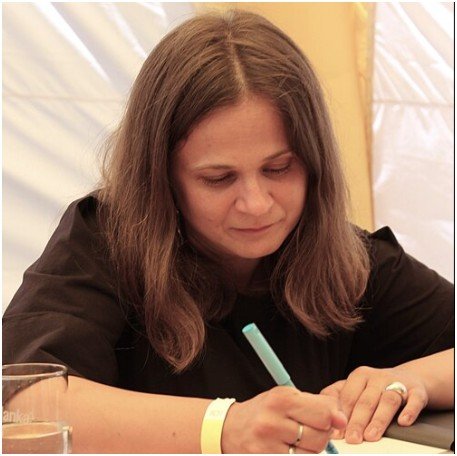
Image source: Wikipedia
Honek is also a poet, and her prose reflects that background. Images arrive with precision. Sentences feel spare, earthy, and lyrical without becoming decorative.
Kate Webster’s translation preserves that compressed texture. The English edition was longlisted for the 2024 International Booker Prize and shortlisted for the 2024 Warwick Prize for Women in Translation.
Honek has explained that she wanted to give a voice to unheard people. She drew partly on fragments of real lives and spent extensive time walking through the Low Beskids, observing how its landscape changed across seasons and times of day.
That research is visible in the book. The scenery never feels pasted behind the characters. It controls their work, movement, fears, and understanding of death.
US readers should check which edition they are buying. MTO Press lists its November 2023 edition at 162 pages. The Two Lines Press US edition, published on February 10, 2026, contains 178 pages and an introduction by Jennifer Croft.
Readers who appreciate compressed translated fiction and communities revealed through interconnected narratives may also enjoy the Heart Lamp book.
What Worked for Me—and What May Not
Atmosphere is the collection’s greatest strength. Honek makes the village feel inhabited, dangerous, and almost sealed from the wider world. Small details gain weight when later stories return to them.
The fragmented structure also rewards patience. A character who initially appears distant can become devastating once another story reveals their history.
The main limitation is emotional saturation. Tragedy arrives so often that some readers may become numb. A death can lose force because despair already feels like the village’s normal weather.
That issue did not defeat the book for me. It changed how I read it. I stopped waiting for relief and began studying the different shapes endurance takes.
This White Nights by Urszula Honek book review therefore sees repeated tragedy as both the book’s greatest risk and one of its deliberate effects.
Who Should Read White Nights?
Choose this book if you enjoy interconnected short stories, rural Gothic settings, poetic prose, translated literature, and morally difficult characters. It best suits readers who value atmosphere and psychological depth over plot speed.
The collection may not work for readers seeking comfort, chronological storytelling, or complete explanations. It includes suicide, child death, violence, alcoholism, drowning, and sustained grief.
Reading one or two stories at a time may produce a stronger experience than finishing the collection in one sitting.
My Verdict: Beautiful, Brutal, and Not Here to Comfort You
My final White Nights by Urszula Honek book review verdict is strongly positive. The collection is bleak, but never empty. Its thirteen stories form a communal portrait in which every death changes how another life is understood.
Pilot looks upward. Andrzej carries everyone’s weight. Piotrek runs.
None offers a clean answer, and that is precisely the point.
Keep a short character list nearby as you read. More importantly, do not judge the collection before its scattered connections begin to close. This quiet book has teeth, and it knows exactly when to bite.
White Nights by Urszula Honek Book Review FAQs
1. Is White Nights by Urszula Honek a novel or a short-story collection?
It is a collection of thirteen interconnected stories that also reads like a fragmented novella.
2. Is White Nights by Urszula Honek difficult to read?
The prose is accessible, but the shifting timeline and recurring characters require close attention.
3. Is White Nights by Urszula Honek a horror book?
It is literary fiction with folk-horror atmosphere, ghostly imagery, and sustained psychological dread.
4. Is White Nights by Urszula Honek worth reading?
Yes, especially for readers seeking poetic translated fiction about isolation, memory, grief, and rural life.