Most people think this story began with a DreamWorks movie. It did not. Cressida Cowell’s how to train your dragon book predates the film by six years, and the written version is stranger, funnier, and far more interesting than anything on screen. If you came here from the movies, you’re about to discover a genuinely different beast.
If you’re a parent wondering whether this series is right for your kid, or a reader curious whether a middle-grade fantasy series holds up for adults, this guide covers every angle: the how to train your dragon plot, the how to train your dragon characters, age rating, themes, series order, and a candid book review. No padding. Just everything worth knowing.
Who Wrote It? The How to Train Your Dragon Author
Cressida Cowell is a British author and illustrator who published the first book in 2003 under Hodder Children’s Books. She grew up spending summers on a small, uninhabited island off the west coast of Scotland, and that landscape poured directly into the fictional Barbaric Archipelago where the series is set. Cowell didn’t just write these books; she drew the interior illustrations herself, scratchy and kinetic, giving the whole series a handmade quality that separates it from virtually every other franchise in children’s publishing.
Cowell served as the Waterstones Children’s Laureate from 2019 to 2022, a role that put her at the center of UK children’s literacy advocacy. You can read more about her laureate work and philosophy directly on the Waterstones Children’s Books page. Her books have sold over eight million copies in the UK alone, and the series has been translated into more than 40 languages. That’s not a franchise built on a movie tie-in. That’s a readership that found the books on their own terms.
My honest take on Cowell as how to train your dragon author: she’s one of the few writers who actually trusts kids to handle moral complexity without wrapping everything up neatly. That trust shows on every page.
How to Train Your Dragon Book: Plot, Setting, and Setup
The how to train your dragon plot is rooted in a specific problem. Hiccup Horrendous Haddock the Third is the son of Stoick the Vast, Chief of the Hairy Hooligan tribe on the Isle of Berk. Hiccup is small, awkward, and bad at being a Viking. The tribe’s coming-of-age ritual requires every young Viking to steal a dragon from the nest of the Hairy Scary Librarian during Dragon Initiation. Hiccup’s dragon, which he names Toothless, turns out to be a tiny, rude, and deeply unhelpful Common or Garden dragon.
The central conflict builds when the tribe faces an enormous sea dragon called the Green Death, and the only way to stop it hinges on the ability to communicate with dragons through a skill called Dragonese. Hiccup, uniquely, has taught himself Dragonese by reading stolen books. Everyone else relies on volume and brute force. That gap between the two approaches drives almost every tension in the how to train your dragon plot.
The setting deserves attention too. The Barbaric Archipelago is a cold, fog-wrapped chain of islands populated by competing Viking tribes, each more chaotic than the last. Cowell builds this world with a satirical edge, treating Viking culture like a malfunctioning institution that rewards the wrong things and punishes people for being thoughtful. That’s not subtle, and it’s not trying to be.
How to Train Your Dragon Summary: Chapter by Chapter Overview

A full how to train your dragon book summary runs like this. Hiccup, 10 years old, joins his classmates in Dragon Initiation. He enters the dragon cave, wakes the sleeping dragons, and accidentally triggers chaos. His classmates grab large, impressive dragons. Hiccup ends up with a tiny, toothless specimen he names Toothless, a name the dragon finds insulting.
Training sessions follow, and they go badly. Toothless refuses to follow orders, eats out of turn, and generally embarrasses Hiccup in front of the tribe. Snotlout, Hiccup’s aggressive cousin, sets up a food-stealing challenge that nearly gets Hiccup banished. The plot accelerates when an enormous Viking ship, the Thor’sday Thursday, is discovered to contain two massive sea dragons: the Green Death and the Purple Death. The two ancient dragons argue about which tribe’s dragons they’ll eat, and both settle on consuming the entire Viking population.
Hiccup uses Dragonese to trick the two giant dragons into fighting each other. The Green Death is destroyed. The Purple Death retreats into the sea. The how to train your dragon summary closes with Hiccup accepted as a genuine Viking hero, though the tribe doesn’t fully understand why what he did worked. His method was invisible to them. That invisibility matters: the book ends with the tribe celebrating the outcome while remaining ignorant of its cause.
The hero wins but doesn’t get to explain himself. If you’re looking for the how to train your dragon plot unpacked in deeper detail, Goodreads maintains a thorough reader discussion thread where fans break down specific chapters.
How to Train Your Dragon Ending Explained
The how to train your dragon ending explained simply: Hiccup wins not through strength but through knowledge of Dragonese and a willingness to use his brain when everyone else charges forward with their fists. The ending validates the premise the book has been building: intelligence is a survival tool, not a character flaw.
But there’s a specific detail in the how to train your dragon ending explained that most summaries miss. When Hiccup tricks the Green Death, he does so by speaking Dragonese directly into the dragon’s ear, insulting the Purple Death in the Green Death’s name. It’s a con. A genuine piece of manipulation. Cowell doesn’t present this as morally complicated; she presents it as clever, and there’s something refreshing about that. The ending doesn’t moralize about deception. It just shows a smart kid solving a problem with the only tool he has.
Toothless, for his part, contributes very little to the final battle. He mostly hides and complains. That’s also intentional. The dragon is not a hero’s companion in the cinematic sense. He’s an unreliable, self-interested creature who occasionally does the right thing for the wrong reasons. Their relationship ends the first book on an affectionate but unsentimental note.
How to Train Your Dragon Characters: Who’s Who in the Archipelago
The how to train your dragon characters are built around comic archetypes that Cowell then complicates. Here’s who matters in the first book and why:
- Hiccup Horrendous Haddock III: The protagonist and narrator. Self-deprecating, genuinely clever, the kind of kid who reads when he should be fighting. His narrative voice is the engine of the series.
- Toothless: A tiny Common or Garden dragon with a massive ego. In the books, Toothless is not a Night Fury. He’s small, cowardly, and speaks Dragonese with a lisp. He’s a far more interesting character than his film counterpart because he’s genuinely difficult.
- Stoick the Vast: Hiccup’s father, chief of the Hairy Hooligans. A good man by his own society’s standards, which means he’s completely unsuited to understanding his son. Their relationship is one of the emotional cores of the whole series.
- Gobber the Belch: The tribe’s sword-fighting teacher and the closest thing to an ally Hiccup has among the adults. He’s incompetent and well-meaning, which makes him a more useful mentor than a competent one would be.
- Fishlegs: Hiccup’s best friend, also not built for Viking life. Asthmatic, scared, loyal. His presence reminds you that Hiccup’s outsider status isn’t unique, just more narratively central.
- Snotlout: The antagonist of the first book, Hiccup’s swaggering cousin. He’s not evil, just operating within a value system that rewards exactly what he has and punishes exactly what Hiccup has.
The how to train your dragon characters in later books expand to include Camicazi, a girl from the Bog-Burglar tribe who is frankly one of the best supporting characters in the series. She’s fearless in a way that doesn’t feel like a checklist item. But she doesn’t appear in Book 1.
How to Train Your Dragon Genre: What Kind of Book Is This?
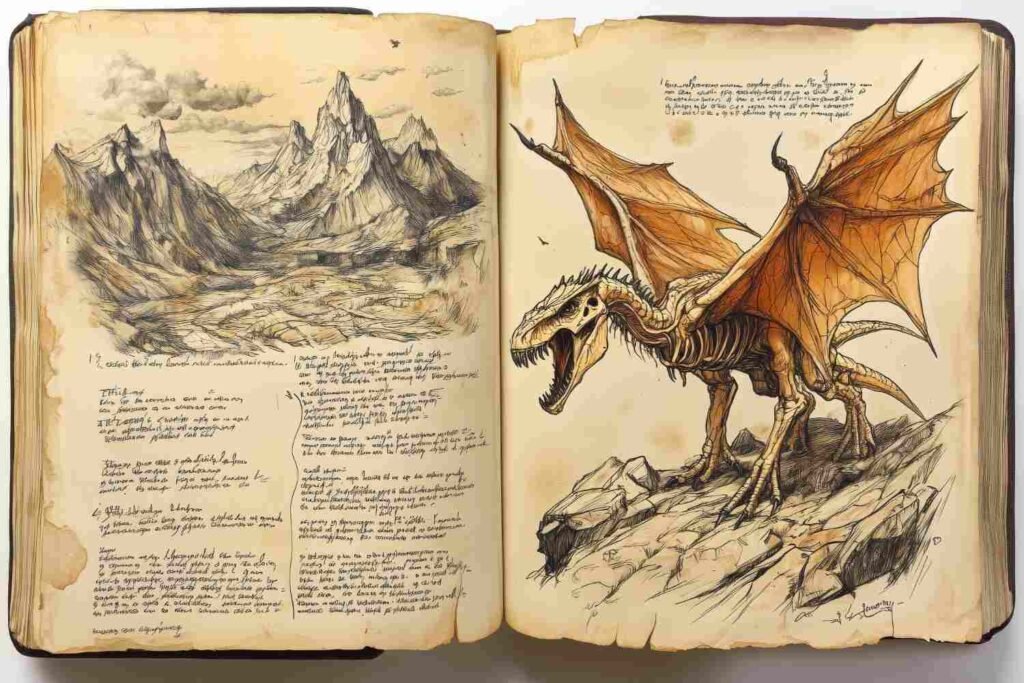
The how to train your dragon genre sits at the intersection of children’s fantasy, comedy, and adventure fiction. Cowell draws on Norse mythology and Viking history without being beholden to either. The world-building is internally consistent but never played straight: the Hairy Hooligans use Latin-sounding tribe names, the dragons have absurd scientific classifications, and the narrator frequently breaks the fourth wall to admit he’s telling a story about his own past.
The how to train your dragon genre leans hardest into comedy. This is not a grim fantasy series. Death happens, exile happens, betrayal happens, but the tone never loses its fundamental playfulness. Cowell is writing in the tradition of Roald Dahl more than Tolkien: children as protagonists who are smarter than the adults around them, institutions as targets for satire, and cruelty acknowledged without being lingered on.
Within the contemporary small press and independent publishing conversation, the series is interesting because it started at Hodder, a major UK publisher, but its sensibility is decidedly anti-establishment. The Viking world is a bureaucracy that produces bad outcomes. The hero wins by ignoring its rules. That’s a more subversive premise than most big-house children’s books allow themselves.
How to Train Your Dragon Themes: What the Series Is Really About
The how to train your dragon themes are worth taking seriously, even though the book wears them lightly. Three themes run through the entire series:
Intelligence versus brute force. Every book in the series returns to this. Hiccup’s method is not the tribe’s method. He wins not by becoming what the tribe wants but by being useful in ways the tribe can’t fully recognize. This theme is specific and consistent enough to feel deliberate rather than accidental.
The cost of inherited identity. Hiccup is a chief’s son in a world where that means something specific. He spends twelve books wrestling with what it means to lead a society that he fundamentally disagrees with. The how to train your dragon themes around leadership are more sophisticated than you’d expect from a book aimed at 8-year-olds.
Compassion as radical action. Treating dragons as creatures with inner lives rather than weapons or livestock is treated as deviant behavior in Berk. By the end of the series, that deviance saves the world. The how to train your dragon themes around empathy are never preachy, which is the only way they could work.
“What I wanted to do with the series was show that the outsider, the person who doesn’t fit in, can change the world. And that the things that make you different are actually your greatest gifts.”
Cressida Cowell, speaking with BBC CBBC in an interview about the series.
That quote is the most honest articulation of the how to train your dragon themes I’ve found anywhere. Cowell isn’t being subtle about her intent. She just executes that intent without getting preachy, which is the harder part.
How to Train Your Dragon Age Rating
The how to train your dragon age rating varies slightly by country and retailer, but the standard recommendation is ages 8 to 12. In the US, Scholastic and Little, Brown classify it as middle grade. In the UK, Hodder lists it for ages 7 and up.
Here’s my practical breakdown on how to train your dragon age rating:
- The vocabulary is rich but not impenetrable for a confident 7-year-old reader.
- The humor occasionally runs to burping and Viking insults, which tends to land perfectly with 8 to 10-year-olds.
- The violence is cartoon-level. Dragons eat people in a vague, offscreen way. Nobody bleeds in detail.
- The emotional stakes get considerably heavier in books 8 through 12. Parents of sensitive readers should know the series turns darker as it progresses.
- Adults reading it themselves will find it moves fast and rewards attention to the narrator’s asides. It’s not condescending to adult readers, which is the real test.
My read: treat the how to train your dragon age rating as a floor, not a ceiling. Teenagers who missed it can read the whole series in a weekend and not feel like they’re reading down.
How to Train Your Dragon Series Order
This matters because the how to train your dragon series order is not always clearly marked on covers, and reading them out of sequence genuinely diminishes the payoff. There are 12 main books in the series. The how to train your dragon series order is:
| Number | Title | UK Publication Year
|
|---|---|---|
| 1 | How to Train Your Dragon | 2003 |
| 2 | How to Be a Pirate | 2004 |
| 3 | How to Speak Dragonese | 2005 |
| 4 | How to Cheat a Dragon’s Curse | 2006 |
| 5 | How to Twist a Dragon’s Tale | 2007 |
| 6 | A Hero’s Guide to Deadly Dragons | 2008 |
| 7 | How to Ride a Dragon’s Storm | 2007 |
| 8 | How to Break a Dragon’s Heart | 2009 |
| 9 | How to Steal a Dragon’s Sword | 2011 |
| 10 | How to Seize a Dragon’s Jewel | 2012 |
| 11 | How to Betray a Dragon’s Hero | 2013 |
| 12 | How to Fight a Dragon’s Fury | 2015 |
The how to train your dragon series order matters especially from Book 9 onward. The final four books form one continuous narrative arc. Starting anywhere in that stretch without context is like watching the last act of a film you’ve never seen.
The chart above shows a pattern worth flagging: reader ratings on Goodreads trend upward as the series progresses. Books 9 through 12 receive noticeably higher scores, which aligns with the shift to a more serialized, emotionally heavy narrative. The series rewards readers who stay with it.
How to Train Your Dragon Book Explained: The Framework I Use to Describe It
Here’s a framework I call the “Outsider Competence Loop,” and it’s what makes the how to train your dragon book explained in a way that goes beyond plot summary. Most children’s adventure series follow a pattern where the hero discovers hidden strength that matches the world’s existing value system. Harry Potter is a great wizard in a world that prizes wizardry. Percy Jackson is a son of Poseidon in a world where that grants power. But Cowell inverts this.
Hiccup’s competence is invisible to his world. Speaking Dragonese, reading stolen books, understanding diplomacy, using deception rather than force: none of these are legible to Berk’s value system. He wins using tools his society cannot see. That’s the Outsider Competence Loop: the protagonist succeeds repeatedly through methods his community is structurally unable to recognize, which means he cannot be assimilated by success.
Every victory leaves him still an outsider. Readers interested in similarly distinctive voices and characters shaped by place may also want to explore midwestern writers everyone should read, where regional identity often becomes part of how outsiders, communities, and belonging are portrayed.
That loop is what makes the how to train your dragon book explained in those terms a genuinely different read from its peers. It’s not about becoming the hero your world needs. It’s about remaining yourself in spite of what your world needs. That’s a harder thing to write, and Cowell pulls it off across 12 books.
How to Train Your Dragon Book Review: An Honest Assessment
The how to train your dragon book review in one sentence: it is one of the most underrated first installments in children’s fantasy published this century, consistently outshadowed by its own movie adaptation despite being a richer text.
The how to train your dragon book review in full runs like this. The first book is short, around 214 pages in most editions. It moves fast. The comedy lands on every second page. Cowell’s illustrations are scratchy and expressive, not polished, and that’s a feature rather than a flaw. The book has a handmade quality that most illustrated children’s fiction abandoned in favor of clean digital art.
The weaknesses are real. The middle section, where Hiccup tries to train Toothless, runs slightly repetitive. There are three scenes of failed dragon training that are all essentially the same joke. For a first-time reader this is fine, but in the how to train your dragon book review context of the whole series, it’s clear Cowell sharpened her pacing significantly by Book 3.
The strongest thing about the how to train your dragon book review overall: Hiccup’s narrative voice is genuinely funny. Not adult-trying-to-sound-like-a-kid funny. Actually funny. The asides where he acknowledges he’s telling a story about his own past, admitting he was embarrassing or wrong, give the book an emotional honesty that most middle-grade adventure fiction avoids. That voice is the reason readers follow him through 12 books.
My recommendation: read it before the movies, not after. The film version replaced Cowell’s world with a different aesthetic and a different Toothless entirely. Reading the how to train your dragon book summary first lets you experience Cowell’s original vision without the film’s imprint overwriting it.
How to Train Your Dragon Book Summary vs. Film: Key Differences
This is the section that trips up most people searching for the how to train your dragon book summary after watching the DreamWorks films. The differences are significant enough to matter:
- Toothless in the books is a tiny Common or Garden dragon, not a Night Fury. He is not rare or powerful. He is irritating and small.
- The film Hiccup injures Toothless and nurses him back to health. The book Hiccup has no such bonding moment. Toothless simply becomes his dragon through the initiation process.
- Astrid doesn’t exist in the first book. She’s a film-original character for the first several story beats.
- The how to train your dragon plot in the film centers on the relationship between a boy and a specific dragon he must protect from his tribe. The how to train your dragon plot in the book centers on a boy who must save his tribe using a skill they don’t respect.
- The tone of the books is far more comedic. The films play the emotional stakes straight; the books keep one eye on the absurdity of the whole situation at all times.
Neither version is inferior. They’re genuinely different works that share character names and a setting. Treat them that way and you’ll enjoy both.
How to Read the Series: A Practical Guide
If you’re picking up the how to train your dragon book for the first time, or helping a young reader get into it, here’s how to approach the series without getting lost:
- Start with Book 1 and read through Book 3 before deciding if the series is for you. Books 2 and 3 expand the world and introduce characters who matter later.
- Books 4 through 7 can be read slightly out of order without disaster, but 6 and 7 contain callbacks to 4 and 5, so keep the how to train your dragon series order in mind.
- Do not skip Book 8. It’s the hinge point of the whole series, where the tone shifts from primarily comedic to primarily epic.
- Books 9 through 12 should be read consecutively. Read them as one long novel in four parts.
- If you’re a parent reading aloud to a child, Books 10, 11, and 12 deal with loss and sacrifice in ways that are worth being prepared to discuss. Not upsetting for most kids, but worth knowing.
The complete how to train your dragon series order is available on Cressida Cowell’s official site with descriptions of each book. For used and independent copies of the full series, the AbeBooks marketplace reliably has complete sets at reasonable prices, which matters if you’re buying for a classroom or library.
The How to Train Your Dragon Book in the Wider Publishing Landscape
For readers and publishers interested in the contemporary small press ecosystem, the how to train your dragon book offers an instructive case study in franchise versus literary identity. Cowell’s books were published traditionally and became a global property, but they retained their author’s creative vision across all 12 volumes because Cowell maintained control of the text. The film adaptation was licensed but not co-written. That separation is why the books still feel like one person’s work rather than a committee product.
Independent presses have increasingly tried to replicate this model: licensing adaptation rights while contractually protecting author voice in the source text. The tension between commercial scale and authorial integrity is visible in the how to train your dragon series order; you can see the series grow in ambition from a standalone comedy in Book 1 to a twelve-book epic that takes genuine risks with its protagonist. That kind of long-form development is rare in franchise publishing and nearly impossible without author control.
In the contemporary publishing conversation, the series also stands as evidence that illustrated chapter books for middle-grade readers don’t have to trade off visual richness for textual density. Cowell’s in-text drawings, maps, and fake dragon field guides embedded in the narrative are structurally part of the reading experience.
Removing them would break the books. That’s a formal argument for illustrated fiction as a genre, not just a marketing decision. The same attention to genre conventions can help readers approaching southern gothic literature for beginners, where setting, atmosphere, and recurring visual imagery often carry as much weight as plot.
Frequently Asked Questions About the How to Train Your Dragon Book
1. Is the how to train your dragon book different from the movie?
Significantly. They share a setting and character names but diverge on plot, character design, and tone. The books are more comedic, Toothless is entirely different, and the how to train your dragon plot follows a different arc than the film trilogy.
2. What is the how to train your dragon age rating?
Generally ages 7 to 12 for the first book, with the series getting progressively more emotionally complex through Books 10 to 12. Adults and teens can read the series without it feeling remedial.
3. What is the how to train your dragon genre?
Middle-grade fantasy comedy with strong adventure elements. The how to train your dragon genre leans on Norse mythology and Viking aesthetics without being bound by historical accuracy.
4. How long is the series?
Twelve books. The how to train your dragon series order runs from 2003 to 2015. There are also several companion volumes including “The Incomplete Book of Dragons,” but those are supplementary materials, not part of the main narrative.
5. Is the how to train your dragon book worth reading after watching the films?
Yes, but adjust your expectations. You’re reading a different story. The how to train your dragon book explained in its own terms is more interesting than the films in several ways, particularly in its treatment of Toothless as a difficult, self-interested creature rather than a loyal companion.
Final Thoughts on the How to Train Your Dragon Book
The how to train your dragon book is twenty-two years old. It hasn’t aged. Cowell’s voice is specific enough to have resisted the kind of cultural drift that makes a lot of early-2000s children’s fiction feel dated. Hiccup’s problem, being smarter than the world he was born into, doesn’t have an expiration date.
If you’ve only seen the films, you’ve seen a beautiful adaptation of a different creative vision. The books are what Cressida Cowell actually wanted to say. They’re worth your time, whether you’re 8 or 38, whether you’re picking up a single copy or buying a set for a school reading program. Readers who enjoy discovering distinctive regional voices may also want to explore pacific northwest writers to read, especially authors whose settings and character-driven storytelling feel equally rooted in place and perspective.
The how to train your dragon book summary tells you what happens. The how to train your dragon themes tell you what it means. And the how to train your dragon book explained through the Outsider Competence Loop tells you why it still resonates. Pick up Book 1 and decide for yourself which of those three things matters most to you as a reader.
What would change if more middle-grade series trusted their young readers the way Cowell does?