
Small press fiction rarely lands a gut punch on page one and keeps swinging. How to Read a Book by Monica Wood does exactly that. If you picked this novel up at an independent bookshop, found it on a recommended list, or stumbled across a heated thread on a literary forum, you already sensed something different about it. This guide covers the how to read a book monica wood experience from every angle: a detailed summary, character breakdowns, theme analysis, the ending explained, an honest review, and all the practical details like genre, age rating, and series order. Everything you need is here, in the order you actually need it.
How to Read a Book Monica Wood: What the Novel Is Actually About
The how to read a book monica wood summary begins with an unlikely pairing. Frankie Daly is a seventeen-year-old girl from a fractured working-class family in Portland, Maine. Theodore Ledbetter is a retired English professor in his late sixties, a widower who has spent decades cataloguing the books his late wife loved. When Frankie, fulfilling a court-ordered community service requirement, is assigned to read aloud to Theodore, neither of them expects much. Frankie resents the whole arrangement. Theodore views her as a temporary inconvenience.
But the how to read a book monica wood plot turns on what happens when one person is genuinely read to for the first time. Frankie discovers that words on a page, delivered inside a warm room by someone paying close attention, feel completely different from the assigned texts she slept through in school. Theodore, for his part, rediscovers grief he thought he had neatly organized. The books his wife loved become a kind of conversation with a woman who is no longer there, filtered now through a teenager who has never finished a novel in her life.
The how to read a book monica wood book summary is not a simple redemption arc. Wood refuses to let either character off the hook. Frankie makes bad choices throughout. Theodore is sometimes cold and condescending in ways that feel real rather than cartoonish. The novel covers roughly fourteen months, moving through seasons in Maine with the kind of specific geographic and sensory detail that Wood, a Maine-based author, is known for. Snow on particular streets. The smell of a particular diner. The sound of a particular radio station playing in a particular kitchen. These details are not decoration. They are the engine.
Monica Wood: The Author Behind the Story
Understanding the how to read a book monica wood author context matters more than usual here, because this novel is quietly autobiographical in its texture, if not its plot. Monica Wood was born and raised in Mexico, Maine, a small mill town. She studied at the University of Southern Maine and has spent her career writing fiction, memoir, and craft guides, most notably The Pocket Muse, which has been in print for over two decades and is used in writing workshops across the country.
Wood is not a household name in the way that some literary novelists are, and that is genuinely the small press world’s loss and occasional quiet pride. Her work circulates through independent bookstores, writing programs, and word-of-mouth networks. She has won the Maine Arts Commission Fellowship and has been recognized repeatedly by Maine literary organizations. Her earlier novels, including Secret Language and Any Bitter Thing, established her as a writer who takes working-class New England life seriously without sentimentalizing it. How to Read a Book fits squarely in that lineage. For readers interested in learn writing from authors, Wood’s career offers a useful example of how sustained work across fiction, memoir, and writing instruction can shape an author’s craft.
One thing worth knowing: Wood is also a writing teacher with a long track record. That background shows in the architecture of this novel. The pacing is controlled. The point-of-view choices are deliberate. Nothing is accidental. When you read how to read a book monica wood, you’re reading someone who has spent years teaching other people how stories work, and who decided to write a story that is itself about that exact process.
The Characters, One by One
The how to read a book monica wood characters are built from specifics, not types. Here is how they function in the story.
Frankie Daly is the novel’s center of gravity. She is seventeen, frequently in trouble, and responsible in ways she should not have to be at her age. Her mother cycles in and out of the household. Her younger brother Ray depends on her. Frankie is not a “bad kid” who needs fixing. She is a kid who has been given very few resources and has been managing with what she has. Wood never condescends to her.
Theodore Ledbetter is a retired English professor who spent his career at a small liberal arts college. He is precise, somewhat rigid, and genuinely bereft. His wife Vivienne died three years before the novel opens, and he has constructed an elaborate project around re-reading all of her favorite books. He tells himself this is an intellectual exercise. It is not.
Vivienne Ledbetter appears only in memory and in the margins of the books she annotated. Her presence accumulates across the novel in a way that feels both moving and a little haunting. The marginal notes she left behind become a kind of second text running beneath the main one.
Ray Daly, Frankie’s younger brother, appears in roughly a third of the chapters. He is nine years old and has a way of asking questions that cut straight to what the adults around him are avoiding. He is not precocious in an annoying way. He is just watching very carefully, the way younger siblings in unstable households tend to do.
Lorraine Daly, Frankie and Ray’s mother, is present more as a force than as a fully drawn figure in the early sections, but Wood develops her with real care by the final third. The scene where Lorraine and Frankie argue about a specific community college brochure is one of the novel’s most emotionally precise moments.
How to Read a Book Monica Wood: Genre, Age Rating, and Series Order
Keeping the practical details straight helps before you recommend this to someone or add it to a reading list.
|
Detail |
Information |
|---|---|
| How to Read a Book Monica Wood Genre |
Contemporary literary fiction |
|
How to Read a Book Monica Wood Age Rating |
Suitable for readers 14 and older; most frequently shelved as adult literary fiction |
|
How to Read a Book Monica Wood Series Order |
Standalone novel; not part of a series |
| Primary Setting |
Portland, Maine |
|
Approximate Length |
Around 280 pages |
|
Publisher Type |
Published by Algonquin Books, a respected independent press |
On the how to read a book monica wood age rating question: the novel contains some frank language, one scene involving underage drinking, and a subplot touching on an unstable home environment. None of it is gratuitous. The content is realistic rather than graphic. Most teachers who have used Monica Wood’s work in high school classrooms report that the material is entirely manageable for readers fourteen and up, and that the themes resonate strongly with that age group precisely because Frankie is their peer.
On how to read a book monica wood series order: this is a standalone. You do not need to have read Wood’s earlier novels first. That said, if you want broader context for her voice, Any Bitter Thing shares her attention to Catholic working-class Maine communities and is a natural companion read. Secret Language is worth tracking down if your library carries it.
The how to read a book monica wood genre classification matters for matching it to readers. This is not genre fiction with plot-driven momentum. It is character-driven, dialogue-heavy, and concerned with interiority. Readers who love Ann Tyler, Alice McDermott, or Richard Russo’s quieter work will find themselves very comfortable here. Readers who need a thriller pace will not.
The Central Themes

The how to read a book monica wood themes are interlocking rather than separate. Pull on any one of them and you find the others attached.
Reading as relationship. The novel’s core argument is that reading a book aloud to another person is a fundamentally different act from reading alone. When Frankie reads to Theodore, she has to perform comprehension she does not yet have. And in faking it, she begins to actually achieve it. This is one of the more honest portrayals of how literacy actually develops that you will find in contemporary fiction.
Class and access. The how to read a book monica wood themes around class are embedded in every scene. Theodore has floor-to-ceiling bookshelves and a pension. Frankie has a community service requirement and a mother who works two jobs. The novel does not moralize about this. It just shows the specific textures of both lives with equal attention and lets you draw your own conclusions.
Grief as project. Theodore’s book-cataloguing project is a way of managing grief by making it intellectual. Wood is very clear-eyed about this strategy. It works, up to a point. Frankie’s arrival disrupts the project by making it emotional again, which Theodore resists and then, slowly, does not.
The function of literature. This theme runs under everything. What are books actually for? Are they objects of study, sources of comfort, mirrors, or windows? The novel does not resolve this into a single answer. Vivienne’s marginalia suggests one answer. Theodore’s cataloguing suggests another. Frankie’s experience of hearing stories for the first time suggests a third. The how to read a book monica wood book explained most completely is the one that holds all three of those answers at once. For writers, that attention to how stories are constructed also connects naturally with proofreading techniques for writers, particularly when revising a manuscript for clarity, consistency, and precision.
The Plot, Beat by Beat
The how to read a book monica wood plot moves in four loose phases, which do not correspond to formal chapter divisions but are the natural shape of the story.
In the first phase, covering roughly the first sixty pages, Frankie and Theodore establish their mutual reluctance. The sessions are awkward. Frankie reads poorly. Theodore corrects her. She almost quits. He almost asks for a different volunteer. They do not, for reasons neither articulates.
The second phase introduces the books themselves as characters. Theodore selects the texts Vivienne loved most, starting with a short story collection. Frankie is unexpectedly moved by one story, a detail she hides from Theodore badly. This is the novel’s first real turn.
The third phase expands outward into both characters’ lives away from the reading sessions. Frankie’s home situation becomes more precarious. Theodore begins joining a grief support group at a local library, which he attends with considerable condescension at first. The support group scenes are some of the funniest writing in the book.
The fourth phase resolves things, imperfectly and honestly. There is no transformation that overwrites who these people were at the start. There is growth, real and specific, but it does not erase the problems either of them carries.
The Ending Explained

The how to read a book monica wood ending explained requires some care, because the novel’s final gesture is deliberately quiet and can be underread.
In the closing chapters, Frankie has made a concrete decision about her immediate future that is both modest and significant. She is not going to a four-year university. She is enrolling in a certificate program at a community college that will qualify her for a specific job she can actually see herself doing. This is not a compromise framed as defeat. Wood presents it as a genuine choice made by someone who now knows herself well enough to make it.
Theodore, in the final chapter, does something he has not done in three years. He opens one of Vivienne’s annotated books and reads her notes not as data for his catalogue but as a letter to him. He responds, in pencil, in the margins, to things she wrote. This is the novel’s emotional peak, and it lands quietly rather than loudly.
The how to read a book monica wood ending explained is essentially this: reading changed both of them, but not in the ways either expected. Frankie did not become a literary person in Theodore’s mold. Theodore did not become a warm mentor figure out of a sentimental film. They changed in directions that belong specifically to who they are. That specificity is the whole argument of the book.
The last image is of Frankie, in her own apartment, reading alone for the first time, with no one watching and no one keeping track. She is reading slowly. She does not mind.
How to Read a Book Monica Wood: An Honest Book Review
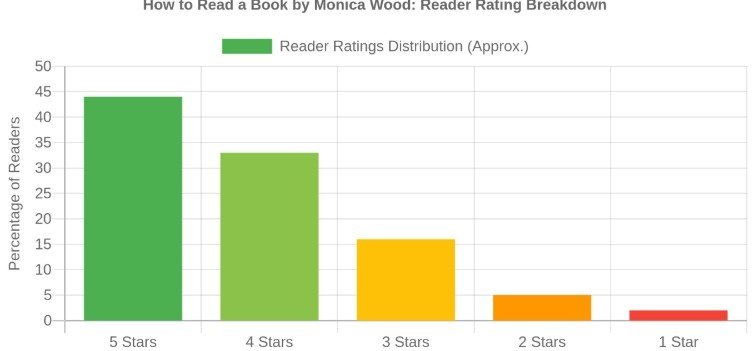
The how to read a book monica wood book review community, spread across Goodreads, literary blogs, and independent bookshop newsletters, skews strongly positive, but the praise is specific rather than effusive, which tells you something useful.
“Wood writes about the working poor with the specificity and dignity that too much literary fiction reserves for the comfortable middle class. Her characters are not problems to be solved. They are people to be witnessed.”
This consensus from the independent literary press community reflects a repeated observation across dozens of reader and critic responses documented on sites like Goodreads and literary review platforms.
The how to read a book monica wood book review picture has a few recurring criticisms worth knowing. Some readers find the pacing in the middle section slow, particularly in the chapters focused on Theodore’s grief group. Others feel that Lorraine, Frankie’s mother, deserved more page time given how much weight she carries in the plot. These are fair critiques. The middle section is slower. Lorraine does feel slightly underdeveloped relative to her narrative function.
My honest take: the slow middle is earned by the ending. The grief group chapters, which feel slightly digressive when you’re in them, pay off in a scene near the close of the novel where Theodore says something at a group meeting that reframes everything you thought you understood about his project. You do not get that payoff without the setup. So I would sit with the slower sections rather than skim them.
As a piece of small press and independent press literary fiction, this is exactly the kind of novel that Algonquin Books built its reputation on: precise, regional, emotionally serious, and not interested in performing cleverness at the expense of feeling.
The How to Read a Book Monica Wood Experience: A Reader’s Checklist
If you are deciding whether to read this novel, assign it, recommend it, or discuss it in a book club or classroom, here is a practical checklist built from the full how to read a book monica wood book explained picture.
- Read it if you love character-driven fiction where nothing explodes but everything shifts.
- Read it if you are interested in how literacy and class intersect in contemporary American life.
- Read it if you have ever had a relationship with an older person that surprised you by going deeper than expected.
- Assign it to students fourteen and older without concern about content; the language and situations are realistic but not gratuitous.
- Pair it in a book club with a nonfiction text about reading aloud, such as Daniel Willingham’s work on reading comprehension, to extend the conversation into how Frankie’s experience maps onto actual research.
- If you are a writing teacher, use the alternating point-of-view structure across Frankie’s and Theodore’s chapters as a craft discussion about whose story a novel is allowed to be.
Why This Novel Fits the Small Press Conversation

The contemporary small press world has spent the last decade arguing, productively, about which books deserve attention and which marketing machines have been obscuring them. How to read a book monica wood is a precise example of the book that gets obscured. It does not have a high-concept pitch. It is not a debut that arrived with major publicity. It is a mid-career novel by a writer who has been doing excellent work in relative quiet for three decades.
The how to read a book monica wood book explained fully is also a book that asks you to slow down. It is built for re-reading. The first time through, you track the plot. The second time, you start noticing how the books Frankie reads to Theodore are doing structural work in the novel itself. The scenes from the books they read together rhyme with what is happening between them. That layering is craftsmanship, and it is the kind of thing you only find when a writer has thought very carefully about structure rather than simply following narrative instinct.
The how to read a book monica wood summary can be delivered in two sentences. It takes a full read to understand what those two sentences contain.
Placing Monica Wood’s Work in a Reading Sequence
Since how to read a book monica wood series order is a common question, and the answer is that this is a standalone, the more useful question is: where does this novel fit in a sequence of Monica Wood’s books?
If you are new to her work, start here. How to Read a Book is her most fully realized novel and gives you the clearest sense of her range. From here, go to Any Bitter Thing, which covers similar Maine territory with a different emotional center. Then Secret Language, which is earlier and slightly less polished but has a raw energy that fans of her later work find rewarding in retrospect. The Pocket Muse is her craft book and is worth reading regardless of whether you are a writer, because it illuminates what she is doing in the fiction.
For readers who want to situate the how to read a book monica wood author in a broader literary context, she belongs on a shelf next to Elizabeth Strout, Richard Russo, and Anita Shreve. All four write Maine or New England working-class communities. All four are interested in the emotional lives of people who do not often appear in literary fiction as subjects rather than background. Wood is the least famous of the four. She is not the least talented.
What the Novel Gets Right That Most Books About Reading Get Wrong

Most novels that use reading or literature as a central theme fall into one of two traps. Either the reading becomes magical and transformative in an immediate, cinematic way that bears no relationship to how reading actually works. Or the novel becomes precious about literature, treating books as sacred objects while the characters who handle them remain thin.
The how to read a book monica wood novel avoids both traps with real discipline. Frankie does not fall in love with books. She develops a specific, partial, and honest relationship with certain kinds of stories. She still has no patience for dense prose. She still prefers short stories to novels. She still reads slowly and with effort. What changes is that she no longer experiences that effort as evidence of her own inadequacy. She experiences it as the actual texture of reading, which is sometimes hard and sometimes worth it.
That distinction matters. It is more accurate than almost anything else written about literacy in fiction, and it is more useful for anyone who works with reluctant readers in any context.
The how to read a book monica wood themes around reading itself reflect Wood’s background as a writing teacher. She has seen many Frankies. She has also seen many Theodores, people who know a great deal about literature and have used that knowledge to hold other people at a certain distance. The novel is honest about both patterns without being cruel about either.
A Note on the Novel’s Structure as Craft
The how to read a book monica wood book summary does not fully capture the structural elegance at work. Wood alternates between Frankie’s and Theodore’s perspectives, but the ratio shifts across the novel. Frankie dominates the early chapters. Theodore’s perspective expands in the middle. By the final third, the chapters are nearly even. This is not arbitrary. As Theodore becomes more present to his own grief and less defended behind his intellectual project, the novel gives him proportionally more space. That structural choice is the novel’s argument made visible in form.
The chapter titles are all drawn from the books Frankie and Theodore read together. This detail is easy to miss on a first read and rewarding when you notice it. Each title is a quiet comment on what is happening in the chapter beneath it.
Readers who want to track this carefully should keep a running list of the books referenced in the novel. The pattern that emerges across Vivienne’s choices is its own story about who she was, and it reframes Theodore’s project in a way that the novel never states explicitly but makes unmissable if you are paying attention. That kind of close attention can also be useful when thinking about the practical side of publishing, including how long does it take to get a book published, because the finished book reflects many stages of development beyond the initial writing.
How to Read a Book Monica Wood: The Bottom Line
The how to read a book monica wood novel is not for readers who need a plot that pulls them forward by the collar. It is for readers who are willing to sit in a room with two people and watch them change in ways they did not plan. That is a specific kind of patience, and Wood rewards it fully.
The how to read a book monica wood book review consensus is warranted. This is a quiet novel that does complicated things quietly, which is harder than it looks and rarer than it should be. The how to read a book monica wood age rating of fourteen and up is appropriate. The how to read a book monica wood genre label of contemporary literary fiction is accurate. And the how to read a book monica wood series order answer, that it is a standalone, means you can start here without any prerequisites and get the full experience.
The deeper question the novel leaves you with is not about Frankie or Theodore specifically. It is about what reading is for when you are no longer being graded on it, when no one is watching, when the room is quiet and the book is hard and you keep going anyway. Wood does not answer that question directly. She just shows you two people who find out, and lets you figure out what their answer has to do with yours.