
Most authors who fail at multi-book projects do so because they write the first book as a standalone and scramble to invent a larger plot for the sequels. Mastering how to outline a trilogy novel requires viewing your narrative not as three distinct books, but as one massive, three-act story engineered with distinct narrative milestones.
Research into story structure highlights that reader satisfaction hinges on dynamic pacing across multi-part arcs. When a trilogy works, it creates an compound emotional payoff that single books simply cannot match. To build a narrative engine capable of sustaining hundreds of thousands of words, you must balance macro-level world-building with individual character arcs.
The Macro vs. Micro Dilemma: Engineering the Series Arc
The biggest trap when planning a three-book series is “second-book syndrome”—a structural mid-point collapse where book two feels like filler designed to bridge the beginning to the end. To avoid this, your macro-outline must apply classic structural principles across the entire narrative arc.
[Macro Series Arc]
Book 1: Inciting Incident & World Setup
│
Book 2: Midpoint Shift & Lowest Point (Dark Night)
│
Book 3: Climax & Total Series Resolution
1. The Macro-Inciting Incident (Book One)
Your opening volume introduces the core conflict, but it only exposes the tip of the iceberg. Book one must resolve its immediate, localized threat to give readers closure, while simultaneously dropping clues about the greater systemic danger lurking behind it.
2. The Series Midpoint and Dark Night (Book Two)
The middle installment functions as the emotional spine of your trilogy. Here, the antagonist gains the upper hand, secrets come to light, and the protagonist experiences a profound defeat. For guidance on refining character motivations during this critical middle phase, reviewing expert developmental editing tips for fiction writers can help ensure your narrative tension remains taut.
3. The Ultimate Climax and Resolution (Book Three)
The final book brings every subplot, relationship, and thematic thread to its breaking point. The personal stakes and external conflict merge, requiring the protagonist to demonstrate total internal transformation to succeed.
The Trilogy Architecture Matrix
To keep your pacing tight, map your core structural beats across both individual volumes and the overarching series:
| Structural Beat | Series-Level Function | Individual Book Function |
| Act I (Book 1) | Establishes global conflict & status quo | Resolves localized incident; opens series portal |
| Act II (Book 2) | Escalates global stakes; reveals true villain | Ends in temporary defeat or major status quo shift |
| Act III (Book 3) | Resolves central thematic & plot conflict | Delivers final confrontation & complete character transformation |
Building a Series Bible to Maintain Lore and Continuity
When writing across multiple volumes, minor continuity errors can derail reader immersion. Professional authors build a centralized reference system—often called a Series Bible—to track world rules, character developments, and timelines.
Educational institutions like the Library of Congress host extensive digital archives demonstrating how complex historical timelines are cataloged, providing a great reference for how writers can structure their own fictional histories.

Key Components of a Series Bible:
- Character Dossiers: Track physical traits, internal flaws, dynamic relationships, and emotional arcs across all three books.
- World-Building Rules: Document magic systems, technological limits, political factions, and geography to prevent contradictions.
- Master Timeline: Record exact dates, character ages, and off-screen events to ensure chronological accuracy.
As you expand your story’s scope, taking time to improve creative writing skills through intentional practice helps keep your prose fresh across a multi-year writing project.
The 4-Step Self-Test for Trilogy Viability
Before committing to a multi-year writing journey, run your outline through this quick diagnostic test to verify that your concept truly requires three books:

- The Standalone Test: Does Book One have a complete, satisfying character arc and plot resolution on its own?
- The Escalation Test: Are the stakes in Book Two demonstrably higher than in Book One, rather than just repeating the same conflict?
- The Transformation Test: Does your protagonist undergo a clear three-stage emotional evolution from start to finish?
- The Subplot Continuity Test: Do minor characters and secondary plot threads introduced in Book One directly impact the final climax in Book Three?
If your outline fails two or more of these checks, your story may work better as a standalone novel or a duology.
Commercial Realities and Publishing Considerations
While outlining a epic trilogy is an exciting creative endeavor, authors should also evaluate the commercial landscape. Managing a long-term literary intellectual property requires treating your writing career with professional rigor.
Many published authors eventually choose to establish formal business structures for their personal brand. Understanding organizational options—such as evaluating if authors need an LLC—helps protect rights, manage royalties across multiple release cycles, and organize tax reporting as backlist income grows.
Organizations like the U.S. Small Business Administration offer resources on managing intellectual property assets for creative sole proprietorships.
When Traditional Outlining Rules Do Not Apply
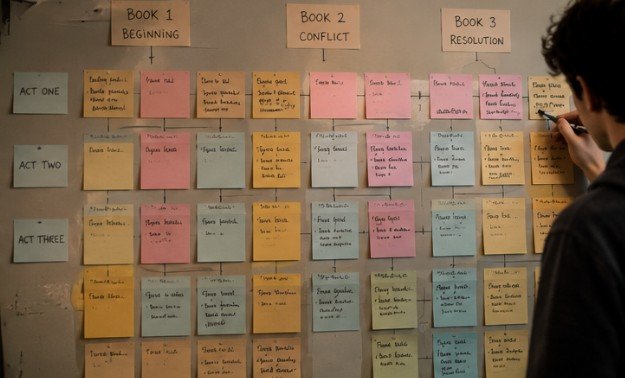
Outlining a trilogy provides a sturdy roadmap, but rigid structure shouldn’t stifle organic creativity. “Pantsers” (writers who write by the seat of their pants) often find rigid chapter-by-chapter outlines restrictive.
If formal outlining limits your workflow, consider milestone planning. Instead of mapping every scene, plot only the major structural beats for each book: the inciting incident, the midpoint shift, and the climax. Leave the space between these milestones open for discovery. This approach preserves structural integrity without sacrificing creative freedom.
Frequently Asked Questions
1. How to structure a trilogy?
Apply a overarching three-act structure across the entire series while giving each individual book its own complete beginning, middle, and end with escalating stakes.
2. How many books do you need to sell to make $100,000?
At a $2.00 royalty per eBook, you need to sell 50,000 copies. At a $5.00 profit per print book, you need 20,000 sales.
3. What are the 7 elements of a novel?
The seven core elements of a novel are character, plot, setting, point of view, theme, style, and conflict.
4. What do you call a trilogy but with 4?
A four-book series is called a tetralogy or a quartet.
Learning how to outline a trilogy novel requires balancing macro-level vision with micro-level execution. By establishing a master three-act framework, maintaining a detailed series bible, and testing your narrative viability before writing, you build a foundation that supports reader engagement across hundreds of pages.
Treat your series arc as one cohesive journey, give each volume its own distinct identity, and focus on steady character growth. Outline with clarity, protect your narrative continuity, and give your readers an epic conclusion worth waiting for.