Some books recover a lost place. Cristina Rivera Garza asks what happens when the place has been erased before recovery can even begin. In this autobiography of cotton cristina rivera garza book review, what struck me most was how family memory, labor history, and damaged land become one unfinished story.
Graywolf Press published the 288-page English edition on February 3, 2026, translated from Spanish by Christina MacSweeney. Rivera Garza first published Autobiografía del algodón in Spanish in 2020.
What Is Autobiography of Cotton About?
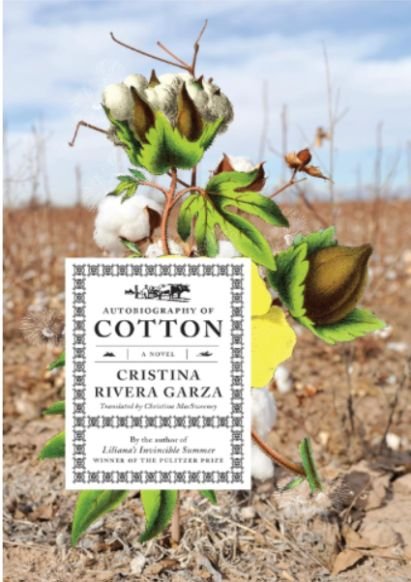
Image Credit: Amazon
The novel begins in northern Mexico in 1934. Writer and Communist activist José Revueltas travels to Estación Camarón in Tamaulipas to support striking cotton workers.
Rivera Garza follows another movement toward those fields. Her grandparents, José María Rivera Doñez and Petra Peña Martínez, leave struggling mining communities searching for a better future. Their route intersects with Revueltas geographically and historically, although the archive cannot prove every possible connection.
That uncertainty is central to the book. My first major takeaway from this autobiography of cotton cristina rivera garza book review is that absence becomes narrative material. Missing records, vanished settlements, exhausted soil, and uncertain family memories shape the story.
Readers attracted to unstable places and formally adventurous fiction may also appreciate the city like water dorothy tse book.
A Border Novel Built From Archives, Memory, and Fiction

Rivera Garza refuses a clean separation between novel, memoir, biography, history, and ecological criticism. The hybrid form suits a past that documents alone cannot reconstruct.
The Archive Does Not Get the Final Word
Rivera Garza uses telegrams, historical records, family memories, and research connected with the 1934 strike. Yet she never treats archival evidence as complete.
That makes this autobiography of cotton cristina rivera garza book review more interesting than a standard historical-fiction assessment. The novel asks not only what happened, but whose experiences survived long enough to become accepted history.
Harvard’s ReVista highlights the same combination of archival material, family history, fiction, and memoir. Rivera Garza has used related techniques elsewhere. The Pulitzer Prize describes her 2024-winning Liliana’s Invincible Summer as genre-bending work combining memoir, investigation, and poetic biography.
The difference here is scale. Rivera Garza moves from the intimate uncertainty surrounding her grandparents toward questions about agricultural policy, labor, migration, and environmental damage.
Christina MacSweeney’s Translation Keeps the Form Mobile
Christina MacSweeney’s English translation carries intimate recollection, documentary language, political reflection, and speculative reconstruction without forcing them into one register.
That mobility matters because the novel constantly crosses boundaries of genre, geography, and time.
Readers who enjoy fiction that refuses one stable narrative frame may find the spoil maile chapman book another useful internal reading recommendation.
Cotton Is Not a Backdrop; It Is a Historical Force
The title initially sounds metaphorical. Rivera Garza makes cotton materially active.
Cotton attracts workers. It reshapes settlement. It promises prosperity. It produces exploitation. It alters the soil and influences migration.
That is why the autobiography of cotton cristina rivera garza book review cannot be reduced to a family saga. Graywolf describes the novel through agricultural colonization, labor activism, environmental degradation, and cross-border migration.
Cotton becomes a way of tracing cause and effect across generations. Economic optimism changes where families live. Work changes communities. Agriculture changes landscapes. Those landscapes then influence the lives that follow.
Ecocide Gives the Family Story a Larger Scale
The environmental argument became one of the most memorable parts of the book for me.
Cotton once promised prosperity as “white gold,” but intensive cultivation carried serious consequences. ReVista’s discussion of the book notes soil exhaustion, erosion, drought, and flooding within the history Rivera Garza reconstructs.
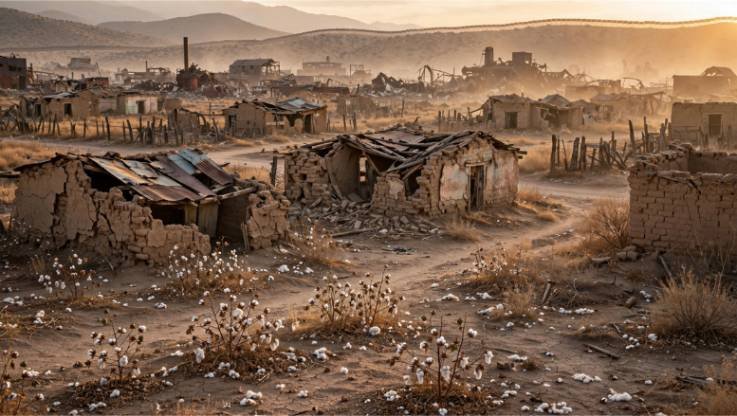
Her later attempt to return toward Estación Camarón makes that history physical. The place associated with family memory has become damaged, fragmented, and difficult to locate.
My own way of interpreting the novel is as a three-layer excavation. The first layer is ancestry. The second is labor history. The third is ecology.
Rivera Garza keeps digging until those layers become impossible to separate. That framework explains why this autobiography of cotton cristina rivera garza book review ultimately feels larger than the story of one family.
How Cristina Rivera Garza Writes the Mexico-US Borderlands
Many border narratives concentrate on crossing. Rivera Garza seems equally concerned with what remains after people move, settle, work, organize, leave, or disappear.
Her borderlands are not simply a political line between nations. They form a social ecosystem shaped by agriculture, economic ambition, labor conflict, migration, environmental pressure, and memory.
That gives the autobiography of cotton cristina rivera garza book review particular relevance for US readers. Rivera Garza has long examined memory and identity from a transnational perspective. The MacArthur Foundation highlighted that quality when naming her a 2020 Fellow.
The book also complicates conventional migration narratives. Movement does not begin at the border. It begins earlier through work, poverty, changing land, aspiration, and family decisions.
Readers interested in experimental fiction about preserving unstable histories may also want to explore the memory museum m lin book.
Is Autobiography of Cotton Difficult to Read?
At times, yes, but the challenge has a purpose.
This is not a plot-driven historical novel. Rivera Garza moves between documents, personal memory, political history, environmental observation, and imaginative reconstruction.
Anyone expecting clean chronology may need time to adapt. Yet the fragmentation mirrors the experience of researching a past that refuses complete recovery.
In this autobiography of cotton cristina rivera garza book review, I see that difficulty as structural rather than accidental. The reader experiences some of the same uncertainty facing the writer.
Critical response has also been unusually strong. Book Marks aggregates seven rave reviews, while Kirkus praised Rivera Garza’s blending of multiple literary forms.
Who Should Read Autobiography of Cotton?
I would recommend the novel most strongly to readers interested in experimental literary fiction, border studies, environmental humanities, labor history, migration, and hybrid memoir.
It also rewards anyone curious about how writers transform archives into narrative without pretending research can restore every missing voice.
Readers who prefer rapid pacing and straightforward chronology may find it demanding. Readers who enjoy books where form becomes part of the argument will find much more to admire.
That distinction matters when deciding whether this autobiography of cotton cristina rivera garza book review points toward the right book for you.
Cotton Has Receipts, and This Book Keeps Them
My final impression from this autobiography of cotton cristina rivera garza book review is that Rivera Garza refuses to let disappearance equal innocence.
Towns vanish. Records disappear. Landscapes deteriorate. Families forget. None of those absences erase the economic and political forces that produced them.
That gives Autobiography of Cotton its unusual strength. It feels intimate without becoming private, political without turning into a lecture, and historical without pretending the past is settled.
My reading tip is simple: read it slowly and notice every change in form. The telegrams, memories, historical gaps, research fragments, and imagined moments are not interruptions. They are the architecture of the novel.
Frequently Asked Questions
1. What is Autobiography of Cotton by Cristina Rivera Garza about?
It connects Rivera Garza’s family history with a 1934 cotton workers’ strike, migration, labor politics, and environmental change in the Mexico-US borderlands.
2. Is Autobiography of Cotton fiction or nonfiction?
Graywolf publishes it as a novel, although Rivera Garza deliberately combines fiction, memoir, biography, archival research, history, and ecological criticism.
3. Who translated Autobiography of Cotton into English?
Award-winning literary translator Christina MacSweeney translated the book from Spanish for its February 2026 English-language edition.
4. Is Autobiography of Cotton worth reading?
Yes. This autobiography of cotton cristina rivera garza book review recommends it for readers who enjoy experimental fiction, border history, environmental themes, and archival storytelling.