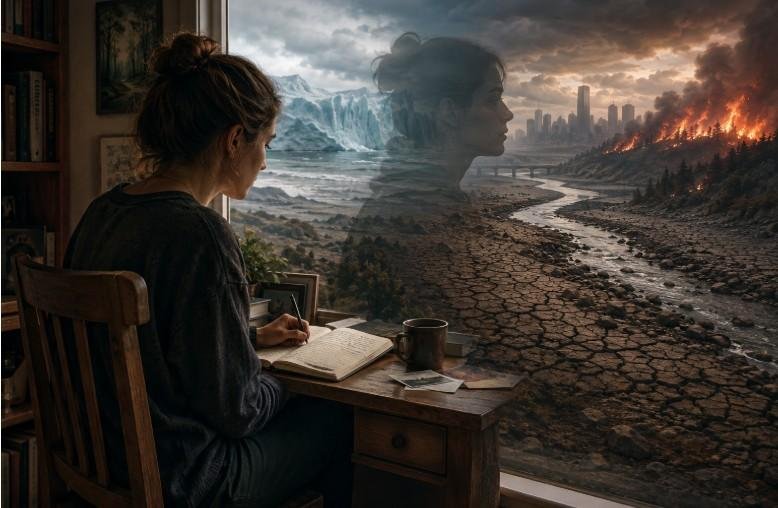
I started noticing climate anxiety in fiction in a different way than I expected. It was not always a story about a flooded city, a ruined coastline, or people surviving after a massive disaster. Sometimes the anxiety was quieter: a character watching a familiar landscape change, worrying about a child’s future, or carrying the feeling that normal life may not stay normal forever. Those details felt more recognizable because they turned a planetary problem into something personal.
I also found that the climate stories that stayed with me were rarely the ones focused only on catastrophe. What made them effective was watching people respond to uncertainty. Some characters shut down, some adapt, some argue with their families, and others build relationships around a shared problem. That human tension gives climate fiction its emotional weight and makes environmental change feel less like a distant headline and more like something capable of reshaping ordinary life.
Why Climate Anxiety Works So Well in Fiction
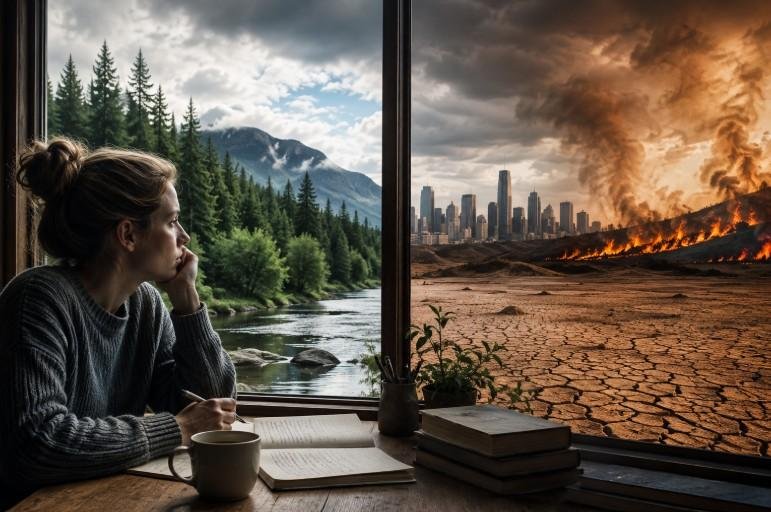
Climate change is difficult to grasp because its causes and effects stretch across huge distances and long periods of time. Fiction can shrink that scale. Instead of explaining an entire planetary system, a novel can follow one person through a difficult day, one family through a changing community, or one relationship strained by an uncertain future.
Climate anxiety is also more complicated than simply being afraid of a disaster. It can involve grief, guilt, anger, helplessness, uncertainty, and the feeling that the future may look very different from what people expected. Fiction has room to explore those emotions without immediately resolving them.
Recent literary discussions show that climate fiction now covers a wide range of forms, from dystopian and speculative stories to literary fiction where environmental disruption remains part of a broader human story.
Characters Make a Global Crisis Feel Personal
The environmental problem becomes more powerful when it changes something the character cares about. A shifting climate might threaten someone’s home, livelihood, family, community, or sense of identity.
Barbara Kingsolver’s Flight Behavior offers a useful example. Displaced monarch butterflies become connected to the life of a Tennessee woman whose personal circumstances are already unsettled. The environmental disruption becomes part of her emotional and social world rather than remaining a distant scientific issue.
This approach allows readers to understand climate anxiety through experience. They are not simply being told that something is wrong. They are watching a character notice it, question it, resist it, and eventually respond to it.
Anxiety Can Look Like Paralysis
Climate fiction does not need characters who spend every chapter preparing for the end of civilization. Anxiety can appear through avoidance.
Someone may continue working, raising children, maintaining friendships, and following a normal routine while privately worrying about what lies ahead. That contrast can feel more realistic than constant panic.
Jenny Offill’s Weather captures this quieter form of environmental dread through a fragmented domestic perspective. The story connects climate concerns with information overload, family responsibilities, and the difficulty of knowing how to respond when the scale of a problem feels overwhelming. Recent literary analysis has also identified this connection between domestic fragmentation and climate change anxiety.
That makes room for a familiar kind of fear: knowing enough to worry, but not knowing what to do with the worry.
Family Conflict Can Shape the Story
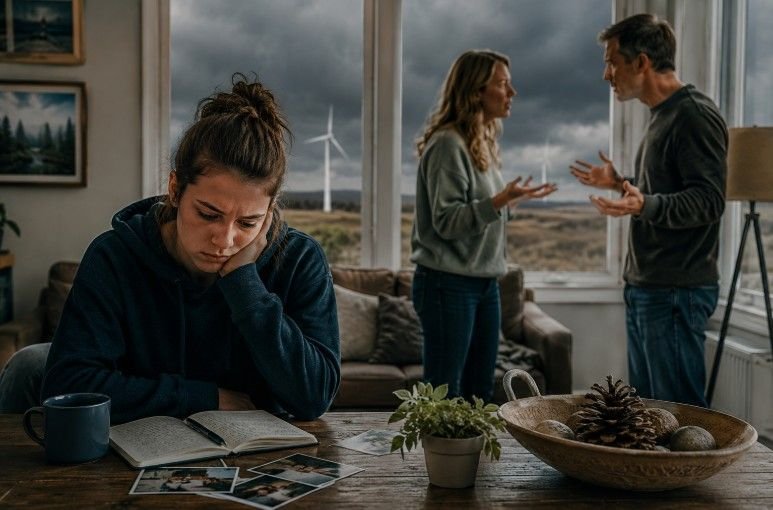
Climate anxiety can also create tension between generations.
Parents may want to protect their children from frightening information. Younger characters may question why older generations accepted certain systems for so long. Two people can agree that environmental change is happening while having completely different ideas about responsibility and what should happen next.
Octavia E. Butler’s Parable of the Sower connects environmental instability with economic breakdown and social disorder. Its protagonist, Lauren Olamina, does not simply wait for conditions to improve. She develops a new way of thinking about survival and the future as her society becomes increasingly unstable.
That makes climate anxiety a character conflict rather than merely a setting.
The Environment Can Become Part of the Conflict
In some stories, the landscape almost becomes another character.
A forest can represent memory. A coastline can represent home. A changing season can unsettle someone whose identity is tied to a particular place. When the physical environment changes, the emotional meaning of that place can change too.
Richard Powers’ The Overstory approaches environmental loss through interconnected human lives and their relationships with trees. Nature is not simply scenery behind the characters. It becomes part of the story’s larger question about how people understand their place within the living world.
This helps climate fiction move beyond disaster. Environmental change can reshape a person’s sense of belonging long before a dramatic catastrophe occurs.
Climate Fiction Does Not Need a Dystopian Future
It is easy to associate climate fiction with ruined cities, extreme weather, and post-apocalyptic survival. Those settings can be effective, but they are not required.
Climate anxiety can appear in literary fiction, speculative fiction, family drama, or a quiet contemporary story. The environmental crisis might sit at the edge of the plot while still influencing how characters think about money, relationships, work, children, or home.
This wider range is one reason climate themes continue appearing across different forms of fiction. Some stories imagine a damaged future, while others focus on people living through gradual change in the present.
Characters Respond in Very Different Ways
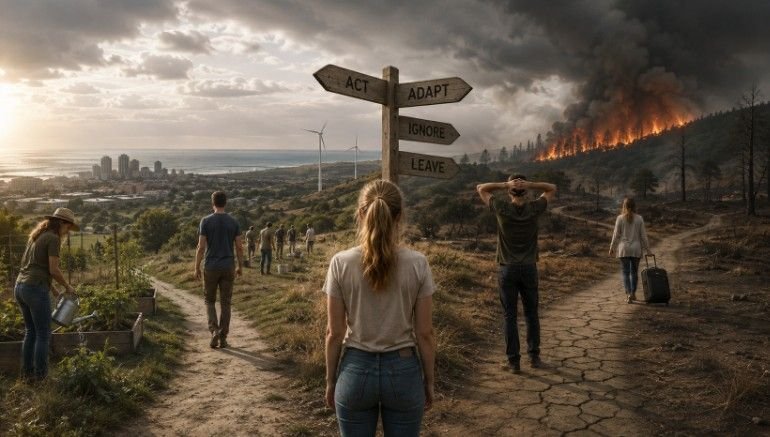
There is no single emotional response to climate anxiety, and fiction becomes more interesting when characters disagree.
One person might become deeply involved in activism. Another might avoid the subject because thinking about it feels unbearable. Someone else may focus on practical adaptation, such as protecting a home, conserving resources, helping neighbors, or learning new skills.
That range creates a natural connection with psychological fiction books gaining popularity. Environmental change becomes a pressure test for the mind. Readers can see how fear affects behavior, relationships, identity, and a person’s ability to imagine the future.
Fiction Can Turn Isolation Into Connection
Climate anxiety can feel lonely because the problem is too large for one person to solve. Stories can challenge that feeling by showing people finding one another.
Community resilience becomes especially meaningful when characters move from individual fear toward shared responsibility. Neighbors cooperate. Families exchange knowledge. Strangers help each other adapt. The story does not need to promise that everything will be fixed.
Even a small act of cooperation can change the emotional direction of a story. That is often more convincing than an easy message of optimism.
This is also where fiction books that challenge your perspective can have their strongest impact. A climate story can make readers question assumptions about progress, comfort, responsibility, and what deserves protection.
Stories Can Change How Readers See the Future
One of fiction’s strengths is its ability to place readers inside a perspective they might never experience themselves. A character can make climate change feel different when viewed through the eyes of a parent, child, farmer, activist, immigrant, scientist, or someone losing a familiar home.
The story does not need to provide a solution. It can simply complicate the way readers think about the problem.
Climate fiction can also challenge the idea that environmental change affects everyone equally. Loss, displacement, economic pressure, and access to resources can create very different experiences within the same crisis. That human inequality gives these stories another layer beyond environmental fear.
Why Hope Still Has a Place
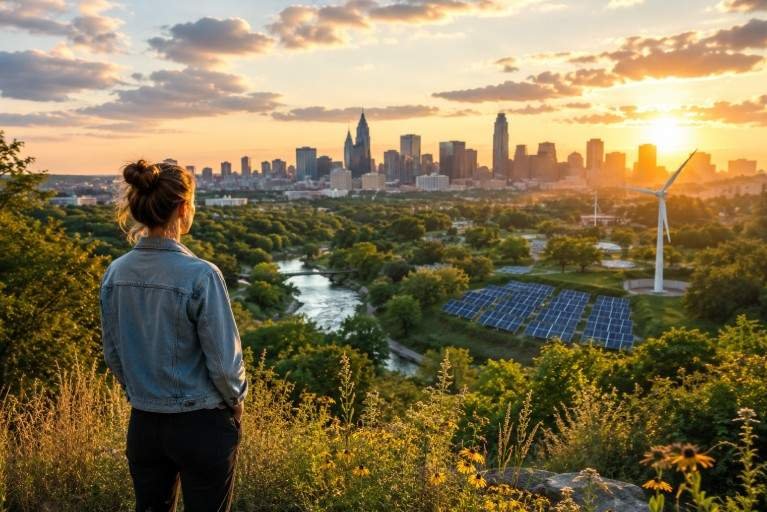
Hope in climate fiction does not have to mean that everything turns out well.
A character helping another person can be hopeful. A community rebuilding can be hopeful. Someone learning to live with uncertainty instead of becoming paralyzed by it can be hopeful. Even paying closer attention to the natural world can change the emotional direction of a story.
That flexibility helps explain why climate themes can appear within popular fiction genres right now rather than remaining limited to one category. Environmental anxiety can support literary drama, dystopia, speculative fiction, family stories, thrillers, and other forms because the underlying questions are ultimately human.
FAQs: Fiction Exploring Climate Anxiety Through Characters, Conflict, and Change
1. What is climate anxiety in fiction?
It is the fear, grief, uncertainty, or helplessness characters experience around environmental change. Stories often explore these emotions through relationships and everyday decisions.
2. Does climate fiction always involve disaster?
No. Some stories focus on subtle environmental changes, ecological loss, uncertainty, or the social effects of a changing climate without showing a large-scale catastrophe.
3. Why use climate anxiety as a character conflict?
It creates emotional pressure that can influence relationships, identity, choices, and ideas about the future without relying on one dramatic event.
4. Can climate fiction be hopeful?
Yes. Hope can come through adaptation, community, care, resilience, or finding meaning despite uncertainty. A hopeful story does not need to ignore loss.
Why These Stories Stay With Us
Climate fiction can make an enormous subject feel close enough to understand. Instead of asking readers to think about the planet as one vast system, it can show what environmental uncertainty does to a family, neighborhood, relationship, or person’s idea of home. That scale creates room for emotions that facts alone cannot easily capture, including grief over something that has not happened yet, frustration with systems that seem impossible to change, and relief when people discover they are not facing uncertainty alone.
The most memorable stories do not simply predict a frightening future. They ask what people become when the future feels uncertain, and what they choose to protect along the way.