
Rural America has never been one story. It stretches from Nebraska prairie and Kansas farmland to Mississippi backroads, Appalachian mountain communities, Indigenous lands, the Colorado plains, and the deserts along the US-Mexico border. That diversity is why I find books about rural american life far more interesting when they move beyond nostalgic images of barns and quiet country roads.
The strongest rural American literature explores land, work, family, poverty, migration, race, faith, farming, economic change, and belonging. Some stories celebrate community ties. Others expose isolation, inequality, addiction, environmental pressure, or the disappearance of traditional livelihoods. Together, these novels and memoirs reveal a complicated America that rarely fits stereotypes.
What Are the Best Classic Books for Understanding Rural America?
John Steinbeck’s The Grapes of Wrath remains one of my first recommendations. The Joad family’s displacement from Oklahoma during the Dust Bowl connects rural poverty, farm loss, migration, labor exploitation, and the Great Depression. Steinbeck’s Of Mice and Men approaches agricultural America on a smaller scale, following migrant ranch workers in California while exploring friendship, loneliness, work, and fragile dreams.
Willa Cather’s My Ántonia takes readers to the Nebraska prairie, where immigrant and pioneer families build lives through difficult farm labor. It remains essential Midwest literature because Cather makes land, memory, immigration, and community equally important.
Readers who want to see where these writers and movements fit within the nation’s broader literary development can also explore the history of American literature timeline, which traces major periods, authors, and shifts in American writing.
William Faulkner’s As I Lay Dying offers a very different portrait. Through a poor Mississippi family’s funeral journey, Faulkner captures rural Southern life, family conflict, hardship, isolation, and dark humor.
Jane Smiley’s A Thousand Acres brings the farm novel into modern Iowa. Its story of land inheritance exposes tensions involving family authority, trauma, money, agriculture, and the emotional weight of owning generations of farmland.
Which Novels Best Capture Small-Town and Working-Class America?

Kent Haruf’s Plainsong and the wider Plainsong Trilogy beautifully capture the quiet rhythms of a fictional Colorado plains town. I like Haruf’s ability to show loneliness and hardship without overlooking kindness, friendship, and the informal bonds that hold small communities together.
Marilynne Robinson’s Gilead moves to 1950s Iowa. Written as a letter from an aging minister to his young son, this reflective novel explores faith, memory, forgiveness, family, and the interior life of a small American town.
These writers belong to a much broader tradition of famous American authors and their books, showing how distinctive literary voices have used particular communities, landscapes, and periods of U.S. history to examine larger questions about identity, class, family, and belonging.
Richard Russo’s Empire Falls shifts the focus to Maine. The decline of a once-prosperous mill town becomes a story about working-class families, economic change, local power, secrets, and what happens when the industry supporting an entire community disappears.
Daniel Woodrell’s Winter’s Bone takes readers into the Missouri Ozarks, where teenager Ree Dolly faces poverty, family obligation, crime, and isolation. The novel is especially effective because it refuses to romanticize rural hardship.
Jesmyn Ward’s Salvage the Bones does something equally powerful in rural Mississippi. Set as Hurricane Katrina approaches, it explores poverty, pregnancy, family loyalty, vulnerability, and resilience within a Black Southern family.
Which Books Best Explain Appalachia and Rural Economic Hardship?
Barbara Kingsolver’s Demon Copperhead offers one of the most compelling contemporary portraits of Appalachia. Through foster care, addiction, poverty, education, and institutional failure, the novel asks how geography and economic conditions shape opportunity.
Her Prodigal Summer presents another side of Appalachian life by connecting farming, wildlife, conservation, changing agricultural practices, and relationships with the natural environment.
J.D. Vance’s Hillbilly Elegy approaches Appalachian Kentucky and Ohio through memoir. It discusses family instability, class, economic decline, work, and cultural identity. I would read it as one personal interpretation of Appalachian experience rather than as a complete explanation of such a large and diverse region.
Sarah Smarsh’s Heartland provides an especially valuable counterpoint. Through her family’s experience in rural Kansas, she examines generational farming, low-wage work, class, education, gender, and what it means to work hard while remaining financially insecure.
What Nonfiction Books Reveal the Changing American Countryside?

Jessica Bruder’s Nomadland follows older and economically vulnerable Americans traveling in RVs across the West in search of seasonal employment. It expands the idea of rural working-class life beyond permanent small towns and family farms.
Ivan Doig’s This House of Sky looks back on childhood in Montana ranch country. Harsh weather, livestock work, family loss, mountain landscapes, and dependence on neighbors create an intimate portrait of the rural American West.
Tara Westover’s Educated takes readers to an isolated Idaho upbringing and examines family authority, self-reliance, formal education, and the tension between belonging and independence.
Francisco Cantú’s The Line Becomes a River shifts attention to the desert borderlands. His account of the US-Mexico border explores law enforcement, migration, remote landscapes, and the communities whose daily lives are shaped by national borders.
Which Books Show the Cultural Diversity of Rural America?
Louise Erdrich’s The Round House, set around an Ojibwe reservation in North Dakota, explores justice, violence, family, tribal sovereignty, and Indigenous identity. It reminds readers that Native American communities are central to any serious discussion of rural American history.
Diane Wilson’s The Seed Keeper connects generations of a Dakota family through seeds, farming, displacement, cultural memory, and relationships with land. For readers interested in Indigenous communities and environmental themes, it provides an important perspective.
Reading across these different settings also connects naturally with regional literature of the United States, which examines how geography, local culture, dialect, work, history, and community shape distinct literary traditions across the country.
Cristina Henríquez’s The Book of Unknown Americans broadens the conversation further. Its Delaware apartment community brings together Latino immigrant families facing work, education, discrimination, hope, and cultural adjustment. Although it is not a conventional farm-life novel, its close-knit community perspective adds useful context to discussions of overlooked American places and immigrant experience.
What Should I Read First If I Want to Understand Rural America?
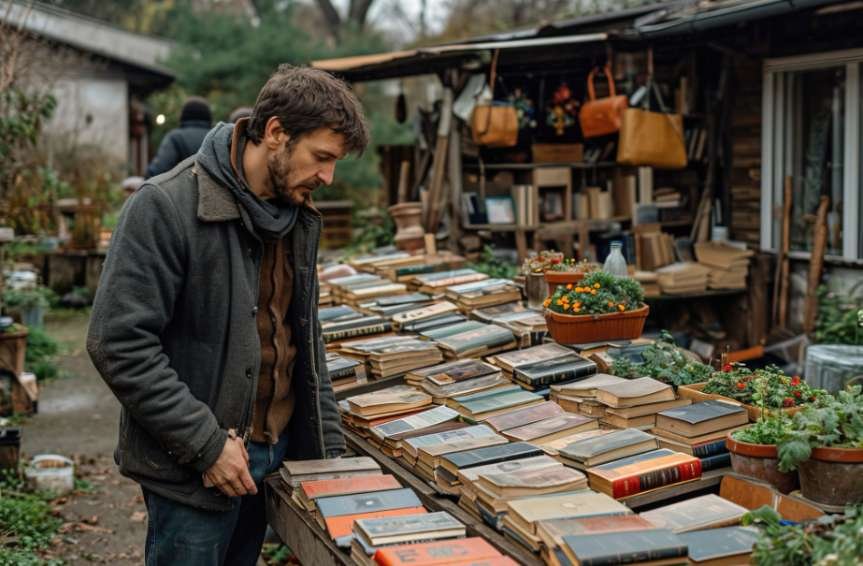
I would start with The Grapes of Wrath for rural history and migration, Plainsong for small-town community, Heartland for modern working-class nonfiction, and Salvage the Bones for the rural South. Readers interested in farming should try My Ántonia or A Thousand Acres, while The Round House and The Seed Keeper provide essential Indigenous perspectives.
The important thing is not to rely on one region or one author. The Midwest, Appalachia, Mississippi, Montana, Maine, California, Colorado, Kansas, Idaho, and Indigenous lands each tell different stories about American country life.
Frequently Asked Questions
1. What is the best novel about rural America?
The Grapes of Wrath is one of the strongest starting points because it combines farm life, poverty, migration, family, labor, and a major period of US history.
2. What books are best for understanding small-town America?
Plainsong, Gilead, and Empire Falls are excellent choices because they explore community relationships, economic change, faith, work, family, and the pressures facing smaller American towns.
3. Which books focus on American farm life?
My Ántonia, A Thousand Acres, Heartland, and Prodigal Summer all examine farming from different historical, economic, and environmental perspectives.
4. Are there modern books about rural poverty and working-class America?
Yes. Heartland, Demon Copperhead, Winter’s Bone, Salvage the Bones, and Nomadland explore economic insecurity, limited opportunity, labor, addiction, migration, and family survival in contemporary or relatively recent America.
Conclusion
What I value most about these books about rural American life is their refusal to turn the countryside into a single romantic image. The strongest stories show both beauty and hardship, independence and dependence, deep community ties and profound isolation.
Read across regions and perspectives, and a much richer picture emerges. Rural America becomes not one place but thousands of communities shaped by land, history, race, work, migration, family, and constant change.