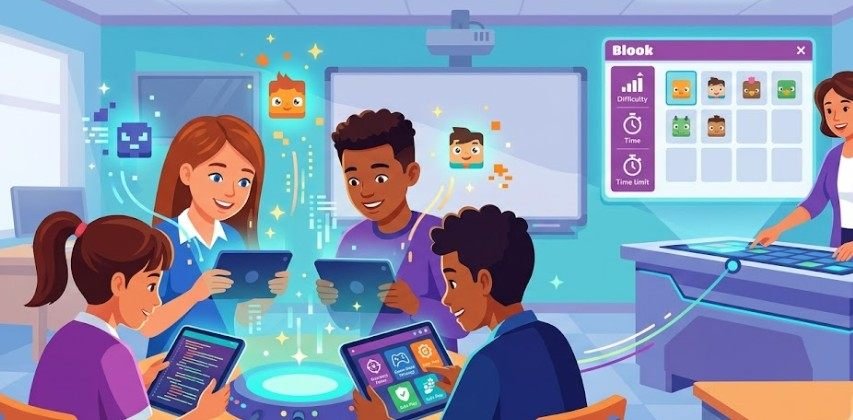
In classrooms across the globe, a six-digit numerical code can instantaneously shift an entire room’s energy from listless morning boredom to fierce, rapid-fire competition. That code is the gateway to Blooket, a gamified learning platform where classic flashcard trivia intersects with modern tower defense, arcade, and strategy mechanics.
Yet, as the platform’s popularity has skyrocketed, so too has a digital arms race: students actively searching for Blooket hacks to bypass question timers or automatically unlock rare “Blook” avatars, while educators struggle to host seamless, cheat-resistant review sessions.
Understanding how to navigate both sides of this equation—maximizing student engagement through hosting options while maintaining academic integrity against client-side scripts—is essential for any modern educator or student.
[ Teacher / Host ] [ Student / Player ]
Select Set -> Set Game Mode Enter 6-Digit Join Code
│ │
▼ ▼
[ Live Game Dashboard ] ◄────────────────── [ Gameplay & Trivia ]
- Real-Time Monitoring • Earn Tokens & Gold
- Custom Time/Goal Limits • Answer Verification
- Anti-Cheat Moderation • Strategic Minigames
Table of Contents
ToggleThe Mechanics of Blooket Play and Host Modes
At its core, the platform operates on a split architecture separating the host interface from player terminals. When an instructor launches a game session from their account dashboard, the platform generates a dynamic, temporary Room ID. This ID connects student browsers directly to the specific state parameters set by the teacher.
How Hosting a Game Session Works
Setting up a live game requires selecting a verified question set—either custom-built or pulled from the public discovery database—and picking a game mode. Each mode alters the core mechanics of how correct answers convert into game advantages:
- Select Question Set: Navigate to “My Sets” or use the “Discover” tab to source material.
- Configure Mode Parameters: Choose a live experience (e.g., Gold Quest, Tower Defense, or Crypto Hack) and adjust settings like game length, score caps, and late-entry policies.
- Launch Lobby: The system produces a unique six-digit game ID, a direct join URL, and a scannable QR code.
- Monitor Analytics: Hosts view real-time data on individual speed, accuracy percentages, and current leaderboard standings.
For students, entering a session requires zero account friction. By navigating to play.blooket.com, typing the active game ID, and picking a display nickname, players enter the shared instance.
Blooket Hacks: The Reality Behind Browser Scripts and Cheats
Search engines and video-sharing platforms are saturated with queries promising “unlimited token scripts,” “auto-answer bots,” and “infinite gold glitches.” To evaluate these claims, one must understand the technical reality of browser-based game mechanics versus server-side validation.
[ Unofficial Browser Script ] ──( Modifies local DOM )──► [ Client Browser ]
│
( Rejected / Flushed )
│
▼
[ Blooket Secure Server ]
The Technical Mechanics of Web-Based Exploits
Most publicized Blooket hacks operate as JavaScript console snippets or browser extension bookmarklets. These scripts target the client side—the code rendered locally inside the user’s web browser. By inspecting the page DOM (Document Object Model) or intercepting WebSocket traffic, these scripts attempt to read incoming answer payloads before the visual timer runs out.
However, the effectiveness of these unauthorized scripts has plummeted due to three core factors:
- Obfuscated Front-End Code: The development team frequently updates variable names, DOM structures, and packet formats, instantly breaking static client-side scripts.
- Server-Side Verification: Permanent resources—such as account tokens, avatar unlocks, and historical win rates—are stored and validated exclusively on remote databases. Injecting a local script to give an account “1,000,000 Tokens” merely modifies a local display variable; the moment the page reloads, the server reverts the change.
- Automated Rate-Limiting: The system tracks response times. Submitting correct answers at inhuman speeds (e.g., 20 milliseconds after a question renders) triggers client-side timeouts or flags the session for administrative review.
Security, Privacy, and Cyber Risks for Students
Using unauthorized third-party tools carries real-world risks that extend beyond breaking classroom rules.
| Third-Party Script Risk | Description |
| Malicious Code Execution | Scripts can harvest stored browser session tokens, passwords, and personal data. |
| Account Suspension | Server-side anomalies can prompt immediate and permanent user account bans. |
| Device Security Threats | Executable “cheat engines” can carry background trojans and adware. |
The Federal Trade Commission (FTC) offers extensive resources on consumer online security and browser safety, emphasizing that executing arbitrary scripts from unknown repositories exposes local hardware to credential harvesters. Furthermore, student privacy in educational software is governed by strict federal standards.
The U.S. Department of Education outlines student rights under the Family Educational Rights and Privacy Act (FERPA), while the FTC enforces the Children’s Online Privacy Protection Act (COPPA). Using third-party extensions often circumvents these built-in network protections, putting personal device data at risk.
Evaluating Game Modes for Educational Impact
Not all gamified modes serve the same pedagogical objective. Teachers should select settings based on whether the goal is rapid recall, long-term retention, or peer collaboration.
| Game Mode | Primary Gameplay Style | Strategic Complexity | Ideal Classroom Application |
| Gold Quest | Luck & Resource Stealing | Low | Quick warm-ups, high energy |
| Tower Defense | Strategy & Placement | High | Individual homework, deep focus |
| Crypto Hack | Password Guessing & Speed | Medium | Vocabulary practice, high engagement |
| Factory | Resource Management | Medium | Continuous review, high question repetition |
| Battle Royale | Direct Head-to-Head | High | Assessment review, high-stakes testing |
A Host’s Action Checklist for Anti-Cheat Game Management
To maintain an equitable playing field and block unauthorized automation, hosts can apply these specific session configurations directly inside the host dashboard:
- Enable “Use Random Names”: Prevents students from impersonating peers or entering offensive handles into the live leaderboard.
- Toggle “Allow Late Joining” Off: Closes the session lobby once play begins, preventing bot instances from flooding active games.
- Set Answer Speed Penalties: Enable time penalties for incorrect choices to discourage rapid, randomized guessing scripts.
- Randomize Question Order: Ensures no two adjacent student screens display the exact same question at the same second, rendering visual side-by-side cheating useless.
- Utilize Mastered Question Cycles: Select “Mastery” in question ordering so incorrectly answered items reappear more frequently until accuracy is demonstrated.
Educators seeking broader guidance on digital security standards can consult the National Institute of Standards and Technology (NIST) Cybersecurity Framework to establish safer computer lab guidelines.
Strategic Alternatives to Cheating
Attempting to script gameplay bypasses the actual learning loop and risks a permanent account ban. Superior performance can be achieved legitimately through straightforward gameplay strategies:
- Master the Upgrades First: In passive modes like Factory or Tower Defense, reinvest early earnings immediately into income multipliers rather than cosmetic items.
- Prioritize Accuracy Over Raw Speed: Because incorrect choices frequently trigger cooldown penalties, maintaining a high accuracy rate yields higher long-term scores than rapid, careless clicking.
- Exploit Solo Study Modes: Utilize solo review modes like Tower of Doom or Crazy Kingdom to memorize question sets prior to live competitive matches.
Frequently Asked Questions
1. Can teachers see if a student is using a Blooket hack?
Yes. Teachers can review post-game accuracy logs, response times, and total answer counts. Answering dozens of complex questions in milliseconds alerts the host to unnatural script activity.
2. Are there any official active Blooket join codes that never expire?
No. All six-digit join codes are temporary session keys generated for specific live games. Once the host ends the game session or closes the lobby, the code expires immediately.
3. Is it possible to get infinite tokens through browser inspection?
No. While editing the local browser HTML can temporarily change the number displayed on screen, tokens are validated on secure servers. Refreshing the page immediately restores the true balance.
4. Do Blooket hacks work on mobile devices?
Most scripts are built for desktop browser developer consoles and do not function on mobile devices. Furthermore, mobile operating systems impose strict sandboxing that blocks script injection.
The real power of gamified learning platforms isn’t found in exploiting system logic or seeking unauthorized shortcuts; it lies in leveraging mechanics that turn study sessions into engaging, memorable experiences. Attempting to manipulate client-side code yields little more than temporary visual glitches, invalid analytics, and significant cybersecurity exposure for user accounts and personal hardware.
For educators and students alike, mastering host configurations, choosing the right game modes, and applying solid gameplay strategies ensures that competitive review sessions remain fast, fun, and genuinely educational.