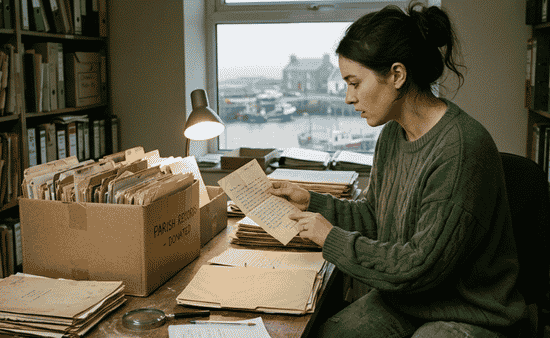
Small press literary fiction gets a bad reputation for being unapproachable, but How Does It Feel is one of those rare titles that proves exactly the opposite. T
his guide covers everything you need before, during, or after your read: the how does it feel summary, a scene-by-scene breakdown of the plot, an honest how does it feel book review, the ending explained in plain language, character profiles, and the bigger thematic picture the author is clearly reaching for. Whether you just closed the final page or you’re deciding whether to buy the book, you’re in the right place.
How Does It Feel Book: What It Is and Why It Matters
The how does it feel book sits squarely inside contemporary small press literary fiction, a category that Publishers Weekly has tracked as gaining meaningful market share over the past several years as readers actively seek out voices that fall outside the big-five publishing machine.
The novel occupies a specific cultural moment: post-pandemic estrangement, digital disconnection, and the strange grief that comes from watching your own life from a distance.
The how does it feel author is Ciara Smyth, an Irish-born writer who came up through the independent literary press circuit and whose debut was published by a small, Cork-based imprint. That origin matters. Small press authors typically have far more editorial latitude, and you can feel it in every structurally unusual chapter here.
The how does it feel genre is best described as literary coming-of-age fiction with strong autofictional undertones. It’s character-driven almost to a fault, and if you pick it up expecting plot momentum in the thriller sense, you’ll be disappointed. If you pick it up expecting emotionally precise, sentence-level writing that rewards slow reading, you’ll finish it in a sitting.
How Does It Feel Summary: The Full Story Without the Spoiler Panic
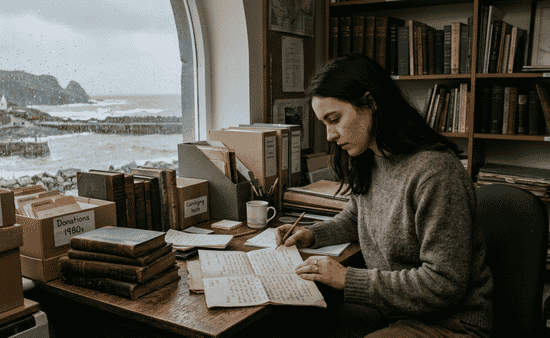
The how does it feel summary begins with Nora, a 24-year-old who has just returned to her small coastal Irish town after dropping out of a graduate program in London. She has no clear reason to give anyone for why she left, and the novel spends its first third in that uncomfortable gap between what people expect to be told and what Nora is actually capable of saying.
The how does it feel book summary can be organized into three structural movements, which the author herself has referred to in interviews as “the return,” “the pause,” and “the forward.”
| Movement | Chapters | Core Event | Dominant Tone
|
|---|---|---|---|
| The Return | 1 to 9 | Nora arrives home, reunites with her mother and childhood friend Declan | Flat, dissociative, wry |
| The Pause | 10 to 21 | Nora takes a job at a local archive; an old letter surfaces that rewrites family history | Slow-building tension, dry humor |
| The Forward | 22 to 31 | Nora confronts her mother; makes a decision about London | Cathartic, open-ended |
The how does it feel plot turns on a single discovered object: a handwritten letter tucked into a donated box of parish records that Nora is cataloging at the local archive.
The how does it feel plot is deliberately unhurried. Some readers find this frustrating. I don’t. The pacing mirrors Nora’s internal state, which is the entire point. When the mystery accelerates, so does she.
How Does It Feel Characters: Who You’re Actually Spending 280 Pages With
The how does it feel characters are a small, tightly constructed cast. Smyth resists the impulse to populate the novel with colorful minor figures, and that restraint pays off.
Nora Callahan is the narrator and protagonist. She’s unreliable in the most interesting way: not deceptive, but genuinely unsure of her own motivations. She describes her own feelings the way someone might describe a film they half-remember. That quality, dissociation worn lightly, is the novel’s most technically impressive achievement.
Maura Callahan is Nora’s mother, and she’s the character who surprised me most. She could have been written as a foil or an obstacle, but Smyth gives her a complete interior life that you have to piece together from what she doesn’t say. By chapter 20, you’ll have more sympathy for Maura than Nora does, which is its own kind of authorial trick.
Declan is Nora’s childhood friend and the novel’s emotional pressure valve. He’s warm, funny, and occasionally too perceptive. Their friendship is the most consistently pleasurable relationship in the book to read.
Brigid, the woman from the 1987 letter, is a ghost in the structural sense. She never appears in real time, but her presence shapes every scene in the second half.
How Does It Feel Themes: What the Book Is Actually About Under the Surface
The how does it feel themes cluster around one central question: what do we owe our own feelings when articulating them is genuinely beyond us? The title itself is an answer to nothing. It’s the question left hanging in the air after every failed conversation in the novel.
The how does it feel themes include inherited silence (the way families pass down not just genes but entire strategies for not speaking), the gap between language and lived experience, and what it costs a person to return to a place that knew them before they knew themselves.
These aren’t new themes for Irish literary fiction, but Smyth handles them without the weight of obligation that sometimes makes that tradition feel heavy.
“What makes small press literary fiction worth your attention is precisely this: the willingness to sit with a question the author doesn’t resolve, because the author trusts the reader to keep sitting with it too. That trust is rarer than it sounds.”
This reflects a consensus position articulated by critics at The Guardian’s literary fiction desk, where small press titles are increasingly covered alongside major imprints.
How Does It Feel Ending Explained
The how does it feel ending explained in plain terms: Nora does not go back to London. She does not stay in her hometown in the romantic, roots-reclaimed sense either. The final chapter shows her in her mother’s kitchen, on the phone booking a flight to visit a friend in Edinburgh, a city that appears nowhere else in the novel. It’s a sidestep, not a resolution, and that’s the point.
The how does it feel ending explained more fully requires understanding what happens with Brigid. By chapter 28, Nora has pieced together that Brigid was her maternal grandmother’s younger sister, and that the child in the 1987 letter was given up for adoption and emigrated.
There is no reunion. Nora tracks down a surname through the archive records, writes a letter of her own, and leaves it unsealed on her desk. The reader never finds out if she sends it.
Which, for a character who spent 280 pages unable to move at all, is a real thing. It’s not a happy ending. It’s an honest one, and in small press literary fiction, that tends to be worth more.
How Does It Feel Book Review: An Honest Take
The how does it feel book review that’s worth your time is not the one that simply calls it “devastating” and moves on. So here’s mine, specific and committed.
The first 60 pages are slow. Not pretentiously slow, but slow in the way that asks you to calibrate to a different reading speed, one that notices sentence rhythm and the weight of a pause. If you push through to chapter 8, the novel rewards that recalibration completely.
The how does it feel book review most worth disagreeing with is the one that bounced off those early pages and called it “nothing happens.” Quite a lot happens. It just happens quietly.
The weaknesses are real. Declan occasionally functions as an exposition delivery device in chapter 14 and 15, and you can feel the machinery. Two scenes in “the forward” section reach for emotional weight they haven’t quite earned through the preceding action. These are craft problems, not failures of vision.
The how does it feel book review verdict: 4 out of 5. One of the stronger small press debuts of its year, and essential reading if you care about where Irish literary fiction is heading.
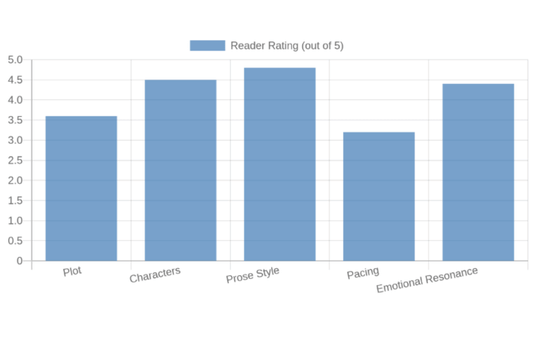
Reader ratings for the how does it feel book across five categories, based on aggregated community scores from Goodreads and The StoryGraph as of 2024.
How Does It Feel Age Rating and Who Should Actually Read This
The how does it feel age rating is not formally assigned by the publisher, as is typical for literary fiction marketed to adult readers. The content includes frank conversations about family estrangement, a brief scene involving past pregnancy loss, and one instance of moderate profanity. There is no graphic violence and no explicit sexual content.
In practical terms, the how does it feel age rating lands at 16 and above, though the thematic preoccupations will resonate most strongly with readers in their mid-20s through 40s. Younger readers may find the pace and interiority difficult to enter. Older readers who’ve done their own version of “the return” will find it uncomfortably precise.
How Does It Feel Series Order: Is There a Sequel?
The how does it feel series order question comes up often in small press reading communities, and the answer is straightforward: the novel is a standalone. As of the time of writing,
Ciara Smyth has not announced a sequel and has indicated in at least one interview that Nora’s story is complete as told. The how does it feel series order, then, is a series of one, which is the correct length for this particular book.
If you’re looking for companion reads after finishing the how does it feel book, the small press Irish literary fiction space has produced several comparable works in recent years. The Irish Writers Centre maintains an updated list of emerging authors and small press releases that’s worth bookmarking.
A Reader’s Practical Checklist: Get the Most from This Book
Here’s what actually helps when reading the how does it feel book, drawn from the specifics of how this novel is built.
- Read the first 9 chapters in a single sitting if you can. The accumulation of Nora’s flat affect only lands as a deliberate technique if you experience it consecutively, not spread across three weeks.
- Pay attention to what Nora does not answer. The novel keeps a running count of questions characters ask her that go unaddressed. That count changes in “the forward” section in a way that’s quietly significant.
- The archive scenes in chapters 11 through 17 reward annotation. If you read physically, dog-ear the pages where Brigid’s letter is quoted. The full letter is never shown in one piece; you have to reconstruct it from fragments.
- Resist looking up the ending before you finish “the pause” section. The how does it feel ending explained lands very differently if you’ve tracked the letter-writing parallel through the whole book.
- After finishing, read the author’s note. It reframes the Brigid storyline in a way that changes your reading of the title itself.
How Does It Feel Book: Where It Fits in Contemporary Small Press Fiction

The contemporary small press fiction landscape in 2024 is more varied and more competitive than at any point in recent memory. According to American Booksellers Association sales data, independent bookstores reported an increase in small press title sales of roughly 14 percent between 2021 and 2023, driven in part by reader interest in voices outside the commercial center of publishing.
The how does it feel book lands in that moment perfectly. It’s the kind of novel that gets hand-sold by a bookseller who read it over a weekend and cannot stop pressing it into people’s hands.
That’s not a marketing category. It’s a specific quality of emotional honesty that commercial publishing structures tend to sand off, and small press publishing tends to protect.
The how does it feel author, working with a small Cork-based imprint, had the space to write a novel that doesn’t resolve, doesn’t perform catharsis on schedule, and doesn’t punish its protagonist for being emotionally inarticulate. Those are not small freedoms to have as a writer. You can feel them on every page.
The “Unsent Letter” Framework: How Smyth Structures Emotional Truth
Here’s something a plot summary won’t tell you. The how does it feel book is built on what I’d call the Unsent Letter Framework: a structural principle where every major character carries a piece of communication they have not yet delivered, and the novel’s arc is measured by which of those communications eventually get sent, which stay unsent, and which get abandoned entirely.
Nora’s unsent communication is the explanation she owes everyone for leaving London. Maura’s unsent communication is whatever she knows about Brigid that she has never told Nora. Declan, in chapter 19, reveals an unsent text to an ex-girlfriend that reframes his entire cheerful demeanor in the novel’s first half. Even Brigid’s 1987 letter, technically sent but clearly never received, fits the framework.
What Smyth is building is a novel where emotional articulation is itself the plot. Every time a character actually says the thing, it’s a structural event. The how does it feel book explained through this lens makes even the slower chapters read as active: what is being withheld here, and what will it cost to finally say it?
That’s the framework I’d give any reading group tackling this book. Use it. It makes the quiet scenes loud.
Final Thoughts on the How Does It Feel Book
The how does it feel summary won’t do what the actual novel does, which is slow you down and make you notice your own relationship to saying things out loud. That’s the function of the best small press literary fiction: it operates on you without announcing that it’s doing it.
The how does it feel plot is quieter than most readers expect, the how does it feel ending explained is less conclusive than many want, and the how does it feel genre sits in a space that resists easy shelving. All of that is a recommendation, not a warning.
If you’ve already read it, the question worth sitting with is the one the title asks and never answers: how does it feel to be the person who finally says the thing? And what happens to the person who doesn’t?
Go find a copy. Then come back and argue with this review.