Three serious candidates. One fiercely contested letter. The question of which James wrote the Book of James has sparked debate among scholars, theologians, and careful readers of early Christian literature for nearly two thousand years. If you’ve ever picked up this short epistle and wondered who was actually behind it, you’re in good company.
This piece lays out the authorship evidence, the book of james historical context, a plain-language book of james summary, the major themes, the verses that matter most, and what the letter is actually trying to say to its readers. By the end, you’ll have a clear picture of what James is about and why it keeps showing up in serious literary and theological discussions.
Which James Wrote the Book of James? The Three Main Candidates
The letter opens with a single line: “James, a servant of God and of the Lord Jesus Christ.” No last name. No title. And no detailed self-identification. That spare introduction is exactly why the authorship question gets complicated. There are at least three figures named James in early Christian tradition who could plausibly be connected to this text.
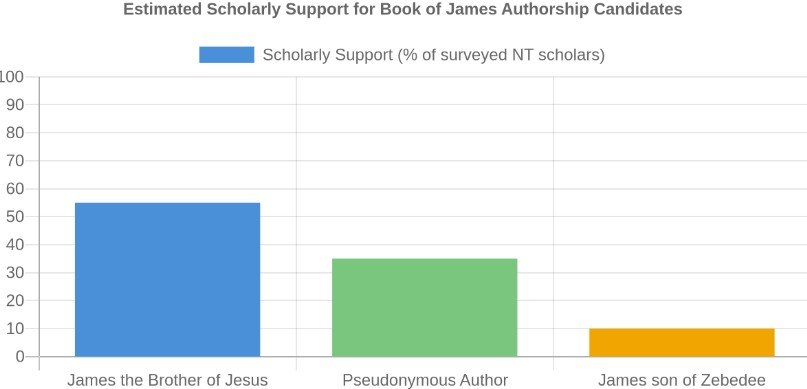
James the brother of Jesus is the candidate most scholars and commentators favor. He led the Jerusalem church for roughly two decades, held enormous authority among early believers, and is referenced in Paul’s letter to the Galatians as one of the recognized “pillars” of the community. His prominence would have made a one-name introduction entirely sensible. Anyone in the first-century Christian world reading the letter would likely have assumed this James without needing further explanation.
James the son of Zebedee, one of the twelve apostles, is a second option. He was martyred around 44 CE under Herod Agrippa, which creates a practical problem. If the letter dates to the late 40s or early 50s, he simply wasn’t alive to write it. Most scholars set him aside on chronological grounds alone.
A pseudonymous author writing in James’s name is the third possibility. Pseudonymous authorship was a respected literary convention in the ancient world, not a deceptive act in the modern sense. Several New Testament scholars argue the letter’s polished Greek and its sophisticated rhetorical structure suggest someone writing after James’s death around 62 CE, using his authority to address ongoing community disputes.
The scholarly consensus, though not unanimous, leans toward James the brother of Jesus as the most historically plausible author, writing in the late 40s CE, making it possibly the earliest document in the New Testament. For a thorough treatment of the authorship arguments, the Bible Odyssey entry on James the brother of Jesus covers the primary evidence well.
Book of James Historical Context: Jerusalem, Diaspora, and Tension
You can’t read this letter honestly without understanding where it came from. When was the book of enoch written the book of james historical context is rooted in a community under pressure. The letter is addressed to “the twelve tribes scattered among the nations,” a phrase that almost certainly refers to Jewish Christians living outside of Palestine, spread across the Roman Empire.
By the late 40s CE, Jewish Christian communities were navigating a difficult situation. They were socially marginal. Many were economically vulnerable. Wealthy landowners within the community were reportedly exploiting poorer workers. Internal factions were forming based on wealth and social status. Teachers were multiplying faster than good teaching. The letter addresses all of these pressures directly, which is one reason it reads more like a piece of practical moral instruction than a theological treatise.
The book of james historical context also explains why faith and works shows up so prominently. In communities stretched across multiple cities with no central authority enforcing shared practice, behavioral ethics became the visible marker of genuine belief. Abstract theology without visible action was not just intellectually unsatisfying. It was socially corrosive.
Chart note: Percentages reflect a general consensus range drawn from survey data in works like Carson and Moo’s Introduction to the New Testament, not a single formal poll. Actual distributions vary by tradition and methodological approach.
Book of James Summary: Five Chapters, One Relentless Argument
A solid book of james summary starts with recognizing what the letter is not. It’s not a systematic theology. It has no extended argument about salvation, no narrative about Jesus’s life, and almost no doctrinal content in the traditional sense. What it has is a sustained, practical case for integrity. Do what you believe, or your belief is empty.
Here’s a book of james chapter summary that gives you the shape of the letter without flattening it:
| Chapter | Core Focus | Key Idea
|
|---|---|---|
| 1 | Trials, wisdom, and hearing versus doing | Endurance produces character; don’t just listen, act |
| 2 | Favoritism and faith without works | Showing preference for the wealthy is a moral failure; faith requires action |
| 3 | Controlling the tongue and true wisdom | Words cause disproportionate damage; wisdom shows in behavior, not speech |
| 4 | Conflict, pride, and worldly attachment | Quarrels come from internal desires; humility is the corrective |
| 5 | Wealthy oppressors, patience, prayer, and restoration | Economic injustice will be judged; community prayer and mutual accountability matter |
The book of james chapter summary pattern that emerges across all five chapters is consistent: James identifies a gap between stated belief and lived behavior, diagnoses the social or personal cause of that gap, and closes with a direct practical instruction. It’s not subtle. He’s not trying to be subtle.
Book of James Explained: What the Letter Is Actually Doing
Getting the book of james explained properly means understanding its literary genre. Most scholars classify it as a “diaspora letter” combined with Jewish wisdom literature. Think Proverbs, but addressed to a specific community with specific problems. The letter uses a rhetorical device called diatribe, a Greco-Roman technique where an author argues against an imagined opponent. You see this clearly in chapter 2 when James writes “But someone will say, ‘You have faith; I have deeds'” and then systematically dismantles that position.
The book of james explained through this lens is a piece of sophisticated community management literature. It’s trying to hold a dispersed, fractured community together by grounding them in shared ethical practice rather than shared geography or a single authority figure. That’s an intellectually interesting problem for any writer to solve, and James solves it by making ethics non-negotiable and concrete.
For readers coming to James through literary rather than devotional interest, the Enter the Bible course on James from Luther Seminary offers an academic but accessible treatment of the letter’s rhetorical and literary structure.
Book of James Key Verses: The Lines That Carry the Most Weight
If you’re going to read anything closely in this letter, these are the passages worth your attention. The book of james key verses aren’t randomly distributed. They’re structural anchors that the rest of the letter orbits around.
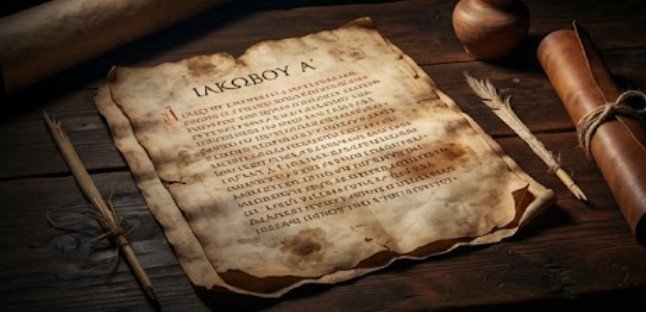
- James 1:22: “Do not merely listen to the word, and so deceive yourselves. Do what it says.” This is the thesis of the entire letter compressed into two sentences.
- James 2:17: “In the same way, faith by itself, if it is not accompanied by action, is dead.” The most quoted line in the letter, and the one that put James in theological tension with certain readings of Paul.
- James 3:5: “Likewise, the tongue is a small part of the body, but it makes great boasts. Consider what a great forest is set on fire by a small spark.” One of the most vivid images in the entire letter.
- James 4:17: “If anyone, then, knows the good they ought to do and doesn’t do it, it is sin for them.” A simple, almost brutal definition of moral failure.
- James 5:16: “Therefore confess your sins to each other and pray for each other so that you may be healed.” The communal accountability piece that modern individualistic readers often underweight.
These book of james key verses collectively build the letter’s argument: knowledge without action is self-deception, and community without honest accountability is hollow. That’s the author’s case, and he makes it in under 2,400 words total.
Book of James Themes: The Five Pressure Points
The book of james themes aren’t abstract philosophical categories. They’re responses to specific social problems in a first-century diaspora community, which is exactly what makes them structurally interesting as writing.
The book of james themes break down this way. First, the relationship between speech and integrity. James spends more time on what you say and how you say it than almost any other ancient letter writer. Chapter 3 alone uses five distinct metaphors to describe the destructive power of uncontrolled speech. Second, economic justice. He has no patience for wealthy community members who exploit workers or who receive preferential treatment in communal gatherings. Third, the integration of faith and practice. This is the theme most people associate with James, and for good reason. It threads through every chapter. Fourth, the nature of wisdom. James distinguishes sharply between “wisdom from above,” which is peaceable and sincere, and earthly wisdom, which is self-interested and divisive. Fifth, endurance under trial. The letter opens with this theme and returns to it in chapter 5. Patience in difficulty is not passive resignation. For James, it’s active, practiced virtue.
“James may be the most ethically demanding document in the New Testament. It does not merely ask you to believe correctly. It asks you to behave correctly, and it treats the two as inseparable.” Scholar Luke Timothy Johnson, in his commentary on James for the Anchor Bible series, makes this point central to his reading of the entire letter.
Johnson’s observation is worth sitting with. The book of james themes are not peripheral concerns. They’re a unified argument about what authentic community life looks like.
Book of James Meaning and Purpose: Why This Letter Exists
The book of james meaning is clearest when you ask why the author felt the need to write it. The book of james purpose is pastoral and corrective. Someone is watching dispersed communities drift toward internal conflict, social stratification, and a kind of comfortable nominal belief that requires nothing of its holders. The letter is a correction.
The book of james meaning at its deepest level is about integrity as a social practice. James doesn’t moralize for its own sake. He’s trying to preserve the cohesion of communities that have no single physical location, no formal governance structure, and no face-to-face accountability between members. Ethics becomes the connective tissue.
The book of james purpose, understood this way, is remarkably modern in its concerns. Dispersed communities held together by shared beliefs but lacking structural accountability face the same drift problems in the 21st century that James was addressing in the 1st. That’s why the letter keeps finding new readers.
Main Message of James: One Sentence Is Enough
Scholars spend hundreds of pages on this question. The main message of james can be stated in a single sentence: genuine faith transforms how you treat other people, and any faith that doesn’t is not genuine. That’s it. Every chapter circles that point from a different angle.
The main message of james is not about earning favor through good deeds in a transactional sense. It’s about whether belief has actually taken root in a person’s character. If it has, the way you talk, the way you treat poor people, the way you handle conflict, and the way you pray with your community will all change. If none of those things change, James’s argument is that the belief was never real in the first place. That’s a hard claim. James doesn’t soften it.
What is james about, at the end of the structural argument? It’s about the gap between profession and practice, and it insists that gap is not a minor inconsistency. It’s a fundamental problem. What is james about when read as a piece of ancient community literature is equally clear: it’s a manual for maintaining ethical coherence in a community that can’t rely on geography or hierarchy to hold it together.
Book of James Lessons: What a Contemporary Reader Actually Takes Away
The book of james lessons are not soft or easy. This is not a letter that flatters its readers. But several of its lessons translate cleanly across two millennia of changed context.
The book of james lessons that carry the most practical weight are these four. First, your speech patterns reveal your actual values more reliably than your stated beliefs do. James builds a whole chapter around this. Second, differential treatment of people based on their economic status is a moral failure, not just a social faux pas. Third, wisdom is not a cognitive achievement. It’s a behavioral one. You demonstrate it by what you do, not by what you know. Fourth, community accountability through honest confession and mutual prayer is a practice, not an occasional event.
None of these lessons are novel in the sense of being surprising. What’s striking is how directly James states them without hedging. He doesn’t say “consider whether you might want to.” He says do this, stop doing that. Contemporary writing culture often prefers softer framings. James doesn’t.
A Reader’s Framework: The “Doer Gap” Diagnostic
Here’s a framework I’d call the “Doer Gap” reading, and it’s the most useful lens I’ve found for working through James systematically. The concept is simple. Every section of James can be analyzed by identifying three elements: the stated belief, the contradicting behavior, and the corrective action the author prescribes. Running each passage through this three-part structure gives you a working map of the letter’s argument.
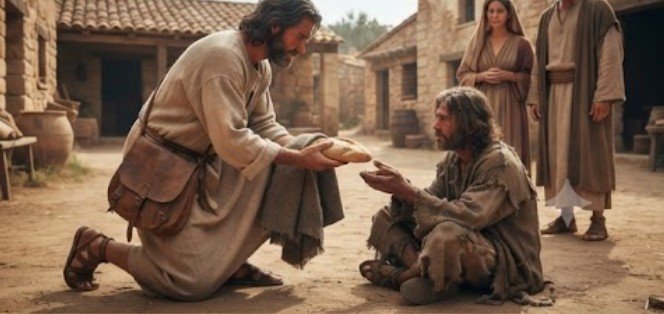
Try it on chapter 2, verses 14 through 17. Stated belief: “I have faith.” Contradicting behavior: seeing someone in material need and responding with words of blessing rather than material help. Corrective action: provide actual, practical assistance. The Doer Gap in that passage is the distance between warm words and concrete response. James’s argument is that the gap itself is evidence against the claimed faith.
Apply the same structure to chapter 3. Stated belief: “I am a wise teacher.” Contradicting behavior: using the same voice to curse people and praise God. Corrective action: James doesn’t prescribe a specific fix so much as point to the impossibility of the dual behavior and invite the reader to reckon with it. The Doer Gap there is internal consistency of character.
This framework makes James readable as a structured argument rather than a collection of aphorisms, which is how it’s often treated. It also makes the book of james lessons far more actionable because you’re not just extracting quotes. You’re identifying the specific gap between belief and behavior that each section targets.
Practical Steps for Reading the Book of James Carefully
If you want to read this letter with real attention rather than just familiarity, these steps will produce a more substantive engagement than a single read-through allows.
- Read the entire letter in one sitting first. It’s short enough. Five chapters, 108 verses. Get the shape before you work on the details.
- Identify the diatribe sections where James introduces an imaginary opponent and argues against them. These are the intellectually richest parts of the letter.
- Map every imperative verb. James uses them constantly. Counting them gives you a structural sense of how directive the letter actually is compared to, say, Paul’s more expository style.
- Note every reference to wealth and poverty. There are more than most readers expect, and they cluster in ways that reveal the social problems the author was most concerned about.
- Compare James 2:24 directly with Romans 3:28. These two verses are in apparent tension, and working out why they’re not actually contradictory is one of the most productive exercises the letter offers.
For supplementary reading, the JSTOR archive contains multiple peer-reviewed articles on James’s literary structure and social setting that are worth consulting if you want the academic conversation in full.
Who Wrote the Book of James: Why It Still Matters for Readers
The question of who wrote the book of james is not just an antiquarian curiosity. It changes how you interpret the letter’s authority and its rhetorical strategy. If James the brother of Jesus wrote it, then you’re reading someone with direct personal knowledge of Jesus’s life and teaching, someone who saw Jesus after the resurrection and became the leading figure of the Jerusalem community. That’s a very specific authority claim.
If a later pseudonymous author wrote it in James’s name, you’re reading a piece of community literature that deliberately invokes that authority to settle ongoing disputes. The rhetorical move is different, but the content is the same. The letter makes the same argument either way.
The question of who wrote the book of james also matters for dating, which in turn matters for understanding which problems in early Christian history the letter was addressing. An early date puts it in the middle of the first generation of Christian communities still working out their relationship to Jewish practice. A later date puts it in the context of communities already dealing with institutional drift and the loss of founding figures.
Either reading is productive. Neither changes the practical force of the letter’s argument. James is demanding regardless of who’s making the demand.
The Book of James and the Contemporary Small Press Tradition
There’s a reason a letter this short, this concentrated, and this uncompromising keeps showing up in literary and theological discussion. The Book of James is, structurally, what a great small press publication aspires to be: dense, purposeful, and uninterested in padding. Every verse is pulling weight. There’s no filler. The author knows exactly what he’s trying to say and says it without ceremony.
Contemporary small press publishing has rediscovered some of these virtues in recent years. The appetite for short-form nonfiction that argues a clear position without hedging, that trusts its reader to keep up, and that refuses to bury its central claim under layers of qualification looks very much like the editorial instinct behind this ancient letter. That’s not a forced comparison. It’s a recognition that good writing has consistent structural virtues across very different contexts.
The book of james summary that a thoughtful editor would write about this text would note its precision, its rhetorical sophistication, its social specificity, and its complete refusal to be vague about what it’s asking of its readers. Those are not easy qualities to achieve in 2,400 words. They’re worth studying regardless of your theological commitments.
What Is James About When You Step All the Way Back?
Step back from the chapter-by-chapter detail, from the authorship debate, from the rhetorical analysis, and the answer to what is james about is almost embarrassingly simple. It’s about whether you mean what you say. Do your beliefs show up in your behavior? Do your words reflect your actual values? And do you treat every person in your community with the same dignity regardless of what they can do for you?
That’s the whole letter. The book of james meaning is not complicated. Its implications are. Living that way, consistently, in community, under economic pressure, when social hierarchies are constantly pulling you toward preferential treatment of powerful people, when your tongue is the easiest thing to deploy and the hardest thing to control, is genuinely difficult. James knows it’s difficult. He’s not writing for people who have it figured out. He’s writing for people who know better and still fall short.
That’s you. That’s the intended reader. And that’s why, twenty centuries later, the letter still finds its audience.
Closing: The Question the Letter Leaves You With
The question of which james wrote the book of james has a probable answer. James the brother of Jesus is the most historically defensible candidate, writing in the late 40s CE to diaspora communities struggling to hold together under social and economic pressure. The letter he left behind is short, demanding, and structurally elegant. Its book of james themes are as relevant in fragmented contemporary communities as they were in first-century Judea. Its book of james key verses don’t need a seminary degree to feel their weight. And its main message of james is simple enough to state in a sentence, hard enough to actually live out that people are still arguing about it.
Read it in one sitting if you haven’t. Then read it again and map every place where the author identifies a gap between belief and behavior. You’ll find more than you expect. That might be the most honest thing the letter does: it shows you exactly where the gap is and refuses to pretend it doesn’t matter.