
I started noticing poetry differently once it became part of my everyday social feed. A poem no longer had to arrive inside a collection or literary journal before I encountered it. A few lines on a phone screen could stop me while I was scrolling, and sometimes those lines were enough to make me look for more from the same writer. That change made poetry feel less distant and much easier to discover.
I also noticed that the relationship does not always end with a social post. A poem that connects with someone can lead to a profile visit, a growing following, a recommendation to a friend, and eventually a search for a complete book. That path has changed what publishing can look like for poets. The audience can now begin forming before the book exists, and readers can have a sense of connection with the writer before they ever hold the finished collection.
How Social Media Changed Poetry Discovery

Poetry has always depended on readers finding the right words at the right time. Social media simply changed where that discovery happens.
Instead of waiting for a poetry reading, bookstore display, literary magazine, or recommendation from another reader, someone can encounter a poem while scrolling through a feed. The format suits short pieces particularly well because a reader can finish a poem in seconds and decide immediately whether it meant something to them.
That does not mean every poem needs to be short. It means the first point of discovery has become smaller and faster. A single stanza can introduce a writer whose longer work may eventually lead readers toward a complete collection.
This is one reason short-form poetry gaining popularity matters to publishing. Short poems can function as an introduction to a writer’s voice. They give readers a quick sense of tone, subject, rhythm, and emotional perspective before asking them to commit to a full book.
Why Emotional Connection Matters
People rarely share a poem simply because it is technically impressive. They share it because something in it feels recognizable.
A line about grief, loneliness, relationships, growing older, friendship, identity, anxiety, hope, or starting over can give readers language for something they have struggled to explain themselves. When that happens, the poem becomes more than a piece of writing. It becomes something a reader wants to save, send, or return to.
That emotional connection is especially useful for emerging poets. A writer can build a community around a recognizable voice instead of relying entirely on traditional literary discovery. Readers begin to know what kind of emotional experience they can expect from the work, while the poet gets direct feedback about what resonates.
From Followers to Book Readers
A social following does not automatically create a successful poetry book. People may enjoy individual posts without wanting an entire collection. The challenge for a poet is turning temporary attention into a deeper reading relationship.
A strong collection gives readers something they cannot get from scrolling through a feed. It can create a deliberate sequence, introduce new poems, develop recurring ideas, and show a broader range of the writer’s voice.
Poets can also create a more permanent home for their work beyond social platforms. Learning how to set up an author website can give readers one place to discover books, upcoming readings, author information, mailing lists, and other projects after first encountering a poet on social media.
The physical book also changes the pace of reading. Instead of consuming one poem between messages or videos, readers can sit with a collection and notice connections between pieces. That difference matters because a book is not simply a larger social-media feed.
For publishers and independent poets, an existing audience can still be valuable. It provides a starting point for promotion, launches, readings, signed editions, and direct communication with potential readers. But the writing still has to give that audience a reason to move from following to buying.
Why Visual Presentation Has Become Part of the Experience

Poetry has always had a visual side. Line breaks, spacing, page placement, type, and white space can influence how a poem feels before a reader has finished it. Social media has made that visual quality even more noticeable.
On a phone screen, presentation can determine whether someone stops scrolling. A clean layout gives the words room to breathe, while an image, illustration, or carefully chosen background can establish a mood before the first line is read.
That influence can carry into print. Readers who discover poetry through visual platforms may also appreciate poetry books with powerful imagery, thoughtful typography, and artwork that supports the writing rather than competing with it.
The strongest approach is not simply to make a book look attractive. Design should reinforce the collection’s personality. A quiet collection may benefit from generous white space, while a more experimental work might use unusual layouts or visual elements to extend the poems beyond the page.
What Younger Readers Are Looking For
Younger readers are not necessarily looking for one particular kind of poetry. Their interests are broad, but social platforms make certain subjects easier to discover and share.
Relationships, self-worth, identity, friendship, mental and emotional struggles, family, loneliness, healing, ambition, and belonging often create strong points of connection because they reflect experiences many readers recognize. Poems about everyday moments can also perform well when they turn an ordinary feeling into language that feels precise.
This helps explain why popular poetry themes among younger readers often feel personal rather than distant. A reader may not begin with an interest in poetry as a literary category. They may simply encounter a poem about something they are currently experiencing.
That first connection can become a gateway to other writers, longer collections, literary events, and different forms of poetry. Accessibility can bring people through the door without deciding how deeply they eventually read.
Social Media Gives Emerging Poets a Different Starting Point
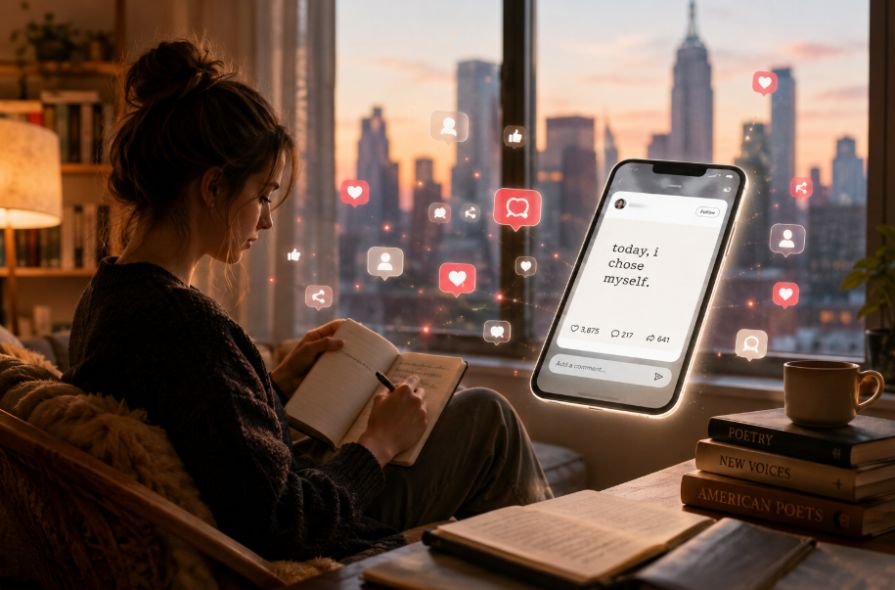
Traditional publishing has historically placed considerable emphasis on the manuscript, submission process, editorial judgment, and established literary networks. Social media adds another possible route.
A poet can publish consistently, develop a recognizable voice, interact with readers, and gradually build an audience before approaching publishers or deciding to self-publish.
At that stage, understanding self-publishing vs traditional publishing pros cons can help writers decide whether they value greater creative control and direct distribution or prefer the editorial, marketing, and distribution support associated with a traditional publisher.
That does not remove the need for editing or strong book production. It simply changes where the relationship with readers can begin.
For independent poets, this can also reduce the distance between writing and promotion. The person creating the poems may also be the person introducing them to readers, announcing a new collection, sharing readings, and encouraging conversations around the work.
That direct connection can feel more personal than traditional advertising. Readers are not only seeing a product. They are following the person and the creative process behind it.
Where Social Discovery and Books Meet
The most interesting change is that the journey from poem to book is no longer strictly linear. A reader can discover a writer online, follow their work, buy a collection, attend a reading, share another poem, and introduce that writer to someone else.
That creates a cycle where readers become part of the discovery process. A recommendation does not have to come from a bookstore shelf. It can arrive through a repost, a short video, a saved poem, or a conversation in the comments.
For poets, that means the audience is no longer something that only arrives after publication. It can grow alongside the work.
Frequently Asked Questions
1. How has social media changed poetry publishing?
It has made discovery faster and more direct. Poets can reach readers without waiting for traditional exposure, while publishers can find writers who already have engaged audiences.
2. Why does short poetry work well online?
Short poems fit naturally into mobile reading and scrolling habits. A few strong lines can create an immediate emotional response and encourage readers to explore more of the writer’s work.
3. Can social media followers become book buyers?
Yes, but a following alone is not enough. Readers are more likely to buy when a collection offers new writing, thoughtful organization, strong design, and a deeper experience than individual posts.
4. Does social media make traditional publishing less important?
Not necessarily. It creates another route to readers. Editing, distribution, book design, and publishing expertise still play an important role in turning a writer’s work into a lasting collection.
Why the Book Still Has a Place Beyond the Feed
Social media has made poetry easier to discover, but it has not made the poetry book unnecessary. In some ways, digital discovery can make a physical collection more meaningful because readers already arrive with a connection to the writer’s voice. The book gives them a slower, more complete experience, with poems arranged intentionally rather than encountered randomly. For emerging poets, that creates an opportunity to use social platforms as an entry point while building something that can exist beyond a screen.
The strongest future for poetry may not belong entirely to digital publishing or print. It may belong to writers who understand how the two can support each other without allowing either one to define the work.