
I started noticing short poems in places where I never expected to find much poetry at all. A few lines would appear between photos, videos, and everyday updates, and somehow they could stop me for longer than a much longer piece of writing. The poems were easy to read, but they did not always feel disposable. Some captured a feeling so quickly that I wanted to read them again.
I also noticed how different the experience felt on a phone. A short poem could be read in a few seconds, shared with someone, saved for later, or heard through a spoken performance. That made me curious about why short-form poetry has found such a comfortable place in digital reading. The answer seems less about people suddenly losing interest in longer poetry and more about how readers now discover, experience, and share words.
Why Short-Form Poetry Fits Digital Reading
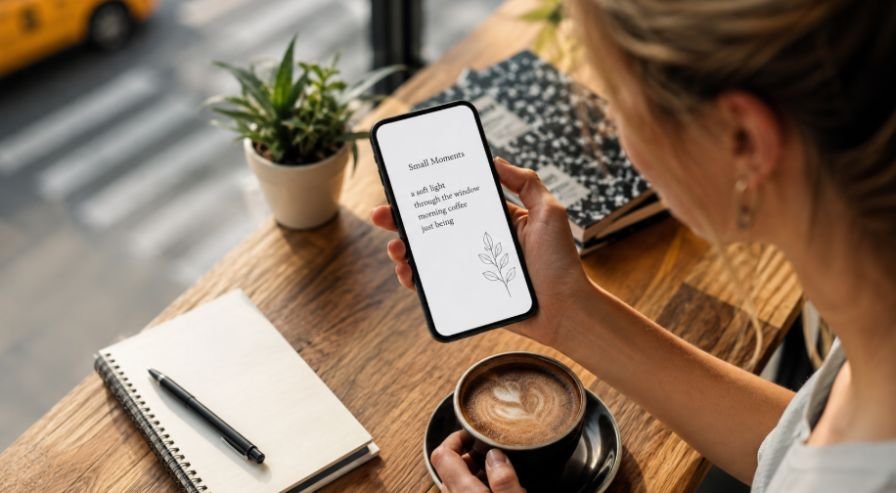
Short-form poetry works naturally with the way people encounter content online. A poem with a handful of lines can fit comfortably on a phone screen without requiring a reader to leave the platform or set aside a large block of time.
That accessibility matters. Poetry can sometimes feel intimidating when readers associate it with complicated language, difficult interpretation, or classroom analysis. Shorter contemporary poems often remove some of that distance by presenting an idea or emotion in language that feels immediate.
Digital platforms also make poetry easy to encounter accidentally. Someone may not search for a poem at all. They might discover one while scrolling, stop because a line feels familiar, and then explore the writer’s other work. Research into poetry on TikTok has found that accessible poems can create strong relational and emotional responses among viewers, while some readers also engage with interpretation and literary discussion.
Brevity Is Not a New Literary Idea
It is easy to assume that short-form poetry was created for social media, but poetry has been concise for centuries. Haiku, epigrams, couplets, aphoristic verse, and other compact forms have always shown that a poem does not need many lines to carry meaning.
What has changed is distribution.
A short poem once depended on a book, literary magazine, reading, or another traditional route to reach an audience. Digital platforms allow writers to publish directly and find readers almost immediately. The screen has become another place where poetic form can develop.
That distinction matters because the popularity of short-form poetry is not necessarily a rejection of traditional poetry. It can be another entry point into it.
Emotional Connection Makes Short Poems Easy to Return To
A short poem often focuses on one emotional moment rather than trying to tell an entire story. Love, heartbreak, loneliness, identity, uncertainty, grief, healing, and self-discovery are common subjects because readers can recognize themselves in a few carefully chosen lines.
That immediacy is part of the appeal of emotional poetry books about life. Readers may begin with a short poem online because it captures something they have experienced, then look for a collection that explores those feelings at greater length.
The strongest short poems do not need to explain everything. They leave enough space for the reader to bring their own experience into the meaning. A few lines about missing someone can feel personal even when the writer knows nothing about the person reading them.
Visual Design Has Become Part of the Experience
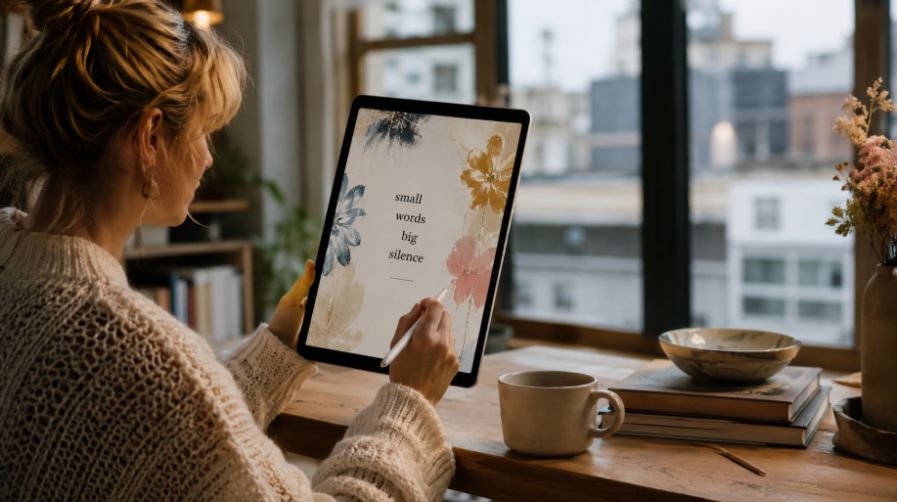
Online poetry is rarely just text anymore. The presentation can shape how a poem is received.
White space, typography, photographs, illustrations, animation, background music, and spoken delivery can all influence the experience. A poem designed for a phone screen may look completely different from one printed across a traditional page.
This combination of text and visual presentation has helped poetry fit naturally into image-based and video-based platforms. Earlier digital poetry communities already showed how writers could combine poetic writing with visual art, while newer platforms have expanded that experience into performance, audio, and short video.
The result is a broader idea of what a poetry reading can be. Someone may read the words silently, hear the poet perform them, or experience both at the same time.
Younger Readers Are Discovering Poetry Differently
Younger readers do not necessarily encounter poetry in the order previous generations did. A person might discover a poet through a short video, follow their account, save several poems, hear a recommendation from a friend, and eventually buy a printed collection.
That path removes some of the distance between writer and reader. Social platforms allow writers to receive comments, reactions, and messages directly, while readers can share individual poems with people who may never have picked up a poetry book on their own.
The movement from digital posts to printed collections has also become an important part of the modern poetry ecosystem. Research and academic commentary have documented how social-media poets have built audiences online and then carried that attention into traditional publishing.
For readers looking beyond individual posts, poetry books with powerful imagery can offer something the scrolling experience cannot: a sustained visual and emotional world that develops across an entire collection.
Short Does Not Mean Simple
There is a real debate around short-form and social-media poetry. Some critics argue that highly accessible poems can become overly direct, repetitive, or commercially shaped. Others see accessibility as a strength because it allows more people to participate in poetry.
Both perspectives are worth considering.
A short poem can be simple in language while still being carefully constructed. Compression can require discipline. When a writer has only a few lines, every word has more responsibility. A poem does not need obscure vocabulary or complicated structure to have depth.
The better question is not whether a poem is short enough, simple enough, or popular enough. It is whether the writing creates an experience that stays with the reader.
Social Sharing Has Changed Poetry Discovery
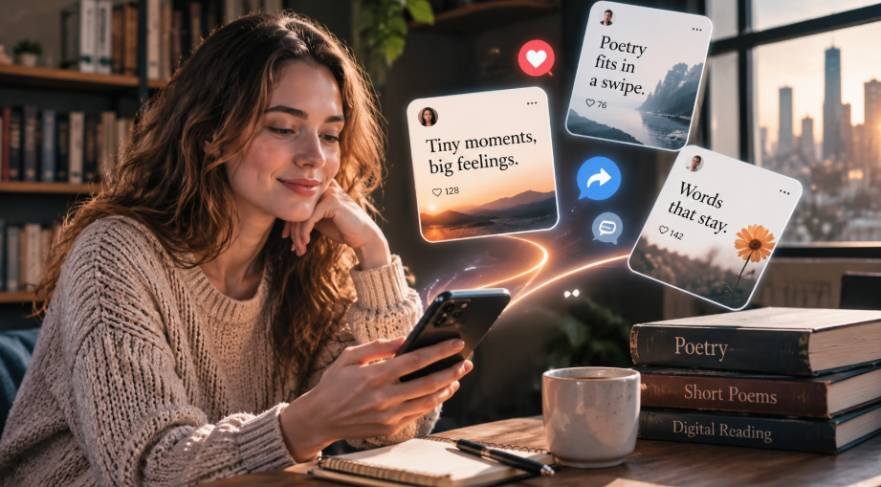
Sharing is one of the biggest differences between digital poetry and traditional discovery. A reader can send a poem to a friend because one line reminds them of a conversation, relationship, memory, or difficult period in their life.
That gives individual lines a life beyond the original post.
It also creates communities around writers and themes. Readers can discuss poems in comments, create response videos, recommend collections, or use a poem as a starting point for a larger conversation. Research examining poetry on TikTok found that comments can include emotional reactions as well as interpretation and discussion, suggesting that digital poetry engagement is not limited to passive consumption.
The Themes Keep Expanding
Short-form poetry is particularly suited to subjects that people want to name quickly but may struggle to explain themselves. Relationships remain common, but contemporary readers also encounter poems about identity, boundaries, family, burnout, belonging, personal growth, grief, and everyday uncertainty.
These subjects connect closely with popular poetry themes among younger readers, particularly when the writing feels direct rather than distant or overly formal.
That does not mean every young reader wants the same kind of poetry. Some prefer traditional forms, experimental writing, spoken word, or older poets. Digital discovery simply gives more readers the chance to encounter different styles and decide what speaks to them.
Where Short-Form Poetry Goes Next

The interesting part of this trend is that digital poetry does not have to remain digital. A short poem can lead to a full collection, a live reading, a podcast, a performance, or a deeper interest in literary history.
That curiosity can also encourage readers to move beyond poetry and explore other influential forms of American writing. Someone beginning with accessible digital verse may eventually seek out the best American novels of all time to see how earlier and contemporary authors have approached identity, relationships, social change, and the wider human experience through longer narratives.
Digital platforms have changed the doorway into poetry more than they have changed poetry itself. They make discovery faster, presentation more flexible, and conversation more immediate. At the same time, readers still decide which words deserve another look.
Frequently Asked Questions
1. Why is short-form poetry becoming popular?
It is easy to read on a phone, visually adaptable, highly shareable, and often focused on emotions or experiences readers recognize quickly.
2. Is short-form poetry only popular because of social media?
No. Short poetic forms existed long before social platforms. Social media has mainly changed how quickly these poems can reach readers and how easily readers can share them.
3. Does short poetry have to be simple?
Not at all. A poem can use a small number of lines while still relying on imagery, ambiguity, rhythm, metaphor, and layered meaning.
4. Can social media lead readers to poetry books?
Yes. Readers can discover a poet through a single post or performance and then move toward full collections, especially when they want more of the writer’s voice and themes.
Why Brevity Still Has Room to Grow
Short-form poetry has found its place because it meets readers where they already are without asking them to abandon the deeper qualities that make poetry meaningful. A few lines can be visual, emotional, musical, and personal at once. More importantly, a short encounter can become the beginning of a much longer relationship with poetry. That is perhaps the most valuable part of the trend: it creates opportunities for people who might otherwise never seek out poetry to discover that they enjoy it.
Poetry does not become less meaningful because it fits on a phone screen. Sometimes a few lines are enough to make someone pause.