
I have always found it more exciting to stumble across a novel that feels unlike anything I have read recently than to pick up the same titles that seem to appear on every recommendation list. Some books grab attention because of their covers, adaptations, or huge marketing campaigns. Others quietly build an audience because the story itself is strange, ambitious, or simply hard to forget. Those are often the books I keep thinking about after I finish them.
I also started noticing that “underrated” does not always mean obscure or completely unknown. A book can win awards, attract strong reviews, and still feel like something many regular readers have somehow missed. What makes these discoveries worthwhile is not their lack of popularity. It is the fact that they offer something different, from unusual narrative structures to unsettling worlds and characters who refuse to behave like familiar fictional types.
What Makes a Fiction Book Worth Discovering?

A book does not need to be completely unknown to deserve more attention. Sometimes it simply needs to escape the narrow cycle of bestseller lists and heavily repeated recommendations.
The strongest hidden gems usually have a clear creative identity. They might experiment with time, perspective, structure, language, or genre. Some create entire worlds from an unusual premise. Others take a familiar idea and approach it from a direction that makes it feel new.
That distinction matters because readers looking for underrated fiction are not necessarily searching for obscure books. They are looking for memorable reading experiences.
The Memory Theater by Karin Tidbeck
The Memory Theater takes fantasy somewhere wonderfully strange. The story moves through a mysterious realm called the Gardens, where time, friendship, growing older, and power do not behave in ordinary ways. Its world feels closer to a dark fairy tale than conventional fantasy, with imaginative rules that gradually reveal themselves.
What makes the novel stand out is its sense of scale. It moves between worlds and ideas without losing its emotional center. Friendship gives the story its grounding while the setting keeps expanding around it.
The book was published in 2021 and runs only about 240 pages, making it an appealing choice for readers who want inventive speculative fiction without committing to an enormous series.
The First Fifteen Lives of Harry August by Claire North
What if you could live the same life again and again while remembering everything that happened before?
That is the central idea behind The First Fifteen Lives of Harry August, and the novel uses it for much more than a clever time-travel premise. Each repeated life changes what Harry knows, who he trusts, and how he understands the consequences of his choices.
The unusual structure allows the story to play with chronology while still maintaining a strong sense of urgency. Instead of treating time travel as a simple way to visit different historical periods, it asks what repeated experience would do to a person’s identity, relationships, and sense of responsibility.
The novel was originally published in 2014 under the name Catherine Webb, with Claire North being the author’s established pseudonym. It also received major recognition within science fiction.
S. by J.J. Abrams and Doug Dorst
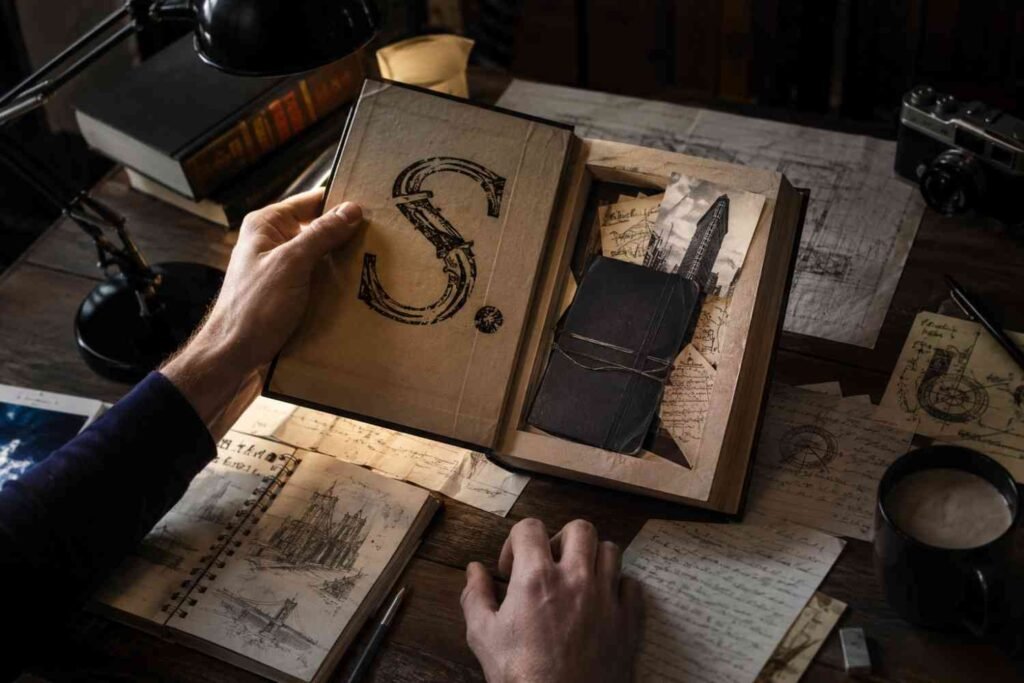
Some novels are meant to be read. S. feels like it is meant to be investigated.
At its center is a fictional book called Ship of Theseus. Around that book, two readers leave handwritten notes, questions, arguments, and clues in the margins. Physical inserts add another layer to the mystery, turning the object itself into part of the narrative.
That makes S. especially interesting for readers who enjoy puzzles and experimental fiction. You are not simply following a plot from beginning to end. You are deciding how much attention to give the main text, the marginal conversations, and the material hidden between the pages.
The original edition contains 22 inserts and was designed as a physical reading experience rather than something easily reproduced in another format.
The Third Policeman by Flann O’Brien
The Third Policeman is the kind of novel that becomes increasingly difficult to describe the more you try.
It begins with a murder and gradually moves into absurd territory involving strange police officers, bizarre philosophical ideas, and a reality that seems to operate according to rules of its own. The humor is dark, the logic is deliberately warped, and the story constantly makes you question what is actually happening.
Its history is almost as unusual as the novel. Written around 1939 and 1940, it was initially rejected for publication and remained unpublished until after Flann O’Brien’s death. That long delay makes its eventual reputation even more interesting.
For readers who enjoy absurdist fiction, this is less a conventional mystery than a strange trip through a world where logic keeps slipping out of reach.
Piranesi by Susanna Clarke
Piranesi is quieter than the other books on this list, but its imagination is just as ambitious.
The entire story revolves around an immense structure known simply as the House. Its halls are filled with statues, tides move through its corridors, birds appear throughout its spaces, and the protagonist records what he observes in journals.
The beauty of the novel comes partly from how much it allows the setting to speak for itself. The House is not just a backdrop. It shapes the character’s understanding of existence, isolation, memory, and identity.
It is also a good example of why how fiction helps readers understand other perspectives can be such a powerful part of reading. The story gradually asks readers to reconsider what they assume about its narrator and the world he inhabits, rather than handing them every answer immediately. The novel won the 2021 Women’s Prize for Fiction.
Fever Dream by Samanta Schweblin
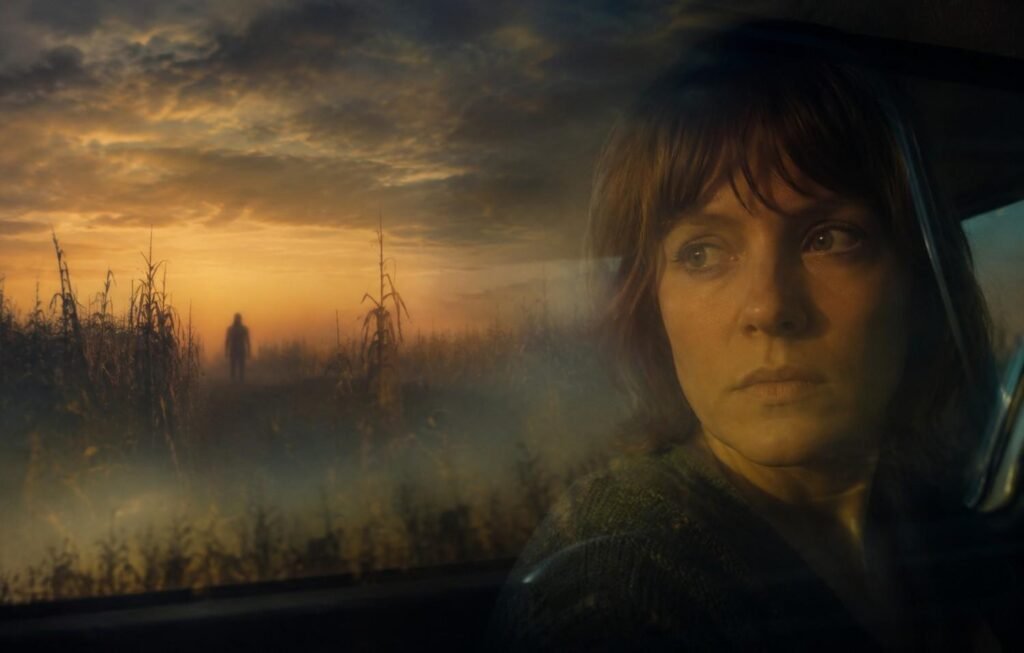
Fever Dream takes a very different approach. It is short, tense, and structured almost entirely around a conversation between a seriously ill woman and a young boy.
The result is an atmosphere of growing dread. Information arrives in fragments, memories overlap, and the reader is forced to piece together what has happened. Environmental contamination and parental fear sit underneath the psychological tension, giving the story a second layer beyond its unsettling surface.
Its original Spanish title is Distancia de rescate, and the English edition was published by Riverhead Books in 2017 in a translation by Megan McDowell. The novel was also a finalist for the International Booker Prize.
Readers interested in fiction exploring climate anxiety may find its environmental themes especially striking because the ecological threat is experienced through personal fear rather than presented as a straightforward warning.
Why Unusual Fiction Often Stays With Us
The appeal of these novels is not simply that they are different. Plenty of books try to be unusual and end up feeling complicated for the sake of it.
The difference is purpose. A strange structure can make us question memory. An impossible setting can change how we think about isolation. A fragmented narrative can recreate uncertainty more effectively than a straightforward explanation. When experimentation serves the story, it becomes part of the emotional experience rather than a decorative trick.
That is also why readers should not judge a book’s value only by how visible it is. A novel can receive less attention than expected and still have remarkable ideas, craftsmanship, and staying power.
Finding More Fiction Outside the Usual Recommendations

Readers can make their bookshelves more interesting by stepping away from the same recommendation loops. Library staff picks, independent bookstores, small presses, translated fiction, older backlists, literary journals, and themed reading groups can all lead to books that algorithms may not repeatedly place in front of you.
It also helps to search by storytelling style rather than popularity. Instead of asking for the next bestseller, look for experimental fiction, unreliable narrators, genre-blending novels, strange literary mysteries, or character-driven speculative fiction.
That approach can uncover fiction books that went under the radar without turning “underrated” into a requirement. Sometimes the best discovery is simply a book that has been waiting outside your usual reading habits.
FAQs: Fiction Books That Deserve More Attention for Their Unique Stories
What makes a fiction book underrated?
An underrated book is often one that receives less reader attention than its quality, originality, or lasting appeal might suggest. It does not necessarily mean the book is completely unknown.
2. Which book is best for readers who enjoy unusual storytelling?
S. is particularly suited to readers who enjoy layered narratives, puzzles, physical book design, and stories that unfold through multiple forms of text.
3. Are older fiction books still worth discovering?
Absolutely. Older novels can offer ideas and narrative techniques that feel surprisingly fresh, especially when they fall outside the books most commonly discussed today.
4. How can I find more hidden fiction gems?
Try library recommendations, independent bookstores, small-press catalogs, translated fiction, literary publications, and older backlists. Searching by theme or storytelling style can also lead to better discoveries.
Why Different Stories Deserve a Wider Audience
The best overlooked fiction does more than give readers another plot to follow. It changes the experience of reading itself. A strange structure can make you slow down. An unfamiliar perspective can challenge an assumption. A completely unexpected world can make ordinary life look slightly different when you close the book. That is the real value of seeking out stories beyond the most visible recommendations.
Popularity can tell you what many people are reading. It cannot tell you what you personally will remember.