
Some political novels explain history. This one shows how history enters a kitchen, a marriage, and a child’s sense of belonging. In this The Nights Are Quiet in Tehran book review, I examine why Shida Bazyar’s family saga feels intimate, restrained, and painfully relevant.
Translated from German by Ruth Martin, the novel follows an Iranian family across four decades. It was shortlisted for the 2026 International Booker Prize, becoming one of six finalists selected after the judges considered 128 books. Its real power, however, lies beyond awards. Bazyar turns revolution and exile into lived family memory.
The Nights Are Quiet in Tehran Book Review: What Is the Story About?
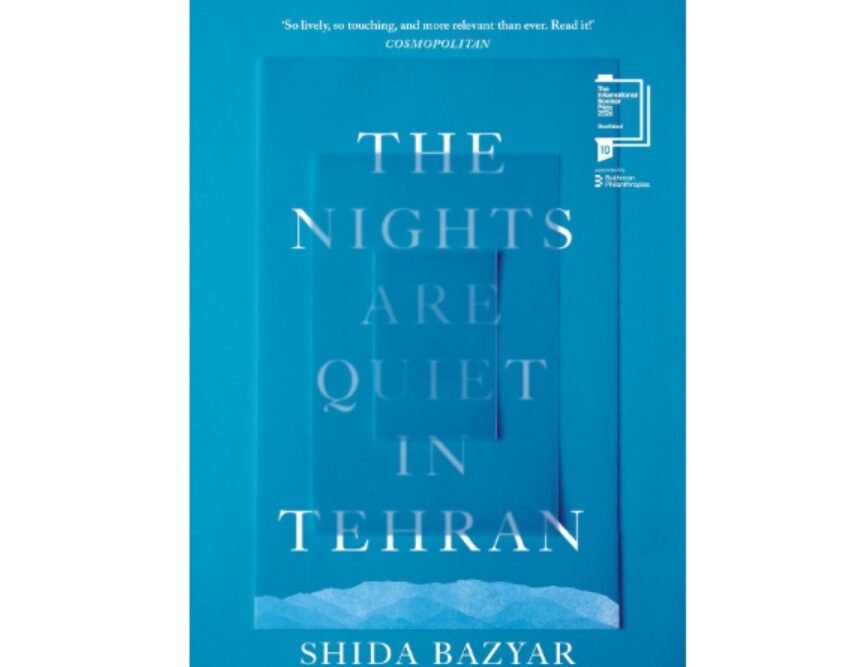
Image source: Amazon
The story begins in 1979 with Behzad, a young communist activist who believes the fall of the Shah may create a freer Iran. His hope collapses as religious authorities gain control and political repression deepens.
Behzad and Nahid eventually flee to West Germany. They find physical safety, but it comes with loneliness, survivor’s guilt, and painful separation from the people they left behind.
Bazyar then advances the story in ten-year intervals. Each section belongs to a different family member. This allows the same political history to pass through changing ages, loyalties, and definitions of home. The Booker Prizes describes it as a polyphonic novel about one family’s flight from and return to Iran.
Four Decades, Four Emotional Viewpoints
Behzad narrates the revolutionary excitement of 1979 and its eventual betrayal. His certainty gives the opening urgency, but his political idealism also limits what he can see.
In 1989, Nahid listens for news from Iran while raising children in West Germany. Her chapter shifts attention from public resistance to private endurance. Language barriers, refugee trauma, motherhood, and homesickness shape her daily life.
In 1999, their daughter Laleh visits Tehran. Family customs feel familiar, yet she remains socially out of place. Her reaction captures a sharp diaspora tension: a homeland can feel emotionally yours while remaining culturally unfamiliar.
In 2009, their son Morad watches the Green Movement unfold through online videos. He feels guilty about his safe student life in Germany while relatives in Iran encounter violence and political instability.
Why the Multi-Perspective Structure Works
The decade-based structure becomes the novel’s emotional engine. Every jump asks the same question: what has exile preserved, and what has it quietly erased?
Writers interested in creating similarly layered timelines and distinct character perspectives can explore how to outline a novel before drafting interconnected narratives.
This creates what I call the novel’s “distance test.” Behzad measures distance through politics. Nahid measures it through family separation. Laleh measures it through cultural discomfort. Morad measures it through digital spectatorship.
The family’s geographic separation remains similar, but the meaning of that separation changes with each generation. For the parents, Iran represents an interrupted life. For their children, it is part memory, part inheritance, and part imagined homeland.
The idea of “return” therefore never feels simple. Visiting Iran cannot restore the private version of home that each character has carried for years.
Where the Structure Loses Momentum
The ten-year leaps also create the main weakness identified in this The Nights Are Quiet in Tehran book review. A chapter can end just as a relationship becomes compelling.
Some emotional changes happen off-page. Early romances, political friendships, and family conflicts receive less space than many readers may expect. The approach occasionally makes the novel feel like four connected novellas rather than one continuous story.
I sometimes wanted Bazyar to remain longer with one narrator. Still, those narrative gaps support the novel’s subject. Exile creates missing years, delayed news, incomplete explanations, and inherited stories with important pieces removed.
Revolution, Exile, and Inherited Memory

Many The Nights Are Quiet in Tehran book review discussions concentrate on Iranian political history. Bazyar, however, never reduces Iran to revolutions, governments, or news headlines. She centers people whose hopes are damaged by forces larger than themselves.
Behzad and his comrades help challenge one oppressive system but fail to recognize another authoritarian order forming around them. His experience warns against political alliances built only around a shared enemy. Removing one ruler does not guarantee a shared vision of freedom.
Nahid offers a quieter form of political knowledge. She struggles with German, misses her relatives, and worries that she cannot fully support her children in their new environment.
Her chapter shows that exile continues after a family crosses the border. Legal safety does not erase grief, cultural displacement, or the exhausting work of rebuilding an ordinary life.
How Diaspora Identity Changes Across Generations
The children grow up with Western music, school routines, friendships, and freedoms their parents never experienced. They also encounter casual racism and suspicion.
Their relationship with Iran develops through family habits, stories, screens, telephone calls, and occasional visits. They inherit their parents’ emotional connection without inheriting the same memories.
What moved me most was Bazyar’s refusal to rank these hardships. Behzad’s political persecution is not treated as more authentic than Laleh’s cultural confusion. Nahid’s homesickness is not dismissed simply because her children adapt.
Each generation loses something different. That layered approach shapes my The Nights Are Quiet in Tehran book review verdict: identity remains an evolving family argument rather than a fixed inheritance.
Ruth Martin’s Translation Keeps Every Voice Distinct
Ruth Martin’s English translation handles major tonal changes without making the book feel scattered. Behzad speaks with political urgency. Nahid sounds inward and watchful. Laleh notices social discomfort, while Morad carries the restless pace of young adulthood.
The translation also preserves the tension between languages. Farsi slogans, German surroundings, and intimate family speech occupy the same emotional space.
European Literature Network praised the novel’s combination of personal experience, cultural loss, persecution, and political change across Iran and Germany. That balance depends on a translation that remains accessible without erasing cultural texture.
In an interview with the Booker Prizes, Bazyar discussed fiction as an art form that helps readers see people rather than nations, politicians, or ideologies. That principle defines this novel. Iran is never only a political symbol, while Germany is never presented as a simple refuge.
Both countries contain safety, alienation, belonging, memory, and contradiction.
Who Should Read This Novel?
I recommend the book to readers of translated literary fiction, multigenerational family sagas, political novels, and diaspora stories. It will especially suit readers who value shifting perspectives and emotional accumulation over fast-moving plots.
Readers interested in translated fiction about individuals trapped inside punishing institutions may also explore the on earth as it is beneath book. Its setting differs considerably, but both works examine dignity, survival, and the effects of institutional power.
Readers seeking constant action may find Bazyar’s novel too restrained. Its emotional effects build through silence, contrast, and delayed understanding. The sadness lingers rather than rising toward a dramatic confrontation.
The Nights Are Quiet in Tehran Book Review: Is It Worth Reading?
Yes. This The Nights Are Quiet in Tehran book review gives the novel a strong recommendation.
Bazyar holds revolution, migration, family conflict, cultural displacement, and hope together without turning her characters into political lessons. Each narrator remains flawed, partial, and fully human.
The restrained prose may frustrate readers who prefer complete resolutions or openly emotional scenes. I found that restraint convincing. Exile rarely offers clean endings, and inherited political pain does not disappear when a family reaches safety.
The book also avoids presenting migration as a simple journey from danger to freedom. The family escapes physical persecution, but it continues negotiating language, belonging, memory, racism, and responsibility.
Final Take: Quiet Title, Loud Aftershock
This novel does not shout for attention. It waits, then leaves an afterimage.
My final view in this The Nights Are Quiet in Tehran book review is that the novel’s finest achievement is making political time feel personal. A revolution may occupy one chapter in a history book, but its consequences can travel through a family for generations.
Read the novel slowly and notice what changes between decades. Pay attention not only to what each narrator says, but also to what the family can no longer explain to one another.
That silence is where Bazyar’s novel hits hardest.
Frequently Asked Questions
1. Is The Nights Are Quiet in Tehran based on a true story?
It is fiction shaped by Iranian-German history and the realities of revolution, migration, exile, and diaspora identity.
2. Who translated The Nights Are Quiet in Tehran into English?
Ruth Martin translated Shida Bazyar’s novel from German into English.
3. Why was the novel shortlisted for the International Booker Prize?
Its polyphonic structure, emotional depth, political relevance, and English translation earned it a place on the 2026 shortlist.
4. Is The Nights Are Quiet in Tehran book review consensus positive?
Yes. Reviews generally praise its humane treatment of exile, although some readers may find the decade-long narrative jumps disruptive.