
The phrase ROFC prize rewards brilliant brave fiction from the small presses points to one of publishing’s most unusual awards. When I researched it, I found a prize designed to reward not only a book’s author but also the independent publisher that risked releasing it.
That difference matters. The award began as the Republic of Consciousness Prize for Small Presses. It now operates in the UK and Ireland as the Queen Mary Small Press Fiction Prize.
Its central purpose remains unchanged. It protects ambitious fiction that larger commercial systems may overlook.
What ROFC Prize Rewards Brilliant Brave Fiction From the Small Presses Actually Means
The wording reflects the award’s founding mission. Novelist Neil Griffiths created the prize to recognize small publishers producing bold literary fiction in the UK and Ireland.
The first award was presented in 2017. Fitzcarraldo Editions won for publishing John Keene’s Counternarratives. Contemporary coverage described the prize as recognition for publishers taking creative and financial risks on niche fiction. se is therefore not the award’s complete official name. It is a description of what the prize was created to accomplish.
The Official Name Has Changed
Beginning with the 2026 prize cycle, the UK and Ireland award became the Queen Mary Small Press Fiction Prize. The change followed a partnership between the Republic of Consciousness Foundation and Queen Mary University of London.
The Republic of Consciousness Foundation remains involved. The prize continues to support fiction published by independent presses in the UK and Republic of Ireland. The first competition under the Queen Mary name also marked the award’s tenth year. ticles may still call it the Republic of Consciousness Prize for Small Presses. Current announcements use the Queen Mary Small Press Fiction Prize name. Both belong to the same award history.
Why ROFC and RofC Both Appear
The organization normally shortens Republic of Consciousness to “RofC.” However, readers often type “ROFC” when searching because acronyms are commonly written in full capitals.
The different capitalization does not indicate another award. Both versions usually refer to the Republic of Consciousness prize network.
Why This Literary Prize Exists

Small publishers often accept manuscripts that are hard to categorize or sell quickly. They may champion translated fiction, experimental structures, hybrid forms, unsettling subjects, or writers without established audiences.
I see the prize’s real value in how it recognizes the publishing decision behind each book. A daring novel does not reach readers through the author’s talent alone.
Someone must edit the manuscript, design the cover, arrange printing, manage distribution, secure reviews, and absorb any loss. For a tiny publisher, one unsuccessful release can damage an entire publishing schedule.
Small Presses Carry Unusual Risks
The prize’s official eligibility explanation argues that large publishers can use profitable books to support riskier projects. Independent presses rarely have that financial cushion.
The foundation therefore aims to direct funding toward publishers whose creative ambition exposes them to genuine financial pressure. roach shifts attention away from prestige alone. It asks a more useful question: who made this book possible when its commercial future was uncertain?
A Publisher-First Prize Model
The Queen Mary prize does not reserve every financial benefit for one winning author.
During the 2026 competition, each longlisted press received £500. Each shortlisted press received another £1,000. That second payment was divided so the publisher received 70%, while the remaining 30% went to the writer or writer-translator team.
The two winning authors also received a five-day writing residency. res reveal how unusual the model is. A press reaching the shortlist received £500 at the longlist stage and £700 from the shortlist payment. That produced £1,200 for the publisher.
The author or author-translator team received £300 from the shortlist allocation.
This is my clearest example of the award’s original thinking. It distributes practical support before judges select a final winner. Several publishers and creators benefit rather than one recipient taking the entire prize fund.
Who Can Enter the Queen Mary Small Press Fiction Prize?

The current requirements are more detailed than the original definition of a small press as a company with fewer than five full-time employees.
A publisher must now be financially independent from any larger business. It must also satisfy at least two of three conditions:
It publishes eight or fewer original titles annually, employs four or fewer full-time workers, or reports turnover below £100,000 in two of the previous three financial years.
Regular freelancers count when assessing the staff limit. Only one book may be submitted by each press under the published 2026 rules. Requirements help direct the money toward businesses that operate with restricted staff, output, or revenue. “Small press” is therefore more than a promotional label within this competition.
Recent Winners Worth Knowing
The award’s recent history shows the range of fiction that independent publishers bring to readers.
In 2024, Charco Press won with Of Cattle and Men by Brazilian writer Ana Paula Maia, translated by Zoë Perry. The short novel explores cruelty and human behavior through workers at an isolated slaughterhouse.
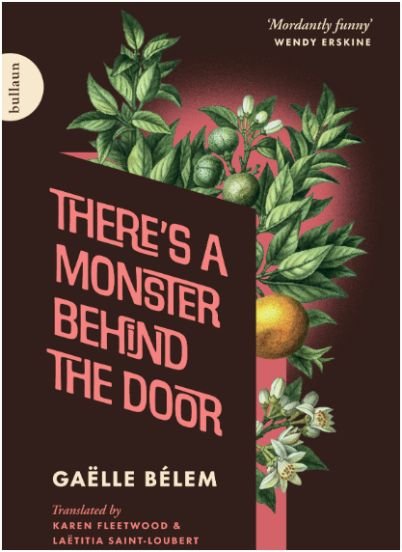
Image source: Goodreads
Bullaun Press won with There’s a Monster Behind the Door by Gaëlle Bélem. Karen Fleetwood and Laëtitia Saint-Loubert translated the novel from French.
Judges praised its humor, energy, and forceful treatment of colonial and postcolonial experiences. ES selected two winners in 2026. Ghost Driver by Nell Osborne was published by Moist Books.
Figures Crossing the Field Towards the Group by Rebecca Gransden was published by Tangerine Press. The official record corrects two possible misunderstandings. Malory was not a winning title. Malory is the central character in Ghost Driver. An Unorthodox Guide to Wildlife was also not a 2026 Queen Mary Prize winner.
Why US Readers Should Care
American readers have a direct connection through the separate Republic of Consciousness Prize, United States and Canada.
The North American award launched in 2022. It supports independent publishers operating across both countries and is run by volunteers. Its prize money comes from public donations. ibility rules are different from those used by the Queen Mary prize.
For the 2026 submission cycle, an eligible US or Canadian publisher must have average annual net revenue below $750,000, excluding arts grants. Literary fiction must also be its primary creative focus. prizes share the same larger principle. Small publishers maintain literary variety by releasing books that may struggle within mainstream acquisition models.
For US readers, the North American longlists and shortlists provide a valuable discovery tool. They can reveal experimental novels, translated books, and unusual story collections that receive little national advertising.
Big Fiction Does Not Need a Big Press
The statement ROFC prize rewards brilliant brave fiction from the small presses captures a publishing philosophy rather than merely describing another book award.
Literary risk deserves financial support. Translators deserve recognition. The publisher that turns an unconventional manuscript into a finished book deserves more than a passing mention in an acceptance speech.
My suggested next step is simple. Choose one book from a recent longlist and purchase it directly from its publisher or through an independent bookstore.
A literary prize can create attention. Readers turn that attention into sales, future publishing contracts, and another opportunity for a small press to take a brave risk.
Frequently Asked Questions
1. What is the ROFC Prize for Small Presses?
It is the former UK and Ireland prize now known as the Queen Mary Small Press Fiction Prize.
2. Who founded the Republic of Consciousness Prize?
Novelist Neil Griffiths founded the award, with the first prize presented in 2017.
3. Does the prize money go only to authors?
No. A substantial share supports the publishers, while writers and translators also receive funding.
4. Is there a Republic of Consciousness Prize in the United States?
Yes. A separate US and Canada award has supported North American independent publishers since 2022.