
A title this strange makes a promise: the poems will not behave predictably. From Professor Murasaki’s Notebooks on the Effects of Lightning on the Human Body delivers science, memory, humor, and unease without turning poetry into a lecture.
I approached the collection expecting atmospheric science to dominate. Instead, scientific language becomes a way to examine relationships, childhood, aging, and sudden emotional change. That tension gives John Latham’s sixth poetry collection its unusual charge.
What Is the Collection About?
Comma Press published the collection in the United Kingdom on September 7, 2017. The 80-page paperback carries ISBN 9781910974285. Independent Publishers Group lists February 2018 as the publication date for the US and Canadian trade edition.
The poems move between intimate memories and larger natural forces. Childhood remains vivid, but age changes how those memories feel. Fresh encounters offer possibility, while illness, separation, and physical decline expose life’s fragility.
This is not simply poetry about science. Science supplies Latham’s habits of attention. He studies small details, tests unexpected associations, and lets an image gather meaning before it disappears.
Where Atmospheric Science Meets Lyric Poetry
Latham spent more than 40 years researching cloud formation. He founded an atmospheric physics research group at UMIST and later worked at the National Center for Atmospheric Research in Colorado. His scientific career explains the confidence behind the collection’s weather imagery.
Weather Becomes an Emotional Instrument
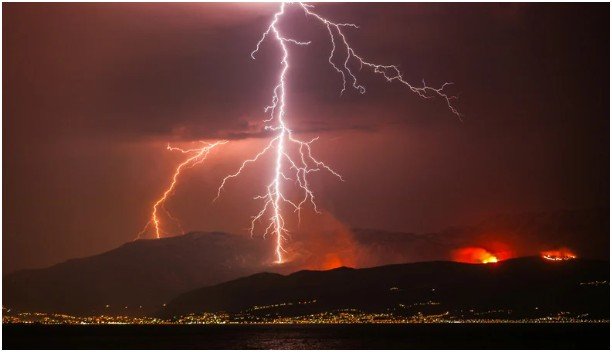
Lightning, fog, ice, and precipitation do more than create scenery. They model how emotion behaves. A feeling may build quietly, flash without warning, or crystallize around one remembered detail.
Comma Press compares Latham’s creative process to ice forming around a tiny particle. That description helped me understand the collection. His poems often begin with something precise, then develop their own internal weather.
Scientific Precision Never Cancels Mystery
The poems value observation but resist one fixed explanation. Latham uses exact details to make uncertainty sharper. The approach feels scientific and poetic at once.
Readers attracted to experimental books that blur familiar categories may also enjoy pseudotooth, especially as a companion exploration of unconventional literary form.
Memory, Aging, and Human Connection
The emotional center lies in ordinary encounters. A relationship can resemble two runners passing. A dance can briefly restore youth. A short message can compress an entire loss into a few words.
A contemporary review observes that the early scientific subjects soon give way to relationships, illness, childhood fear, love, and aging. This movement prevents the collection from becoming concept-driven. Its ideas remain attached to recognizable lives.
I found the contrast between childhood and old age especially effective. Childhood appears bright because memory has preserved selected details. Aging introduces betrayal: the body changes, confidence weakens, and time revises what once seemed permanent.
Satire keeps the poems from becoming solemn. The invented scholarly frame, translated-notebook style, and scientific formality create emotional distance. That distance allows difficult subjects to arrive without excessive sentimentality.
The Prize-Winning Poem Has a Different Recorded Title
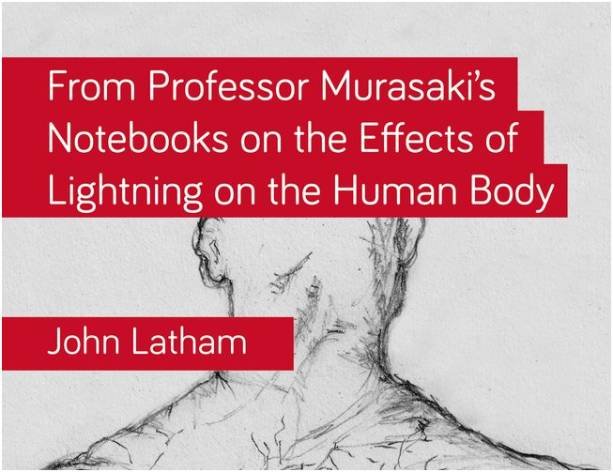
Image source: Amazon
Comma Press states that the collection’s title poem won second prize in the 2006 National Poetry Competition. However, The Poetry Society records the winning poem as “From Professor Nobu Kitagawa’s Notebooks On Effects of Lightning on the Human Body,” followed by a fictional translation credit.
That difference matters. It suggests that the collection title represents a later variation or reframing rather than a word-for-word reproduction of the competition title. Many short descriptions of the book overlook this distinction.
The Poetry Society also identifies Latham as a poet, writer, and playwright whose work appeared on BBC Radio 4. Comma Press reports that he won first prize in more than 20 poetry competitions.
How I Recommend Reading the Collection
I use three lenses when approaching these poems.
First, Track the Weather
Notice references to clouds, electricity, fog, ice, pressure, or movement. Then ask what the physical process reveals about the speaker’s emotional condition.
Second, Find the Memory Particle
Identify the small object or moment holding the poem together. It may be a gesture, message, landscape, or bodily detail. That particle often explains why the poem expands in an unexpected direction.
Third, Watch the Human Contact
Ask who reaches another person, who fails, and who arrives too late. This final lens turns scientific imagery into emotional consequence.
The method offers more than a list of themes. It reveals how Latham constructs meaning: observation creates an image, memory transforms it, and human contact gives it weight.
Is the Collection Worth Reading?
From Professor Murasaki’s Notebooks on the Effects of Lightning on the Human Body suits readers who enjoy accessible poems with intellectual depth. It may also appeal to scientists, meteorology enthusiasts, and readers interested in memory, relationships, or aging.
The language often appears plain, but the connections are not. That balance makes the collection approachable without making it simple.
Comma Press lists the book as a paperback and provides ebook options through Kindle, Kobo, and Google Play. Availability and pricing may differ for US readers.
Frequently Asked Questions
1. Who wrote From Professor Murasaki’s Notebooks on the Effects of Lightning on the Human Body?
British physicist, poet, novelist, and playwright John Latham wrote the collection.
2. When was the poetry collection published?
Comma Press published the UK paperback in 2017, while its US and Canadian trade edition is listed for 2018.
3. What are the collection’s main themes?
Its main themes include scientific observation, childhood memory, relationships, aging, illness, loss, and unexpected renewal.
4. Did the title poem win an award?
A related version with a different recorded title won second prize in the UK’s 2006 National Poetry Competition.
The Forecast: Strange, Tender, and Worth the Risk
This collection works because it never forces science and emotion into separate rooms. Latham treats a cloud, a childhood scene, and an aging body as equally worthy of close attention.
My best tip is to read each poem twice. Follow the literal event first. Then return for the emotional weather. That second reading is where the lightning usually strikes.