When I hear cryptocurrency solana seeker the 500 crypto phone described as a smartphone built for Web3, I don’t immediately ask whether it comes with free tokens. I ask something less exciting but much more useful: does owning one actually make crypto easier?
That’s the test Seeker needs to pass. Plenty of ordinary Android phones can install wallets, trading apps, and browsers. Solana Mobile therefore needs its hardware-level wallet security, decentralized app distribution, identity tools, and ecosystem extras to justify buying specialized hardware.
The famous $500 pricing makes the comparison especially interesting. At that price, you’re not shopping in bargain-phone territory—you can find some extremely capable mainstream Android competitors.
Table of Contents
ToggleWhy Is cryptocurrency solana seeker the 500 crypto phone Different From a Regular Android?
On the surface, Seeker looks like a conventional modern Android handset. It has a 6.36-inch AMOLED display, 120Hz refresh rate, 8GB RAM, 128GB storage, 5G connectivity, and a 4,500mAh battery.
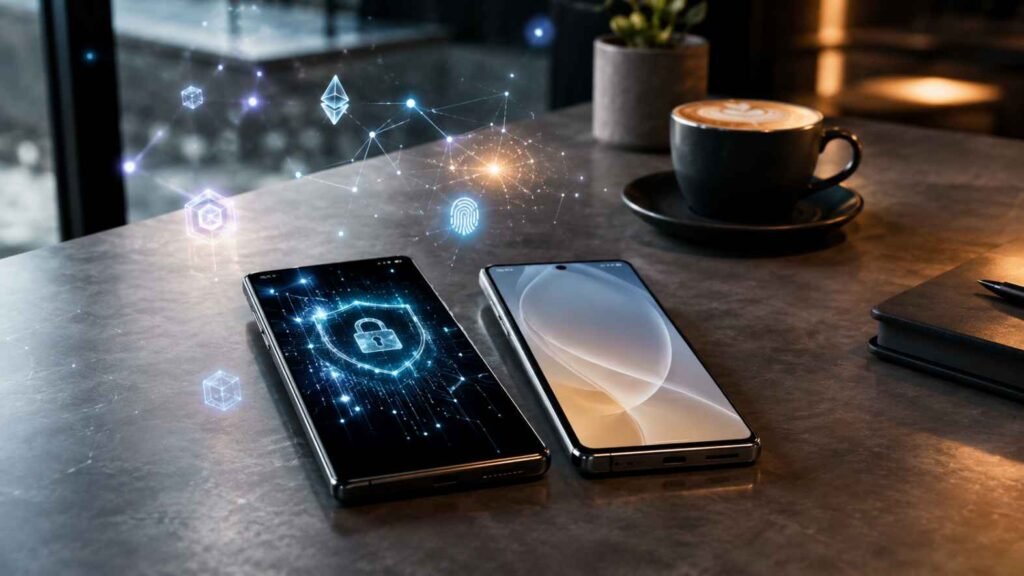
The deeper difference is Solana Mobile’s crypto stack. Seed Vault provides hardware-backed key handling, while Seed Vault Wallet, Seeker ID, Genesis Token, and the Solana dApp Store create a more vertically integrated onchain experience.
CoinDesk’s reporting around the launch explained how Seeker was designed as Solana Mobile’s second-generation handset and connected it with the broader SKR-powered ecosystem. The background is worth reading in CoinDesk’s coverage of Seeker and Solana Mobile’s ecosystem strategy.
Does cryptocurrency solana seeker the 500 crypto phone Have Good Hardware for the Money?
The answer depends on what you compare. Against a flagship costing twice as much, Seeker’s 8GB memory and 128GB storage look modest. Against ordinary midrange Android phones, the specifications are far more reasonable.
Its MediaTek Dimensity 7300 chipset isn’t designed to win benchmark competitions against premium flagship silicon. What it should provide is sufficient everyday performance while helping the device maintain a more accessible price.
You can compare the hardware yourself through Solana Mobile’s current Seeker specification sheet, which lists the processor, display, battery, connectivity, storage, memory, and Seed Vault integration.
Why Is Seed Vault the Big cryptocurrency solana seeker the 500 crypto phone Feature?
If I were choosing one reason to buy a dedicated crypto phone, it would not be access to another trading app. Regular phones already have plenty of those.
Seed Vault matters because crypto security eventually comes down to keys and transaction signing. Solana Mobile’s approach integrates key protection more deeply with the phone’s hardware and wallet experience.
That improves convenience, but it doesn’t outsource responsibility. If you willingly sign a malicious transaction or expose your recovery credentials, secure hardware cannot magically travel backward through time and cancel your mistake.
Can cryptocurrency solana seeker the 500 crypto phone Replace a Hardware Wallet?
I wouldn’t frame it that simply. Seeker provides hardware-backed crypto security inside a smartphone, while traditional dedicated hardware wallets are purpose-built devices with a narrower role.
The Seeker advantage is convenience. Your wallet, dApps, identity, connectivity, and signing flow all live in one mobile experience rather than requiring a second device whenever you interact with crypto.
The trade-off is that your smartphone is something you carry everywhere. It connects to networks, runs many applications, and lives a much busier digital life than a hardware wallet sitting safely in a drawer.
What Does the Solana dApp Store Add?
The dApp Store gives Seeker users a crypto-focused application marketplace with categories such as DeFi, payments, gaming, NFTs, DePIN, and AI.
From a developer perspective, that’s potentially important because distribution has long been one of crypto mobile’s awkward problems. Native access can encourage teams to design experiences around smartphones instead of shrinking desktop interfaces until they technically fit.
From a user perspective, however, the quality of the ecosystem matters more than the number of apps. Five genuinely useful applications beat 200 apps you open once because somebody promised points.
Is cryptocurrency solana seeker the 500 crypto phone Only About Airdrops?
The Saga’s history made this question inevitable. The earlier Solana phone became famous partly because crypto rewards helped create unexpected demand after a slow start.
Seeker certainly includes reward-oriented elements, including its Genesis Token, ecosystem programs, and SKR. But buying the handset solely because you expect future rewards is speculation layered on top of a hardware purchase.
Decrypt’s hands-on assessment similarly concluded that Seeker makes the most sense for people actively engaged with Solana rather than shoppers simply hunting for a discounted mainstream smartphone. You can see the full practical comparison in Decrypt’s Solana Seeker review.
How Big Has the Seeker Ecosystem Become?
The story changed considerably after launch. Solana Mobile said in 2026 that more than 200,000 devices had shipped and its mobile ecosystem had grown beyond 500 dApps.
It also reported more than $5 billion in onchain volume through the ecosystem. Company-reported activity numbers should always be read in context, but they show that Seeker isn’t merely sitting on a concept shelf anymore.
The bigger question is retention. I care less about whether someone installed a dApp once and more about whether useful applications make people continue choosing Seeker as their preferred crypto device.
What Are the Biggest cryptocurrency solana seeker the 500 crypto phone Downsides?
First is specialization. You’re buying into a Solana-centered ecosystem. That’s attractive if Solana is already where you spend your time, but much less compelling if you mainly use other networks.
Second is hardware competition. Mainstream smartphone makers operate at extraordinary scale and compete aggressively on cameras, processors, software support, accessories, repair infrastructure, and trade-in programs.
Third is crypto risk itself. Tokens fluctuate, malicious applications exist, scams target wallet users, and incentives change.
A crypto-native device makes blockchain access easier, but easier access can also make careless decisions easier.
How Should You Evaluate cryptocurrency solana seeker the 500 crypto phone Before Buying?
Step 1
Ignoring potential airdrops for five minutes. Ask whether you’d still want the phone if no future rewards appeared. That one question removes a surprising amount of emotional fog.
Step 2
Comparing the hardware with mainstream Android phones around the same price. Check processor performance, camera expectations, storage, screen quality, battery life, software support, warranty, and repair options.
Step 3
Auditing your own Web3 habits. Count how frequently you use Solana wallets, DeFi platforms, staking, payments, NFTs, DePIN, games, and decentralized applications.
If you’re also interested in how AI can be applied to crypto activity, see our guide to cryptocurrency build your own ai crypto trading bot.
Step 4
Deciding whether integrated key management solves an actual problem for you. If wallet friction is currently annoying, Seed Vault becomes meaningful. If you barely transact, it may not.
Step 5
Checking the current official price. The Seeker has appeared at different effective prices through preorder windows and ecosystem promotions, so never assume yesterday’s $500 figure is today’s checkout total.
What Are the Key Takeaways About cryptocurrency solana seeker the 500 crypto phone?
Seeker makes more sense when you judge it as a specialized Web3 device rather than a conventional phone attempting to win a specification war.
Its combination of Seed Vault, integrated wallet features, Seeker ID, Solana dApp Store, and ecosystem rewards creates an experience regular Android phones don’t reproduce exactly.
The compromise is that you’re prioritizing crypto-native utility over absolute flagship hardware. Whether that is a smart trade depends almost entirely on how involved you are with Solana.
What Are Buyers Asking About cryptocurrency solana seeker the 500 crypto phone?
A specialized smartphone brings two shopping checklists together: the ordinary “is this phone good?” checklist and the considerably stranger “how does it secure my private keys?” checklist. If you’re also comparing the broader crypto landscape before deciding where to focus your Web3 activity, reviewing the top 10 cryptocurrencies can provide useful context.
Frequently asked questions
1. Who should buy cryptocurrency solana seeker the 500 crypto phone?
Active Solana users, developers, DeFi participants, collectors, and people regularly using Web3 mobile apps are the clearest audience.
2. Does the Seeker support 5G?
Yes. Current official specifications list 5G support along with Wi-Fi 6, Bluetooth 5.4, one nano SIM slot, and one eSIM.
3. Does the Seeker have wireless charging?
Yes. Solana Mobile’s current specifications list a 4,500mAh battery with wireless charging.
4. Will rewards make the Seeker pay for itself?
There’s no guarantee. Past ecosystem rewards can never promise future value.
Is cryptocurrency solana seeker the 500 crypto phone a Bargain or Just Crypto With Better Packaging?
I think Seeker is most interesting because it asks a bigger question than whether crypto enthusiasts need another gadget: what happens when blockchain functionality is designed into the mobile experience from the beginning?
For heavy Solana users, the answer may be “finally, this is easier.” For casual users, the answer may still be “I’ll just install a wallet on my current phone, thanks.”
My personal buying test would be simple: remove every hypothetical future reward from the equation. If you’d still happily pay the asking price for the phone, Seed Vault, dApp experience, and ecosystem access, you’ve found the strongest reason to buy it.