
If you are searching for a whyteface a igoni barrett book review, the real question is whether Barrett’s strange racial premise still works once Frank leaves Nigeria. For me, moving him into Europe is exactly what gives this sequel a reason to exist. The joke becomes quieter, but the questions become harder.
Four years after Blackass, Furo Wariboko now lives as Frank Whyte. He still appears white except for his buttocks. In Whyteface, he takes his first vacation outside Nigeria, moving through Amsterdam, Oslo, and Milan.
The result is less frantic than Barrett’s earlier novel. It is also more reflective, uncomfortable, and interested in what happens after privilege becomes normal.
What Is Whyteface About?
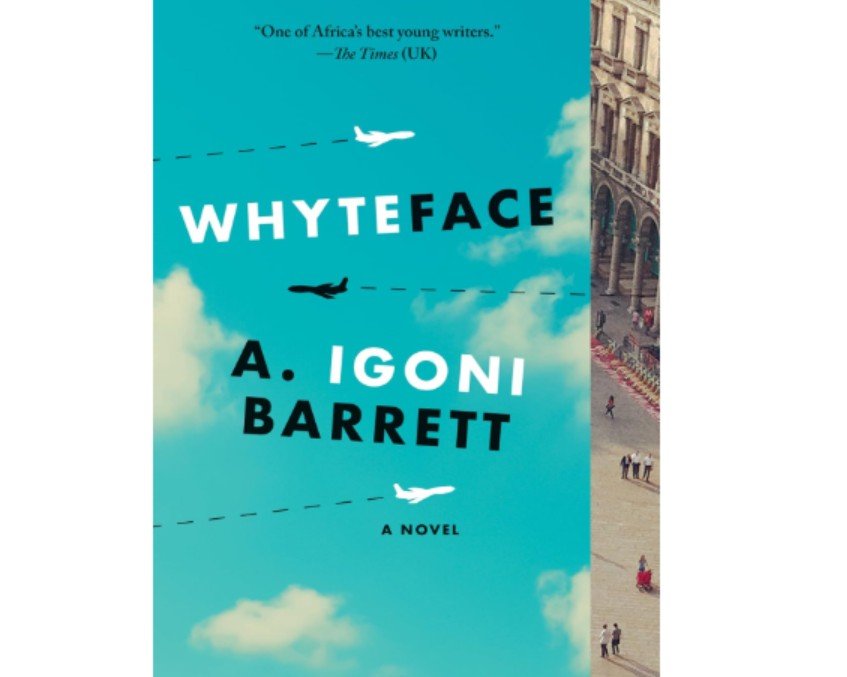
Image Credit: Amazon
Graywolf Press presents Whyteface as a return to Frank after the extraordinary transformation introduced in Blackass. Europe gives him something Lagos could not: the ability to appear ordinary.
His whiteness no longer attracts the same attention. He can walk through European cities and blend into their crowds.
Yet that apparent freedom produces a contradiction. Distance from Nigeria makes Frank feel more Nigerian, not less. His body provides anonymity while memory, nationality, and family keep reminding him where he comes from.
That is why this whyteface a igoni barrett book review sees the sequel as more than another chapter in an unusual transformation story. Barrett asks what happens when racial privilege stops shocking the person who possesses it.
Blackass vs Whyteface: Satire Changes Its Temperature

Blackass drew much of its power from Lagos. Job hunting, social media, class performance, corporate absurdity, and racial privilege gave the novel constant comic motion.
Whyteface lowers that temperature.
Kirkus Reviews highlights the novel’s more meditative character. That change is central to understanding it. Barrett still writes satire, but he now seems more interested in discomfort than punch lines.
Why the quieter sequel works
I think the tonal change is one of Barrett’s smartest decisions.
Repeating the manic rhythm of Blackass could have turned Frank’s transformation into a reusable gimmick. Moving him to Europe changes the social equation instead.
In Nigeria, Frank’s white appearance makes him exceptional. In much of Europe, it allows him to disappear into the majority.
At this point, my whyteface a igoni barrett book review becomes less concerned with the mechanics of Frank’s transformation and more interested in its consequences. What does privilege feel like when the person benefiting from it can stop noticing it?
Barrett does not offer an easy answer.
Race, Migration, and African Identity Abroad

Frank’s encounters gradually widen the novel beyond his private identity problem.
In Oslo, he becomes involved when a charismatic Kenyan writer faces racism. In Milan, he meets a migrant woman who may have a distant family connection to him.
Both encounters expose the gap between Frank and other Africans moving through Europe. His transformed body gives him social protection that nationality, memory, and family history cannot provide.
Frank’s struggle is especially interesting when viewed through internal conflict vs external conflict examples. Internally, he wrestles with nationality, memory, privilege, and the identity attached to his transformed body. Externally, racism, migration, social expectations, and the reactions of other people continually test the advantages his appearance gives him.
Barrett also examines Western attitudes toward Africa. Prejudice does not always arrive through obvious hostility. It can hide inside charity, curiosity, pity, or supposedly enlightened concern.
That distinction gives the whyteface a igoni barrett book review particular weight as a migration story. Barrett keeps returning to a difficult question: who gets to move without explaining why they belong?
My three-city identity test
The most useful way I found to interpret Frank’s European trip is to treat each major city as a different identity test.
Amsterdam tests invisibility. Frank can blend into the crowd. That sounds liberating until anonymity reveals the difference between appearing to belong and actually belonging.
Oslo tests solidarity. Racism directed at another African forces Frank to confront his responsibilities when his appearance allows him to escape similar treatment.
Milan tests kinship. His encounter with a possible relative places migration and family history beside the advantages of his altered body.
This is what makes the geography important.
Amsterdam, Oslo, and Milan are not simply attractive backdrops for a literary road trip. Each city removes another excuse Frank might use to consider his whiteness a private accident.
That three-stage progression is one of the strongest reasons my whyteface a igoni barrett book review rates the European setting so highly.
Colonial Legacy Without Turning Into a Lecture

A less controlled novel could easily make Frank a mouthpiece for long speeches about Europe, Africa, race, and colonialism.
Barrett largely avoids that problem.
His ideas emerge through encounters, awkward conversations, racial assumptions, and Frank’s shifting awareness of himself. History operates as pressure rather than exposition.
Identity is not presented as something Frank can define once and keep forever. It changes according to where he stands, who is looking, and what social history has already attached to his appearance.
Readers interested in contemporary experimental writing that examines identity, social structures, and political pressures from a different literary angle may also find the shelter is necessary for existence brenda iijima book review worth exploring.
That restraint strengthens this whyteface a igoni barrett book review. Barrett trusts readers to recognize the contradictions instead of explaining every one of them.
Where Whyteface Is Less Convincing
The slower approach will not suit everyone.
Some critical responses have noted that Whyteface can feel plotwise static. I think that criticism is fair.
Frank’s ailing father creates emotional pressure from Nigeria, with much of that relationship unfolding through text messages. The subplot gives Frank another connection to home, yet it can feel attached to the European narrative instead of fully woven into it.
Readers hoping for the aggressive comic momentum of Blackass may also be surprised.
Whyteface still contains satire, but its sharpest moments often arrive several beats after the joke. Barrett wants readers to sit with the discomfort.
That makes a whyteface a igoni barrett book review difficult to frame as a simple claim that the sequel is better or worse. The books are pursuing different effects.
Is Whyteface Worth Reading?
Yes, especially if you prefer literary satire that refuses to solve its own hardest questions.
Barrett uses an absurd bodily transformation to explore race, migration, nationality, family, colonial inheritance, privilege, and belonging. More importantly, these themes overlap instead of appearing as separate talking points.
Readers who also move between literary fiction and contemporary relationship-centered novels may want to explore what is the book november 9 about for a very different approach to identity, emotional choices, and the consequences of the past.
Coverage from Kirkus Reviews, Library Journal, Brittle Paper, and Electric Literature also reflects the novel’s strong interest in race, identity, and global movement.
From a US reader’s perspective, this whyteface a igoni barrett book review also feels timely because Frank’s story complicates familiar conversations about whiteness. Barrett shows that racial categories change meaning across national borders even when privilege survives the journey.
My rating: 4.2/5.
I would read Blackass first. Whyteface can stand alone, but Frank’s European anonymity carries far more weight when you understand what his appearance meant in Lagos.
The Passport Changed. The Problem Didn’t.
The smartest thing Barrett does is refuse to make Europe an escape hatch.
Frank travels. He blends in. He gains physical distance from Nigeria. None of those things settle the question of who he is.
That contradiction gives the novel its staying power. Someone can benefit from the identity society assigns their body while privately resisting that same identity.
My final whyteface a igoni barrett book review takeaway is simple: read the novel slowly and pay attention to what changes between cities. The most revealing moments are often not what Frank does. They are the things his new position allows him not to notice.
Frequently Asked Questions
1. Is Whyteface a sequel to Blackass?
Yes. It continues Furo Wariboko’s story roughly four years later, after he has established his life as Frank Whyte.
2. Do I need to read Blackass before Whyteface?
No, but reading Blackass first gives important context for Frank’s transformation, racial privilege, and changing identity.
3. What are the main themes in Whyteface?
The novel examines race, migration, colonial legacy, Nigerian identity, xenophobia, whiteness, family, privilege, and belonging.
4. Is Whyteface by A. Igoni Barrett worth reading?
Yes. This whyteface a igoni barrett book review recommends it most strongly to readers who enjoy reflective satire, migration fiction, and identity-driven literary novels.