
I have always found it more satisfying to stumble across a novel that never seemed to be everywhere. Some books arrive with huge launches, endless social posts, and shelves full of copies, while others quietly build their own little audience. I have found some of my most memorable reads in that second group, usually after seeing a passing recommendation or noticing a title that somehow escaped the usual reading conversations.
What makes an overlooked book interesting is not simply that fewer people talk about it. A book can disappear from the spotlight for countless reasons, from limited marketing to an unusual premise that is difficult to categorize. The five novels below stood out to me because each offers something distinctive. They move between survival, magical realism, fantasy, mystery, and darker speculative fiction without feeling like variations of the same reading experience.
The River by Peter Heller
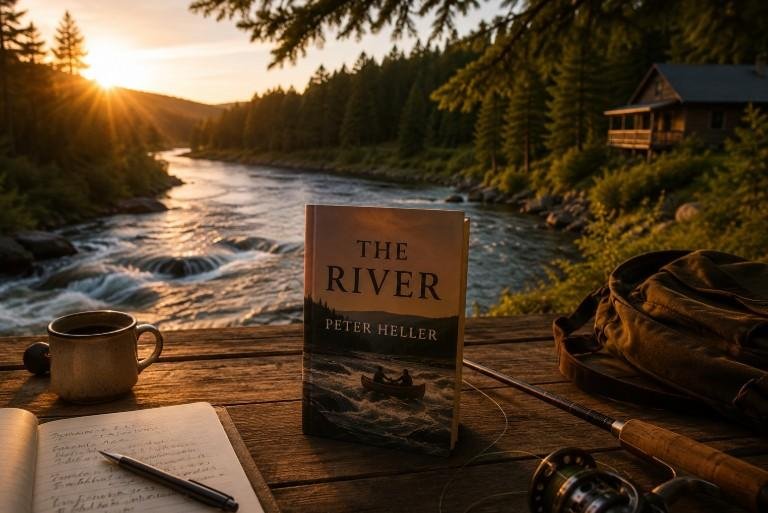
The River begins with two college friends taking a canoe trip through the wilderness of northern Canada. Jack and Wynn expect long days on the water, fishing, reading, and enjoying the landscape. Then they discover that a wildfire is moving toward them, and another danger is much closer than they realize.
What makes the novel work is the way the wilderness becomes part of the tension rather than simply serving as scenery. The river, weather, fire, and changing conditions constantly affect what the characters can do. At the same time, the relationship between the two friends gives the survival story an emotional center. It is tense without becoming a nonstop action novel, and its nature writing gives the setting unusual weight.
It is a particularly good choice for readers who enjoy literary thrillers where the environment matters almost as much as the plot.
The Book of Form and Emptiness by Ruth Ozeki
Ruth Ozeki takes a very different route. The story follows Benny Oh, a young boy who begins hearing objects speak after his father dies. His mother is struggling with grief and compulsive hoarding, while Benny gradually finds refuge in a library and in the strange presence of a book that becomes much more than an ordinary object.
There is a lot happening beneath the unusual premise. Grief, loneliness, consumerism, mental health, family relationships, and the role of books all become part of the story. Objects having voices could easily become a gimmick, but here the idea gives the novel another way to explore how people attach meaning to the things surrounding them. The book won the Women’s Prize for Fiction, yet its size and contemplative pace can make it feel like a discovery rather than an obvious mainstream recommendation.
Readers who enjoy fiction that mixes emotional realism with magical elements may find a lot to take from it.
The Gray House by Mariam Petrosyan

The Gray House is probably the strangest recommendation on this list, and that is exactly why it belongs here.
The novel takes place in a boarding school for disabled children and teenagers, but the school is not simply a setting. It has its own rules, factions, histories, rituals, and mysteries. The residents use nicknames, stories shift between different narrators, and the boundaries between ordinary reality and something more mysterious become increasingly difficult to define.
It is also a very large novel, and its unusual structure asks readers to be patient. The story moves through different perspectives and timelines instead of explaining everything immediately. That can make it challenging, but it is also what gives the book its distinctive atmosphere. The English translation brought a major Russian literary work to a wider audience, while reviews have noted both its extraordinary imagination and its deliberately sprawling structure.
For readers who like immersive worlds and stories that refuse to explain themselves too quickly, this can be an especially rewarding choice.
The Starless Sea by Erin Morgenstern
Some novels are built around a plot. The Starless Sea is built around the feeling of discovering a story hidden inside another story.
Zachary Rawlins, a graduate student, finds a mysterious book that contains a story connected to his own childhood. His search eventually leads him beneath the surface of the ordinary world to a hidden realm filled with libraries, doors, myths, and stories. The novel keeps moving between Zachary’s journey and smaller tales that gradually become part of the larger picture.
It is easy to see why the book appeals to readers who love books about books, but its appeal goes further than that. It is interested in storytelling itself, particularly the strange way stories can become places we return to when real life feels less certain.
That connects naturally with the growing interest in psychological fiction books gaining popularity, especially novels that use unusual structures to explore memory, identity, grief, and the way people understand themselves.
The Starless Sea is not a fast read, and it does not try to be one. Its pleasure comes from atmosphere, symbolism, and gradually uncovering connections that initially seem unrelated.
The Library at Mount Char by Scott Hawkins

The Library at Mount Char starts with a premise that sounds almost impossible to explain without making it seem stranger than it already is. A group of children are taken in by a powerful figure known as Father and raised inside an extraordinary library. Each child studies a different area of knowledge, and those disciplines eventually give them abilities far beyond anything ordinary humans possess.
When Father disappears, the children are left with an enormous problem. The library contains knowledge connected to the structure of the universe, and control of that knowledge comes with terrifying consequences.
The novel blends fantasy, horror, mystery, and dark humor. It can be violent and unsettling, but its real strength is the scale of its imagination. The story keeps introducing ideas that feel completely unexpected while still maintaining a strong emotional thread around family, power, loyalty, and revenge.
It is an excellent pick if predictable genre boundaries have started to feel boring.
Why These Books Are Worth Finding
The five books above have very little in common on the surface. One is a wilderness survival story, another explores grief through talking objects, one builds an entire reality around a mysterious boarding school, another turns storytelling into a physical world, and the last creates a bizarre mythology around a library.
That variety is exactly what makes overlooked fiction worth exploring. You are not limited to whatever category happens to dominate bestseller lists at a particular moment. A quieter novel can offer a completely different experience, especially when its premise does not fit neatly into one shelf.
There is also something satisfying about finding fiction that feels slightly outside the current conversation. Fiction exploring climate anxiety is one example of how contemporary readers are seeking stories that engage with larger fears through personal experiences rather than straightforward commentary. Older or less visible novels can offer similarly interesting perspectives without being written specifically to follow a trend.
How to Find More Under-the-Radar Fiction

Finding these books does not require an elaborate search. Independent bookstores can be especially useful because staff recommendations often bring attention to books that have not received enormous marketing campaigns. Libraries are another good place to look, particularly when browsing by author, small press, translated fiction, or genre instead of simply searching bestseller shelves.
It also helps to look beyond the newest releases. A book does not become less worthwhile because it was published five or ten years ago. In fact, older fiction can be easier to appreciate once the initial publishing cycle has passed and the pressure around a new release has disappeared.
Pay attention to books that cross categories, too. A novel described as literary fantasy, speculative mystery, psychological horror, or historical science fiction may not attract readers who search only within one genre. Yet those combinations can be exactly what makes a book memorable.
That is one reason looking beyond popular fiction genres right now can make your reading list more interesting. Trends can point you toward good books, but they should not determine the boundaries of what you read.
FAQs: Fiction Books That Went Under the Radar but Deserve More Attention
1. What makes a fiction book go under the radar?
Limited marketing, unusual subject matter, small-press publication, or competition from bigger releases can all keep a strong novel from reaching a large audience.
2. Are under-the-radar books usually older?
Not necessarily. Some are recent releases that simply received less attention, while others have been available for years and gradually find new readers.
3. How can I find overlooked fiction?
Try independent bookstore recommendations, library browsing, small-press catalogs, translated fiction, author backlists, and reading communities outside mainstream bestseller lists.
4. Are these books suitable for casual readers?
It depends on the book. Some are fast-paced and accessible, while others have unusual structures or slower pacing that reward readers willing to spend more time with them.
The Best Discoveries Often Sit Outside the Spotlight
There is no shortage of books competing for attention, and that makes it almost impossible for every worthwhile novel to receive the same level of visibility. Some disappear because they are difficult to categorize, some because they arrive quietly, and others simply get buried beneath a crowded release schedule. That does not make them less valuable. In many cases, the absence of constant attention gives readers more room to encounter a story on its own terms. These five novels show just how different an under-the-radar reading experience can be.
Sometimes the best addition to your reading list is not the book everyone is discussing. It is the one you almost missed.