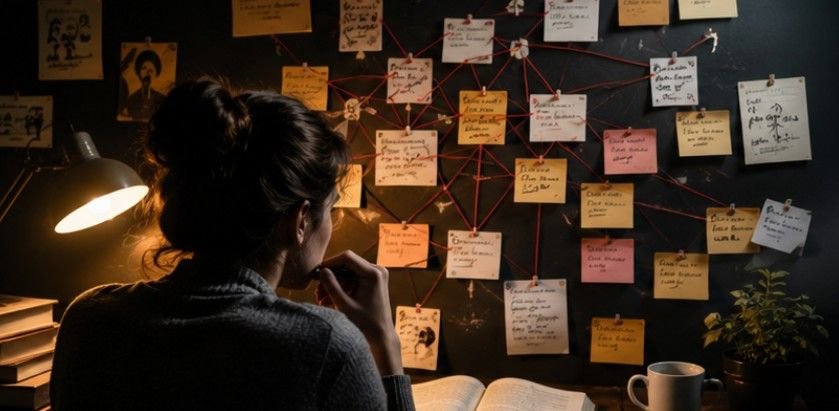
Even literary giants stumble over basic logic. In Raymond Chandler’s classic detective masterpiece The Big Sleep, a chauffeur named Owen Taylor is found dead in his car at the bottom of the pier. Midway through filming the movie adaptation, director Howard Hawks realized nobody knew who actually killed him. He wired Chandler for clarification, and Chandler famously cabled back: “They sent me a wire… asking me who killed Owen Taylor.
Egad, I didn’t know either.” If an icon of American crime fiction can accidentally leave a major murder unsolved, you do not need to panic. Learning how to fix plot holes in a novel is not about preventing mistakes; it is about developing a rigorous method for troubleshooting them during revision.
A plot hole is essentially a breach of contract between the author and the reader. It occurs when a story breaks its own internal logic, ignores a established character motivation, or creates a timeline impossibility. When these inconsistencies pop up, they pull the reader out of the story world instantly. Fortunately, narrative logic behaves like a spiderweb: pulling a single thread out of place disrupts the structure, but carefully splicing the thread heals the entire pattern.
The Anatomy of Narrative Broken Logic
Before diving into repairs, it helps to diagnose what type of structural failure you are dealing with. Narrative inconsistencies usually fall into three distinct categories:
- Timeline Paradoxes: Events happening out of chronological order, character travel times that defy geography, or sudden age shifts.
- Character Amnesia: A protagonist possessing a key skill in Chapter 2, then suddenly forgetting they have it during a crisis in Chapter 10.
- World-Building Violations: Ignoring established rules of magic, technology, or physical limitations simply to move the plot forward.
When readers catch these flaws, their suspension of disbelief shatters. Narrative theory research highlighted by organizations like the National Endowment for the Arts shows that deep reader engagement depends heavily on immersion—a psychological state where the brain processes narrative events as real-time experiences. The moment a logic gap appears, cognitive friction forces the brain back into a critical state, destroying emotional resonance.
How to Track, Trace, and Fix Inconsistencies
Fixing narrative flaws requires stepping away from creative discovery and adopting the mindset of a forensic investigator. Rather than guessing where things went wrong, you need a systematic process for finding the root cause.

[ IDENTIFY THE PLOT HOLE ]
│
▼
[ TRACE CAUSE-AND-EFFECT BACKWARD ]
│
▼
┌────────────────┴────────────────┐
│ │
▼ ▼
[ ADJUST EARLY SETUP ] [ BRIDGE WITH DIALOGUE/LOGIC ]
│ │
└────────────────┬────────────────┘
│
▼
[ UPDATE YOUR STORY BIBLE ]
1. The Reverse Causality Audit
When you discover a logic gap, resist the urge to edit the scene where the problem appears. The flaw you see in Chapter 15 is rarely born in Chapter 15; it is almost always the result of a missing setup in Chapter 3.
Work backward scene-by-scene from the point of failure. Ask yourself what precondition had to exist for this moment to make sense. Did your protagonist escape a locked cellar using a hairpin? Trace backward: when did they put that hairpin in their pocket? Did they have pockets in that dress? By hunting backward, you isolate the exact node where cause-and-effect broke down.
2. Replace “And Then” with “Therefore / But”

Famed South Park creators Trey Parker and Matt Stone developed a narrative rule that doubles as an elite editing tool: if the connection between your scenes can be described as “and then,” your plot is weak. Every scene transition should instead be connected by “therefore” or “but.”
If your hero finds a hidden key (Scene A) and then they go to the library (Scene B), the logic feels artificial. If your hero finds a hidden key (Scene A), therefore they head to the library vault (Scene B), but the lock has been changed (Scene C), the causal chain remains unbroken.
3. Establish a Living Story Bible
Memory is an unreliable narrator. As your manuscript grows past 60,000 words, tracking character eye colors, travel distances, and inventory becomes impossible without documentation. Build a story bible—a centralized reference document containing:
- A Master Timeline: Track dates, times of day, and character movements side-by-side.
- Character Knowledge Tracker: A log detailing exactly who knows what key information, and when they learned it.
- Rule Set: Hard constraints for your world’s technology, magic, or legal systems.
When editing, double-check your prose for filler that obscures these logical connections. Cleaning up your draft early—such as knowing which unnecessary words to cut from manuscript projects—makes structural flaws dramatically easier to spot.
Structural Repair Strategies: Quick Fixes vs. Deep Re-Outlining
Not all plot holes require massive rewrites. Use this matrix to choose the right repair strategy for your manuscript:
| Patch Strategy | Best For… | Execution Example | Risk Level |
| Paving the Way | Missing setup or unearned character skills | Plant a subtle 2-line scene in Chapter 2 showing the protagonist picking a padlock as a bored teenager. | Low |
| Lampshading | Minor improbable coincidences | Have another character call out the weirdness: “What are the odds you happened to keep that receipt?” | Medium |
| The Retcon Swap | Contradictory lore or world rules | Change the nature of the obstacle in Chapter 12 to fit established rules, rather than changing the rules. | Medium |
| Causal Rework | Major timeline paradoxes | Re-order scene sequences completely using a dedicated how to outline a novel framework. | High |
If you need to show character reactions or mechanical fixes in action, remember to focus on active narrative beats. You can refine your scenes by reviewing clear show don’t tell examples fiction writers use to convey internal logic naturally through behavior.
When Advice Fails: Exceptions and Edge Cases

It is worth noting that complete logical consistency is not always the ultimate goal of storytelling. In certain literary genres, strict cause-and-effect takes a back seat to emotional truth or stylistic intent.
- Surrealism & Magical Realism: In works like Franz Kafka’s The Metamorphosis, asking why or how Gregor Samsa turned into a bug ruins the narrative premise. The logic break is the story.
- Absurdist Comedy: Comedic fiction often uses non-sequiturs and broken cause-and-effect to create surprise.
- Unreliable Narrators: If your point-of-view character is lying, traumatized, or confused, contradictory details can be a feature rather than a bug.
Educational resources from major institutions, including research archives at Harvard University, emphasize that storytelling relies on psychological resonance just as much as formal logic. If fixing a minor plot hole requires removing the most emotional, thrilling scene in your book, consider “lampshading” the issue instead of gutting your best work.
Frequently Asked Questions
1. How to resolve plot holes?
Trace the inconsistency backward from where it appears to find where cause-and-effect broke. Fix it by inserting earlier setups, tweaking character motivations, or removing scenes that contradict established world rules.
2. What book does Stephen King regret writing?
Stephen King has publicly expressed regret over Rage (written under his pseudonym Richard Bachman). He eventually requested the publisher take it out of print due to its real-world associations with school shootings.
3. Can a plot hole ruin a story?
Yes, if it breaks the central stakes or undermines character agency. Minor logic slips are easily forgiven, but a massive plot hole in the climax leaves readers feeling cheated and dissatisfied.
4. How do writers avoid plot holes?
Writers avoid them by maintaining a detailed story bible, mapping out chronological timelines, tracking what information characters know at any given moment, and conducting dedicated editing passes focused purely on story logic.
Fixing narrative flaws is ultimately an act of respect for your reader. By auditing your cause-and-effect chains, building a clear story bible, and stepping back to evaluate your manuscript with cool detachment, you turn fragile drafts into airtight stories. Take a breath, trace the logic backward, and start stitching those threads together.