
Some novels ask for attention. This one takes it. My She Who Remains book review examines a slim, ferocious novel that turns one woman’s escape from marriage into a lifelong reckoning with identity, love, family, and survival.
Rene Karabash’s debut, translated from Bulgarian by Izidora Angel, follows Bekija in Albania’s Accursed Mountains. To avoid an arranged marriage, she takes a vow of chastity and becomes Matija, a “sworn virgin” accepted socially as a man.
The novel was shortlisted for the 2026 International Booker Prize. s She Who Remains book review remains largely spoiler-free while discussing the novel’s central premise, unusual structure, and most important themes.
What Is She Who Remains About?
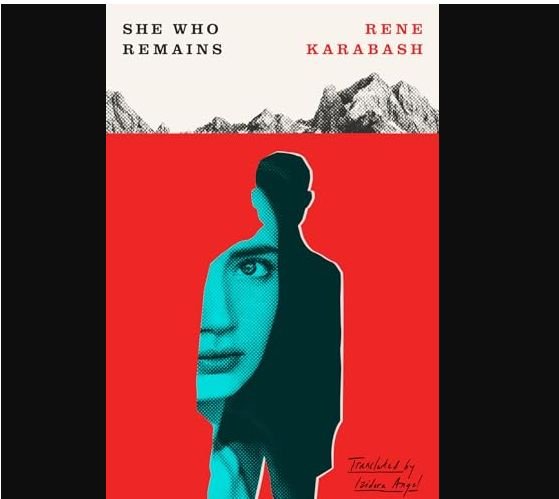
Image source- Goodreads
Bekija grows up in a village where the Kanun controls family duty, gender, marriage, and honor. Her oath appears to offer freedom. She changes her name, clothing, social role, and public identity. Yet the bargain requires her to renounce intimacy and the future she might have chosen.
Decades later, a visiting journalist asks Matija to tell the story. The interview becomes an emotional rupture. Memories of violence, family betrayal, forbidden love, and unresolved grief return without warning.
The past does not sit neatly behind Matija. It floods the present, mixing remembered events with dreams, laments, hallucinations, and old family secrets.
Karabash’s novel won Bulgaria’s Elias Canetti Prize in 2019 and has been translated into more than a dozen languages. Survival Becomes Another Form of Captivity
Bekija’s Oath Is an Exit With No Open Door
At the center of this She Who Remains book review is what I call the novel’s “freedom ledger.” Every gain arrives beside an irreversible loss.
Matija gains male recognition but loses Bekija’s public existence. Matija avoids an unwanted husband but must surrender romantic possibility. Matija receives authority but pays with isolation. The oath solves an immediate danger while turning survival into a permanent sentence.
This is not a simple liberation story. Bekija does not move from oppression into freedom. She moves between systems of control.
One system threatens forced marriage. The other offers safety only after she gives up part of herself.
Love Reveals the Human Cost
The buried queer love story gives the novel its deepest ache. Bekija’s connection with Dhana represents more than romance. It suggests a life built through personal choice instead of obedience.
Karabash refuses easy comfort. Love survives as memory, secrecy, and possibility. The tragedy is not limited to what happened. It also includes everything oppressive customs prevented from happening.
Readers drawn to similarly unsettling, body-conscious fiction may also enjoy our pseudotooth review.
Experimental Prose That Feels Like Testimony
 Image source: Wikipedia
Missing Punctuation Creates Emotional Pressure
Karabash largely avoids conventional capitalization, full stops, and dialogue markers. I had to slow down at first. The page can feel crowded because the prose provides few visual resting places.
Then the method began to make emotional sense.
Matija’s voice does not sound like a polished statement prepared for a journalist. It rushes forward like testimony held back for decades. Memories overlap. Images repeat. Dreams enter factual scenes. The timeline circles rather than marches.
The most useful reading tip in this She Who Remains book review is simple: stop searching for perfect chronology. Follow recurring names, images, and emotional shifts instead.
Once I read for rhythm rather than order, the narration became more coherent. Its confusion reflects trauma, secrecy, and the imperfect process of remembering.
Izidora Angel Protects the Novel’s Rhythm
A book this dependent on rhythm could easily flatten in translation. Angel’s English version keeps the prose raw, incantatory, and unstable. It does not tidy Matija’s voice for the reader’s comfort.
Peirene Press describes the novel as dreamlike and feverishly urgent, while Sandorf Passage emphasizes the haunting influence of the Kanun over village life. el’s achievement lies in preserving tension without making the language unreadable. The English prose feels spoken, remembered, and performed at the same time.
Gender, the Kanun, and the Illusion of Choice
The sworn-virgin tradition is not merely an invented plot device. Research on Balkan burrnesha describes people assigned female at birth who took vows of celibacy and assumed socially male roles.
That status could provide access to property, employment, movement, inheritance, or household authority otherwise restricted by patriarchal rules. s context sharpened my reading. The tradition can appear transgressive because it crosses established gender boundaries. Yet it can also preserve patriarchy by making male status the price of personal autonomy.
The system does not truly expand women’s freedom. It creates a narrow exception for someone willing to stop living publicly as a woman.
For this She Who Remains book review, that contradiction matters most. The oath changes Bekija’s social category, but it never dismantles the structure that harmed her.
What This She Who Remains Book Review Finds Most Powerful
The atmosphere is the novel’s greatest strength. The mountains feel physical, but they also act like walls. Family honor becomes a constant threat. Violence sits inside ordinary conversations. Even tenderness carries danger.
I also admired Karabash’s refusal to explain every symbol. Choral laments, repeated images, hallucinations, and fractured memories give the book a dark folk-tale quality.
The narrative trusts readers to feel connections before fully understanding them. That approach makes the book emotionally immediate, although it also creates genuine difficulty.
Sparse punctuation can blur speakers and time periods. The emotional intensity rarely relaxes. I would not read this novel while distracted. A quiet setting and longer reading sessions help Matija’s voice establish its rhythm.
A fair She Who Remains book review must admit that some readers will find the structure alienating. However, the difficulty serves the character’s fractured memory rather than acting as empty experimentation.
Who Should Read She Who Remains?
This novel suits readers who value literary fiction that experiments with voice, chronology, and structure.
It should appeal to readers interested in Balkan literature, translated fiction, queer love, patriarchal customs, and stories where the body becomes contested territory.
Readers seeking a fast plot, conventional dialogue, clear chapter transitions, or emotional comfort may struggle. This She Who Remains book review does not call the novel accessible. It calls it worth the effort.
Approach it as a dramatic confession rather than a conventional narrative. The voice matters as much as the events being described.
The Verdict: This Book Does Not Knock—It Haunts
I finished thinking less about the oath itself than about the society that made it seem necessary. Karabash shows how survival can preserve a life while stealing its possible futures.
My final She Who Remains book review rating is 4.5 out of 5 stars.
The novel is demanding, feverish, and sometimes disorienting. It is also emotionally exact. Read slowly, resist forcing the timeline into order, and listen for the grief beneath Matija’s breathless voice.
This book does not provide a comfortable reading experience. Good. Comfort would betray its subject.
Frequently Asked Questions
1. Is She Who Remains based on a true story?
No, but its sworn-virgin tradition is rooted in documented Balkan customs associated with the Kanun.
2. Is She Who Remains difficult to read?
Yes; sparse punctuation, nonlinear memories, and an intense narrative voice require patience and concentration.
3. Does this She Who Remains book review contain spoilers?
It discusses the premise, themes, and narrative style but avoids revealing the novel’s final discoveries.
4. Is She Who Remains worth reading?
Yes, especially for readers who enjoy experimental translated fiction about identity, gender, forbidden love, and survival.