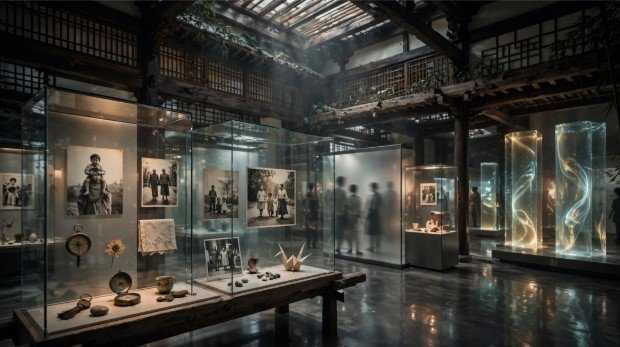
If you are searching for the memory museum m lin book review that goes beyond a plot recap, the key question is simple: what makes these stories linger? M Lin’s debut treats memory as unstable evidence. It can comfort, distort, survive censorship, and preserve what public history may erase.
Graywolf Press published The Memory Museum: Stories on April 21, 2026. The collection moves from contemporary China and America into imagined futures. Its characters confront migration, class, intimacy, censorship, identity, and political change. Graywolf describes it as an expansive debut focused on women in China and the Chinese diaspora.
What The Memory Museum Is Really About
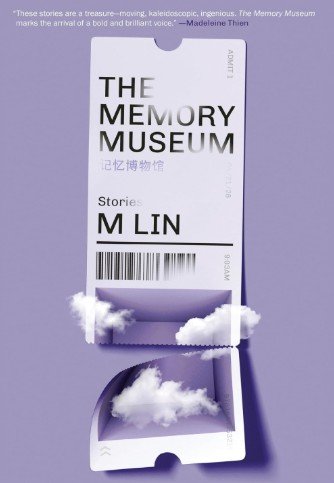
Image Credit: Amazon
My strongest takeaway from the memory museum m lin book review is that memory works on two levels. It is the subject of these stories, but it also shapes their form.
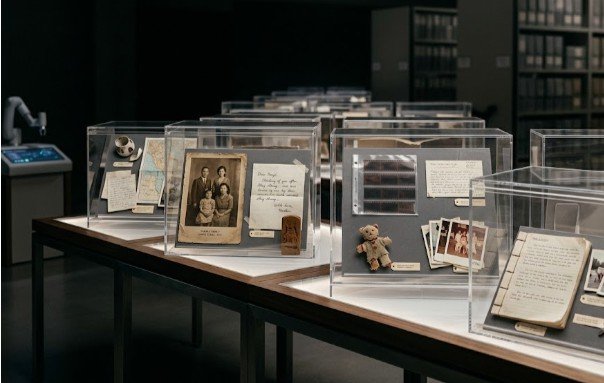
Many pieces feel like recovered exhibits. One preserves a childhood detail. Another captures a failing relationship. Others hold private desires or political events that refuse to disappear.
That makes this collection more than a broad story about diaspora. It asks who gets to preserve the past. It also asks who edits that past when personal experience clashes with an official version of history.
Publishers Weekly describes Lin’s characters as people born in China and scattered across the world. Kirkus identifies connection, class, censorship, and immigration as recurring concerns.
For me, that combination explains why the memory museum m lin book review cannot be reduced to a conventional immigration narrative. Distance transforms Lin’s characters, but it rarely frees them from what came before.
Memory as Resistance, Not Nostalgia
The title story makes that tension explicit. In a future Memory Museum, sensory architects preserve experiences that could otherwise disappear. The premise sounds speculative, yet its emotional logic feels immediate.
The clever part is that memory never becomes perfectly reliable. Its power comes from fragility. A smell, dialect, family story, or childhood image may endure even when public history becomes cleaner and easier to control.
Readers attracted to fiction that experiments with history and cultural memory may also want to explore questions 27 and 28 karen tei yamashita book as a related internal read.
Migration, Identity, and the One-Child Generation

A major strength of the memory museum m lin book review is its refusal to make migration a simple before-and-after transformation. Lin’s characters carry several versions of home at once.
Graywolf frames the collection around the experience of China’s One-Child Generation. Family pressure, state policy, mobility, gender, and class therefore overlap instead of appearing as separate themes.
Yet Lin keeps those concerns personal. Her characters still face relationships, work, illness, motherhood, desire, and belonging.
Lin was born and raised in Beijing and now lives in the United States. She writes fiction in English, her second language, while Mandarin is her mother tongue.
That linguistic background matters. In an interview with the Chicago Review of Books, Lin discusses the difficulty of representing Chinese realities in English and the inevitable presence of things that resist translation.
That gives the memory museum m lin book review another useful lens. Migration happens geographically, but it also occurs through language. Something can always change between experience, memory, and expression.
Why the Contemporary Stories Hit Hard
“Magic, or Something Less Assuring” follows a politically divided couple taking a planned Morocco vacation before finalizing their divorce. Their disagreements connect marital strain with different interpretations of China’s COVID-era policies.
“You Won’t Read This in the News” turns toward migrant workers, petty theft, precarity, and unexpected connection.
“Tough Egg” follows a filmmaker confronting censorship while examining motherhood and Chinese women seeking IVF abroad. Graywolf specifically presents the story as an exploration of artmaking, censorship, and motherhood.
Across these stories, politics matters because it changes what people can choose, document, discuss, and remember. That keeps the memory museum m lin book review centered on human consequences rather than abstract ideological arguments.
Readers interested in characters shaped by unstable identities and uncomfortable social pressure may also explore attention seeking behavior aea varfis van warmelo book as another contemporary literary companion.
The Near-Future Stories Give the Collection Its Edge
The memory museum m lin book review also deserves attention for the collection’s speculative range.
“Scenes from Childhood” places an elderly woman within a dystopian future while pulling her toward ancestral memories. The title story pushes the idea further through technology built to preserve sensory experience. Foreword Reviews notes how the collection moves between contemporary settings and dystopian visions while exploring fertility, speech, education, and political repression.
These stories do not depend on conventional science-fiction worldbuilding. The future acts more like pressure.
It asks what current political, environmental, and technological choices might resemble after decades of accumulation.
That creates what I consider the collection’s most interesting structural effect. Past, present, and future resemble rooms inside one museum. Each story preserves a partial record. None claims to represent an entire nation or generation.
That is also why the memory museum m lin book review works best when the stories are considered together rather than ranked only by plot.
Readers who enjoy literary fiction using speculative premises to test human behavior may also find earth 7 deb olin unferth book worth pairing with Lin’s collection.
M Lin’s Prose Balances Politics With Intimacy
What stands out in the memory museum m lin book review is the distance between the scale of Lin’s themes and the restraint of her prose.
The collection addresses state power, migration, fertility, illness, censorship, race, and class. Yet much of its emotional force comes through smaller observations.
Publishers Weekly praises Lin’s direct writing and the emotional truths within her stories. Kirkus emphasizes her character development and calls the collection a strong debut.
That balance matters.
Lin allows politics to remain visible without reducing characters to arguments. People can contradict themselves, love imperfectly, change their minds, and hold several loyalties simultaneously.
For US readers, this makes the collection particularly relevant to conversations around Asian American literature and diaspora writing. It also resists framing every Chinese character primarily through an American viewpoint.
Which Stories Are Most Memorable?
For readers using the memory museum m lin book review to decide where the collection appears strongest, I would watch how four stories speak to one another.
“Scenes from Childhood” establishes the pull of ancestry.
“Magic, or Something Less Assuring” shows political disagreement entering a marriage.
“Tough Egg” connects artistic work with censorship, reproduction, and motherhood.
“The Memory Museum” finally turns preservation itself into an emotional and political act.
Together, they reveal what I see as Lin’s smartest structural decision: the collection behaves like the institution named in its title.
Each story stores a different emotional artifact. The reader must decide what connects them.
That approach also avoids an easy trap. Lin does not present one character as representative of Chinese people or the diaspora. Instead, the collection accumulates contradictions.
Who Should Read The Memory Museum?
I would recommend the collection to readers who enjoy literary short fiction with political depth but dislike characters being reduced to positions.
It should also appeal to readers interested in Chinese diaspora literature, migration, censorship, motherhood, cultural memory, class, and near-future fiction.
The memory museum m lin book review is especially useful for US readers looking for stories that complicate the familiar narrative of leaving one country and successfully “arriving” in another.
Lin treats migration as an ongoing negotiation. Home can remain emotionally powerful after someone leaves it. A new country can offer opportunity without automatically producing belonging.
That emotional ambiguity may be the book’s most universal quality. Lin herself has said she came to recognize that the collection could speak beyond Chinese readers to people who have experienced leaving one place for another.
Final Verdict: Memory Has Teeth
My final view in the memory museum m lin book review is that Lin’s debut works because memory never becomes sentimental decoration.
Memory can comfort. It can embarrass, expose, distort, protect, and resist. Under certain political conditions, simply preserving it can become meaningful.
The collection’s strongest moments make historical pressure feel intimate without shrinking its importance. That is difficult to achieve, yet Lin repeatedly brings large forces down to the level of relationships, bodies, language, and sensory experience.
Critical reception has been similarly positive. Kirkus called it a “stunning debut,” while Publishers Weekly praised the stories for their emotional impact. Foreword Reviews also highlighted its cultural yearning and movement across past, present, and future.
My best tip before reading is simple: notice what characters remember through smell, language, place, food, bodies, and family stories.
Those quiet details are not decorative.
They are the museum.
FAQs About The Memory Museum by M Lin
1. Is The Memory Museum by M Lin a novel?
No. It is M Lin’s debut short story collection, published by Graywolf Press on April 21, 2026.
2. What is The Memory Museum by M Lin about?
It explores memory, migration, censorship, identity, race, class, intimacy, and Chinese lives across China, America, and the diaspora.
3. Is The Memory Museum speculative fiction?
Partly. Several stories use dystopian or near-future settings, while others remain grounded in recognizable contemporary life.
4. Is the memory museum m lin book review positive overall?
Yes. Kirkus, Publishers Weekly, and Foreword Reviews all responded positively to Lin’s characterization, emotional precision, and thematic ambition.