If you searched for an earth 7 deb olin unferth book review to decide whether this strange climate novel deserves your time, my answer is yes—with one caveat. Earth 7 is not conventional science fiction. It treats ecological collapse, immortality, romance, and cosmic absurdity as parts of one problem: humans cannot stop trying to outsmart endings.
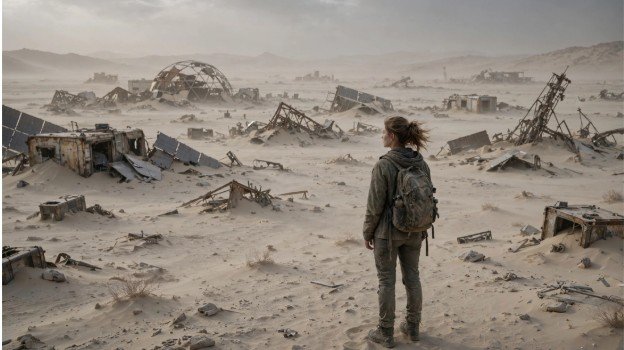
Graywolf Press published the 248-page novel on June 9, 2026. Its future Earth is severely depopulated and largely reduced to sand. Some survivors move to Mars. Others pursue digital immortality. A smaller group stays behind and preserves biological material for a future world.
Quick Verdict: Is Earth 7 Worth Reading?
My earth 7 deb olin unferth book review lands firmly on the positive side. For readers comparing new literary climate fiction, this earth 7 deb olin unferth book review also finds the novel more emotionally grounded than its bizarre premise suggests.
Kirkus praised it as climate fiction, while Publishers Weekly highlighted Unferth’s ability to keep extraordinary events emotionally accessible. Readers who enjoy literary speculative fiction should find plenty to admire.
New Fiction Books offer a similarly broad range of imaginative storytelling, making them appealing to readers who enjoy discovering fresh perspectives, distinctive characters, and unconventional narratives. Readers who demand rigid scientific realism may find the book deliberately slippery.
Earth 7 Plot Summary: Dylan, Survival, and Artificial Worlds
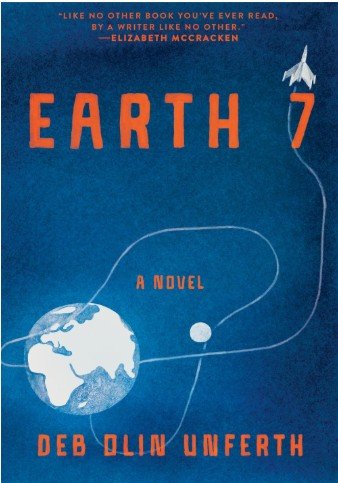
Image credit: Amazon
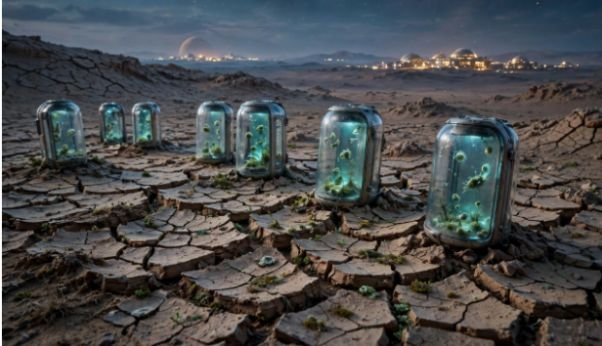
Later, Dylan reaches the surface and works at a desert molecular-collection facility. Researchers are trying to preserve genetic traces of Earth’s species. Earlier collections have already been destroyed or lost, making the project both heroic and absurd.
Micro-Animals and the Limits of Human Control
Dylan starts with menial work, including sweeping sand, yet discovers resilient micro-animals that can help conceal DNA. For me, this is where the novel becomes sharper. Humans build massive preservation systems, yet microscopic life may prove better at persistence.
This Earth 7: Deb Olin Unferth book review reads that reversal as central: survival is not the same thing as control. A book review of What Is The Housemaid book about similarly examines how the story explores secrecy, power, and the hidden realities behind seemingly ordinary relationships.
Melanie and the Love Story at the Center
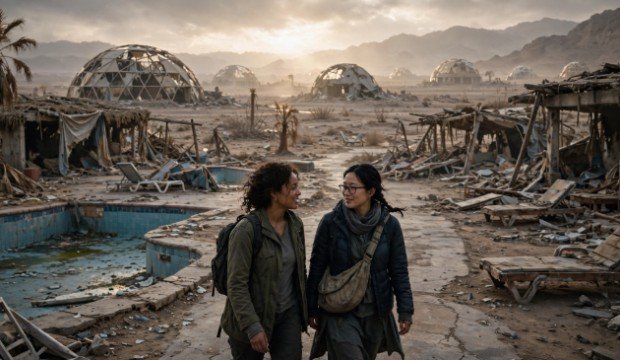
Dylan later visits Vacationland for Singles, an artificial resort, and meets Melanie. Other guests assume Melanie is a robot. She is actually human, although years of body modification on a reality program may have made her effectively immortal.
Their relationship gives the novel its emotional center. That focus is why this earth 7 deb olin unferth book review does not treat the book as a technology satire alone. Dylan and Melanie do not solve the apocalypse. Their bond matters because it stays meaningful even when permanence has become technologically distorted.
Climate Fiction Themes: Technology, Preservation, and Loss

Unferth does not build her climate fiction around one villain or one neat disaster. Environmental collapse, technological fixes, and human choices blur together.
That complexity has roots in the author’s research. Unferth has said she studied sand, stayed in the Sahara, traveled to the Arctic, and considered technological “band-aids” for climate change while developing the novel. The result is a future that feels physically imagined rather than decorated with climate anxiety.
My Four-Response Reading of Earth 7
The most useful original lens for my earth 7 deb olin unferth book review is to track four responses to collapse.
Mars represents escape. Uploaded consciousness represents digitization. The molecular collections represent preservation. Dylan and Melanie’s relationship represents attachment.
The first three strategies try to defeat loss. None wins cleanly. Leaving Earth means abandoning it. Becoming code questions whether continuity equals life. Preserving DNA becomes futile if no living world remains to receive it.
Love works differently. It does not conquer death or restore Earth. It gives finite existence meaning. That makes the romance more than a subplot; it becomes the novel’s alternative to technological salvation.
Tardigrades, Imperfection, and What Counts as Life
The tiny creatures also challenge humanity’s obsession with grandeur. They persist while people build colonies, laboratories, resorts, and immortality systems.
Melanie’s body develops the same theme from another direction. Her apparent perfection makes people read her as artificial. Small imperfections reconnect her to ordinary humanity. In my reading, Earth 7 values life because it changes, adapts, breaks, and continues.
Deb Olin Unferth’s Writing Style: Cosmic Comedy Meets Eco-Fiction
A useful earth 7 deb olin unferth book review must mention style because form will decide whether this novel works for you.
Unferth moves quickly between perspectives, scales, and tones. The narrative can jump from loneliness to microscopic creatures or cosmic consciousness. The New York Times review, excerpted by Literary Hub, compared its freewheeling spirit to Italo Calvino’s Cosmicomics.
The humor never fully cancels the grief. For that reason, this earth 7 deb olin unferth book review sees the comedy as structural rather than decorative.
The drawback is looseness. Readers who need a linear plot and fixed rules may feel the novel keeps changing shape. I think that instability serves the subject. Ecological collapse appears here as a chain of consequences, not a tidy event.
Who Should Read Earth 7?
I would recommend Earth 7 to readers who enjoy literary science fiction, eco-fiction, philosophical humor, and speculative romance. This earth 7 deb olin unferth book review is especially positive for readers who like genre-crossing novels.
Hard-science readers should adjust expectations. This is less about technical systems than emotional and philosophical pressure.
Calling the book “science fiction” is accurate, but incomplete. It uses the future to ask why humans preserve, migrate, archive, invent, and love when every solution remains temporary.
The Planet Is Toast, but This Book Isn’t
My final take on this earth 7 deb olin unferth book review is simple: Earth 7 turns apocalypse into something stranger than despair. It imagines humanity after massive failure, then refuses to make failure the only story left.
Its best idea may be that persistence does not require triumph. A microscopic creature can persist. A damaged world can retain traces. Two people can love without saving civilization.
Read Earth 7 if you want climate fiction that feels philosophical without becoming cold, and funny without becoming shallow. Give its odd structure room to work.
FAQs About Earth 7 by Deb Olin Unferth
1. What is Earth 7 by Deb Olin Unferth about?
It follows Dylan through a depopulated future where humans pursue Mars, digital immortality, DNA preservation, and love.
2. Is Earth 7 a climate fiction novel?
Yes. It mixes climate fiction with literary science fiction, romance, satire, and philosophical questions.
3. Is Earth 7 by Deb Olin Unferth worth reading?
Yes, especially for readers who enjoy experimental eco-fiction, unusual humor, and speculative stories about survival.
4. Do I need to read Barn 8 before Earth 7?
No. Earth 7 is a standalone novel and does not require knowledge of Unferth’s earlier work.